Sustainable and Organic Pig Farming: The Complete 2026 Guide
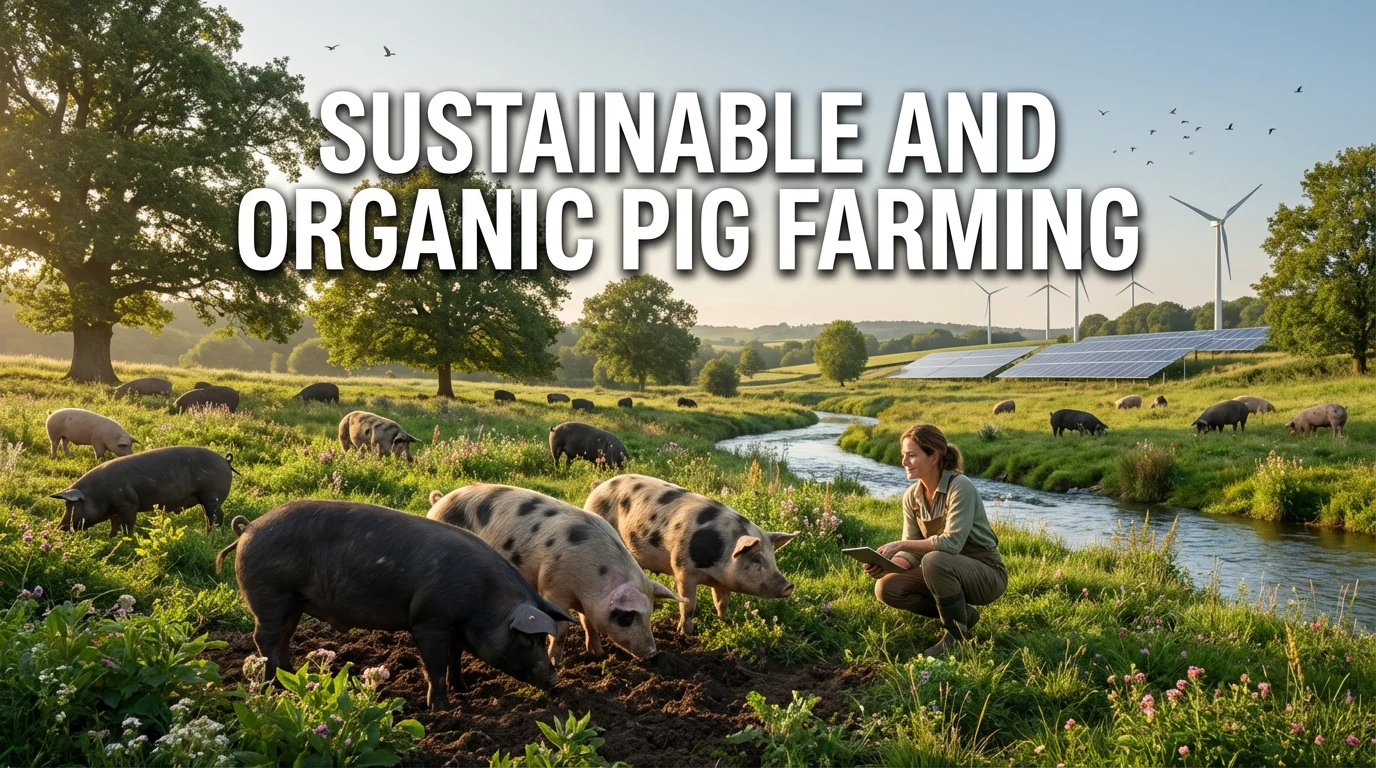
Sustainable and organic pig farming operates on five foundational principles: certified organic feed without synthetic additives, outdoor access and natural living conditions, no routine antibiotics or growth promoters, soil and environmental health maintenance, and complete traceability from farrow to finish, as outlined in the FiBL guide on organic pig production in Europe.
The first principle centers on nutrition—organic pigs must receive 100% certified organic feed throughout their lives, free from GMOs and synthetic amino acids. Animal welfare rules in the EU and U.S. require meaningful outdoor access with adequate space, soil contact, shade, and vegetation so pigs can express their natural behaviors, a point summarized in ATTRA’s guide on raising organic pigs to USDA certified standards.
The prohibition on routine antibiotics represents a major paradigm shift in sustainable and organic pig farming. Organic systems rely instead on robust genetics, low-stress handling, strict hygiene, and environmental management to maintain herd health. Any animal requiring treatment with a prohibited substance must be treated humanely but permanently loses its organic status, according to the USDA Organic Livestock Requirements.
1. Principles of Organic Pig Farming
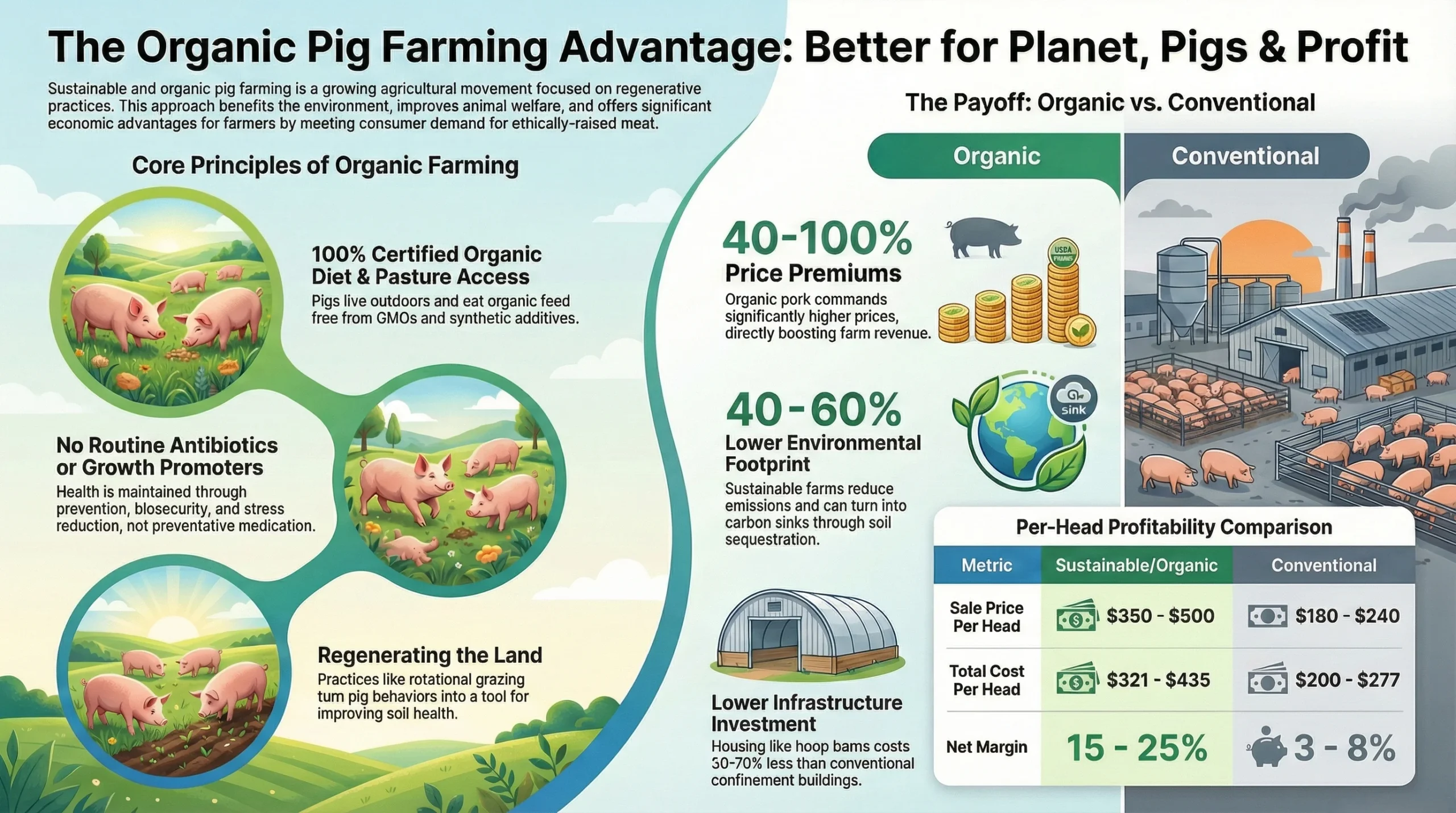
Organic pig farming operates on five foundational principles: certified organic feed without synthetic additives, outdoor access and natural living conditions, no routine antibiotics or growth promoters, soil and environmental health maintenance, and complete traceability from farrow to finish.
The first principle centers on nutrition—organic pigs must receive 100% certified organic feed throughout their lives, free from GMOs and synthetic amino acids. Animal welfare requires meaningful outdoor access with minimum space of 1 square meter per pig in the EU, while US standards emphasize access to soil and vegetation.
The prohibition on routine antibiotics represents a paradigm shift. Rather than preventative medication, organic systems emphasize robust genetics, stress reduction, and environmental management. Treated animals permanently lose organic status.
| Principle | Key Requirements |
| Organic Nutrition | 100% certified organic feed, no GMOs, no synthetic additives |
| Outdoor Access | Meaningful pasture access, rooting opportunities, minimum space |
| Health Management | No routine antibiotics, prevention through management |
| Environmental Stewardship | Soil health, biodiversity protection, pollution prevention |
| Traceability | Complete records from birth to slaughter, annual inspections |
2. Benefits of Sustainable Pig Farming
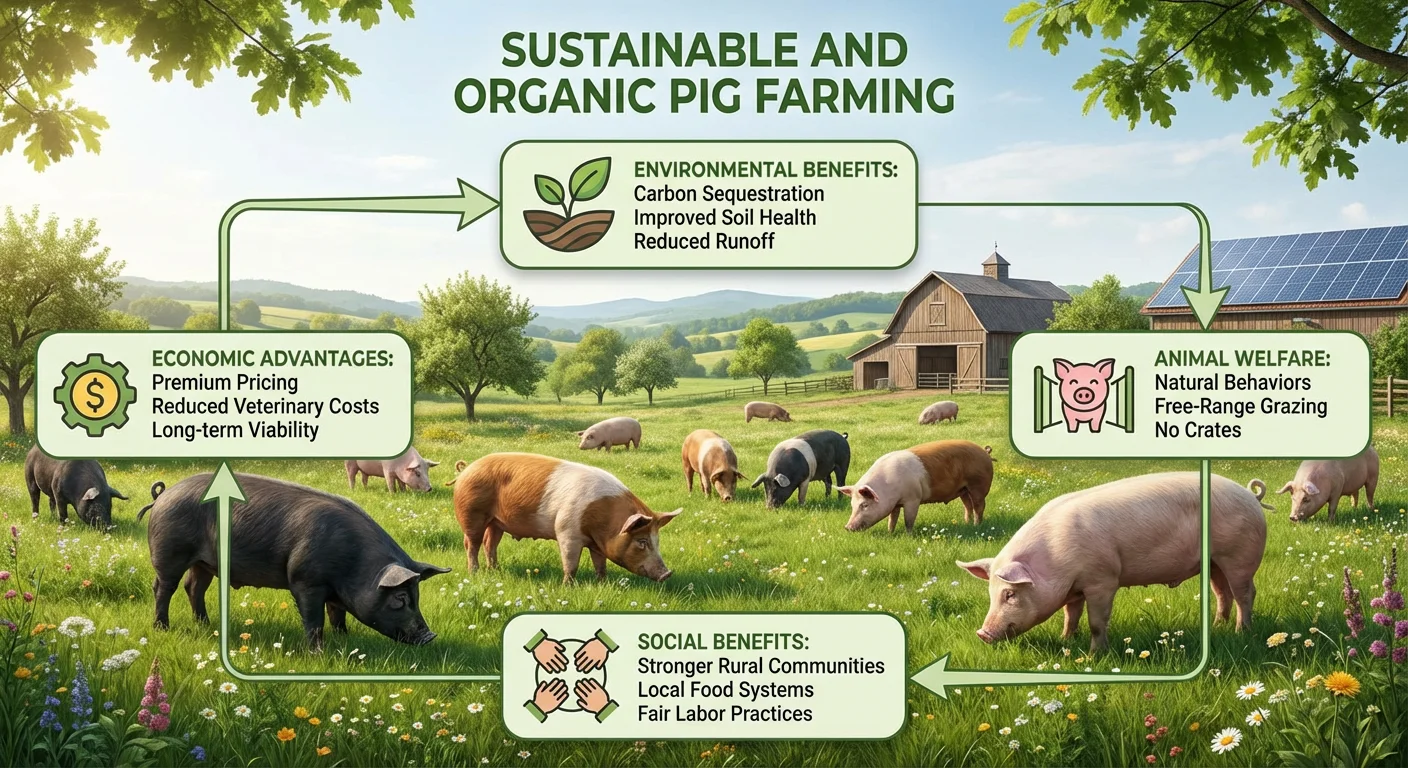
Sustainable pig farming delivers measurable benefits across four dimensions: environmental (reduced emissions, improved soil), economic (40-100% premium pricing, lower input costs), animal welfare (natural behaviors, better health), and social (community relationships, rural employment).
Well-managed pasture-based systems sequester 0.5-2.0 tons of carbon per hectare annually, potentially turning pig production from a carbon source into a carbon sink. Integration with crop rotations reduces synthetic fertilizer needs by 40-60%.
Premium pricing represents the most visible economic benefit. Organic pork commands 40-100% premiums at wholesale. Farms also report 25-35% reductions in veterinary expenses after transitioning to preventative health systems, while eliminating synthetic fertilizers saves $80-150 per acre annually.
Case Study: Green Valley Cooperative in Iowa brought twelve small farms together in 2023 to market sustainable pork collectively. Member farms reported average income increases of 62% in the first year, with the cooperative’s shared processing facility reducing per-head costs by 28%.
3. Breed Selection for Organic Systems
Heritage and traditional breeds excel in organic systems because they combine robust genetics, strong foraging ability, and natural disease resistance, making them ideal for outdoor and pasture‑based management.
Top performers include Berkshire, Large Black, Gloucestershire Old Spots, Tamworth, and Red Wattle—breeds that efficiently convert pasture into high‑quality meat and fit well into low‑input, forage‑based systems, as outlined in this practical heritage‑breed guide for small farms: https://ecofarmingdaily.com/raise-healthy-livestock/pigs/practical-pork/.
Berkshire is perhaps the most versatile heritage breed for organic producers, combining excellent marbling and flavour—often marketed as “Kurobuta” pork—with good mothering ability and a calm temperament suited to pasture.
Large Black pigs, with their dark skin and strong grazing instinct, are hardy outdoor animals that resist sunburn, while Tamworth, Gloucestershire Old Spots, and Red Wattle each offer a balance of foraging ability, growth rate, and carcass quality that makes them popular choices in organic and pasture‑based herds; an example of detailed breed information is The Livestock Conservancy profile for Gloucestershire Old Spots: https://livestockconservancy.org/gloucestershire-old-spots-pig/.
| Breed | Best Features | Considerations |
| Berkshire | Meat quality, versatility, 50-75% market premium | Needs some shade |
| Large Black | Exceptional foraging, docile, hardy | Slower growth |
| Tamworth | Active forager, excellent bacon | Needs secure fencing |
| Red Wattle | Fast heritage growth, good meat quality | Limited availability |
4. Organic Feed and Nutrition Strategies
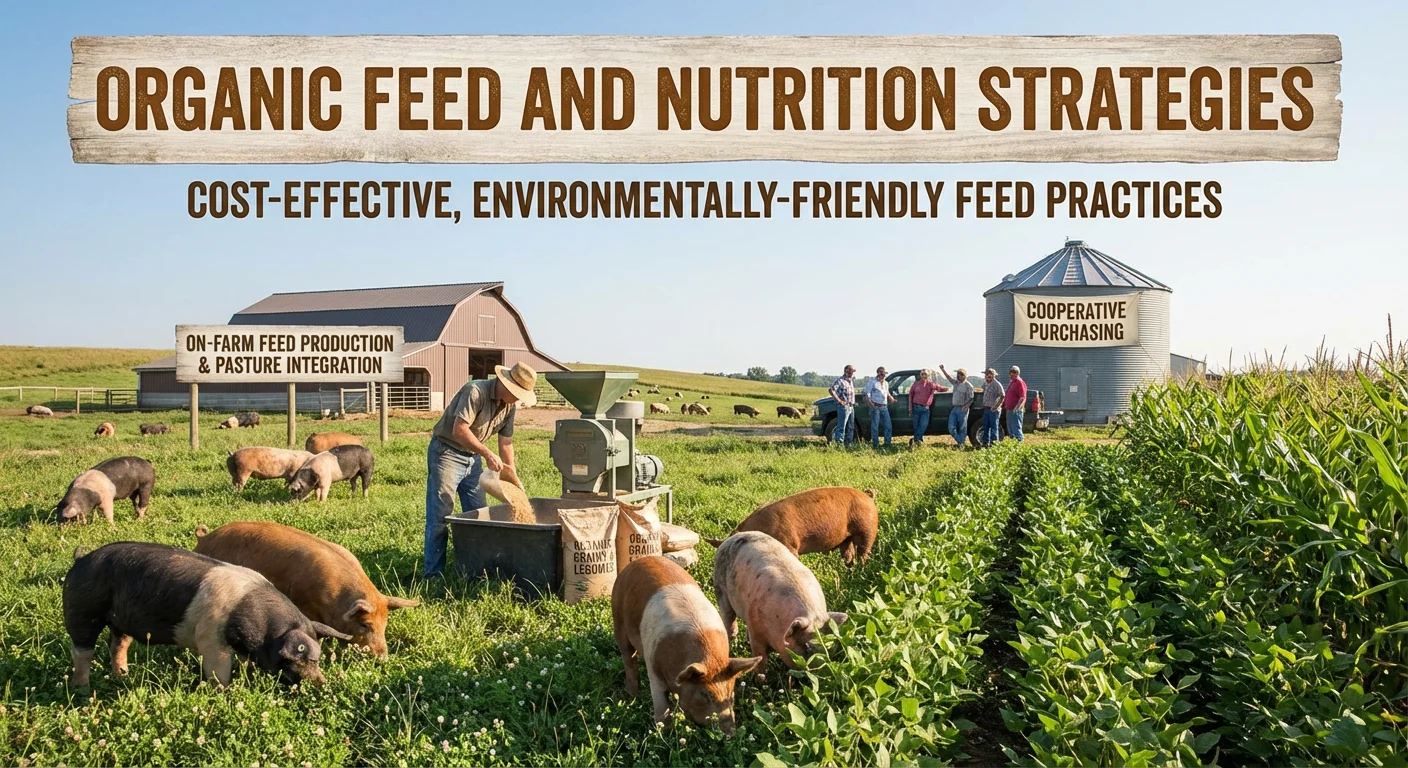
Effective organic feed and nutrition strategies combine certified organic grains, legumes, and pasture foraging, with feed typically accounting for 60–70% of total organic pig production costs.
Producing part of the ration on‑farm, joining regional feed cooperatives, and using well‑managed pasture to supply up to around 30% of pigs’ nutrient needs during the growing season are proven ways to control costs. Practical guidance on reducing feed costs in organic pig systems is available at eOrganic (https://eorganic.org/node/36109).[1]
Organic feed often costs about $450–600 per ton compared with roughly $250–350 for conventional rations, so farms that grow their own cereals and protein crops gain much tighter control over costs, and some closed‑loop systems report cutting purchased feed by 60–80% through smart crop rotations and home‑grown staples. Pasture and roughage—such as clover‑rich leys, brassicas, and mixed herbal swards—can supply 20–30% of nutrition in the growing season while supporting gut health and natural rooting behaviour.
Many organic herds further supplement diets with mast (acorns, chestnuts), organic vegetable culls, and dairy by‑products like whey to add low‑cost energy and protein without compromising certification, as illustrated in the TEAGASC Pig Feed Cost and Price Monitor (https://teagasc.ie/wp-content/uploads/2025/05/Pig-Feed-Cost-and-Price-Monitor-Jan-2024.pdf).[2]
Key organic feed and nutrition strategies:
Build relationships with nearby organic farms and processors to source vegetable culls and suitable by‑products as affordable supplementary feeds, as recommended in the Agricology resource on fulfilling 100% organic pig diets with roughage and foraging (https://agricology.co.uk/resource/fulfilling-100-organic-pig-diets-feeding-roughage-and-foraging-range/).[3]
Conduct regular soil tests to optimise yield and protein content of on‑farm feed crops.
Invest in on‑farm grain storage to buy or harvest feed at favourable seasonal prices.
Rotate pigs through pasture before swards are overgrazed to maximise forage intake and regrowth, following the principles outlined in the USU Extension Pasture Pig Basics guide (https://extension.usu.edu/smallfarms/research/pasture-pig-basics.pdf).[4]
5. Sustainable and Organic Pig Farming Practices: Pasture-Based Systems
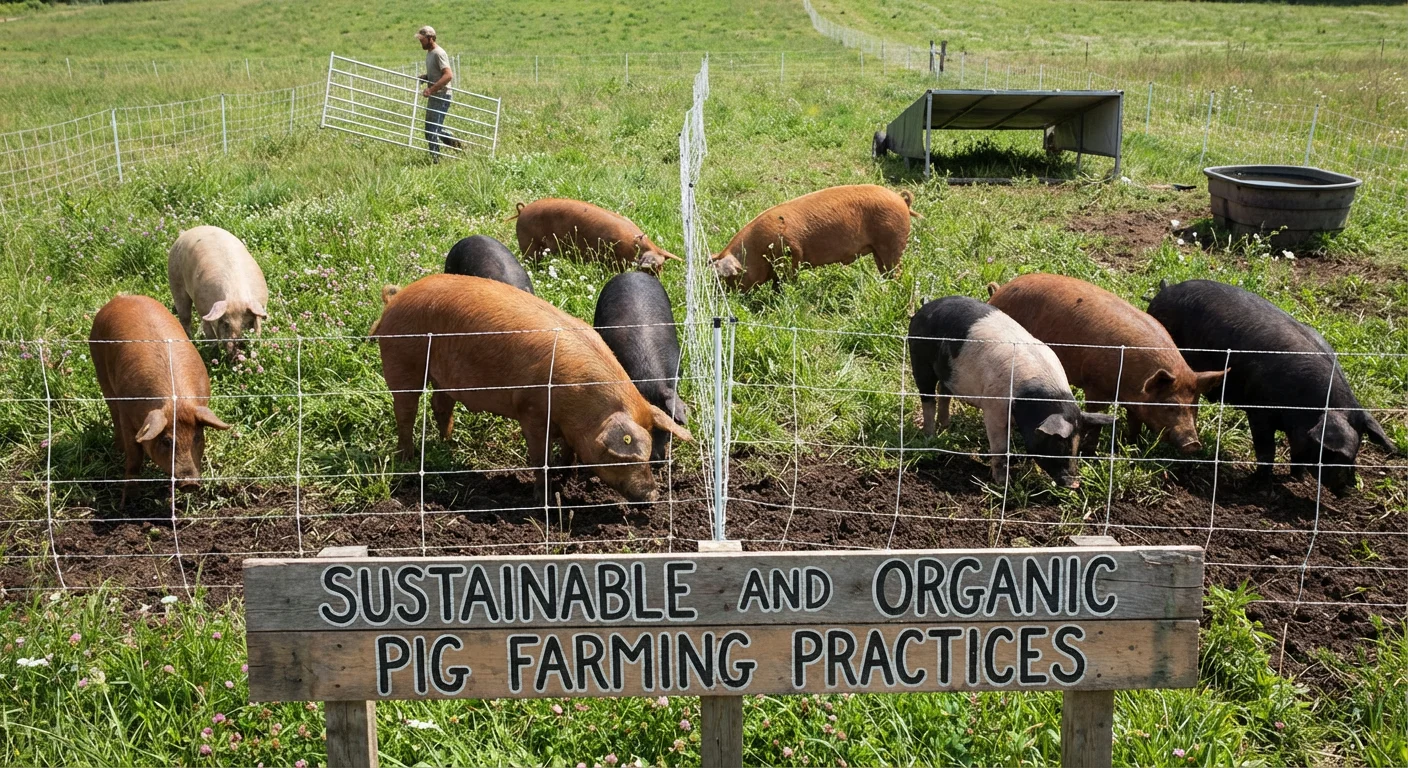
Rotational grazing divides pasture into paddocks, moving pigs every 3-14 days to prevent overgrazing and break parasite cycles. Successful systems provide 20-40 pigs per acre, with moves timed by plant height (before grass falls below 3 inches). This reduces feed costs by 20-30% while improving soil health.
Pigs root, dig, and tear vegetation—behavior that becomes regenerative when properly managed. Short grazing periods followed by 60-90 days rest allow pastures to regrow stronger with deeper root systems. This rest period also breaks parasite cycles naturally, as most pig parasites have 21-28 day life cycles.
Case Study: Thompson Family Farm in Kentucky divided 80 acres into 12 paddocks. Following pigs with laying hens that scratch through manure, they increased soil organic matter from 2.8% to 4.1% in three years while doubling pasture productivity.
| Parameter | Recommended Range |
| Stocking Density | 20-40 pigs per acre |
| Grazing Period | 3-14 days per paddock |
| Rest Period | 60-90 days minimum |
| Move Trigger | Grass height below 3 inches |
| Shade Requirement | 10-15 sq ft per pig |
6. Waste Management and Circular Farming
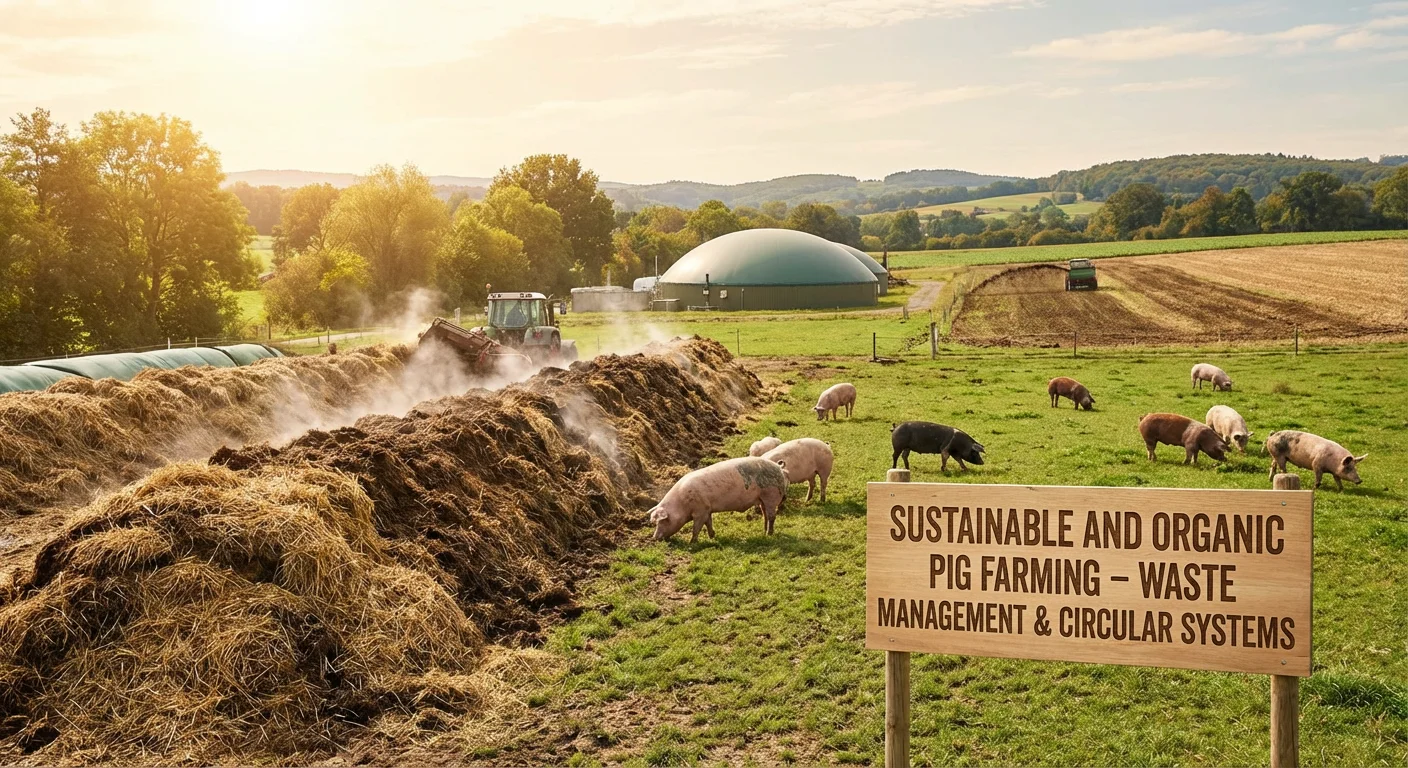
Circular farming turns pig manure from a disposal problem into a valuable fertiliser resource. A 100‑sow unit can produce roughly 2,500 tons of manure per year, with nutrient value that can reach tens of thousands of dollars when applied correctly, as shown in the Missouri Extension manure-value calculator.
Composting and Anaerobic Digestion Techniques
- Composting: Proper composting balances carbon (bedding, straw) and nitrogen (manure), maintains moisture around 50–60%, and ensures adequate airflow so piles reach 130–150°F. This process kills many weed seeds and pathogens while building stable organic matter.
- Deep-bedded hoop barns: These structures allow pigs to naturally mix and aerate the bedding, enhancing compost quality while supporting animal welfare.
- Anaerobic digesters: For larger operations, digesters capture methane from manure to produce heat or electricity, while retaining nutrient-rich effluent for use as fertiliser. This approach reduces greenhouse gas emissions and turns waste into a renewable energy resource.
Practical Tips
Integrate manure application into crop rotations to maximise soil fertility benefits.
Monitor moisture and temperature regularly to maintain effective composting conditions.
Allow compost piles to mature for 60–90 days before applying to fields.
Consider investing in sensors for larger digesters to optimise gas capture and nutrient retention.
7. Disease Prevention Without Antibiotics
Antibiotic-free production relies on prevention through biosecurity, stress reduction, optimal nutrition, and environmental management. Key strategies include closed-herd policies, all-in/all-out production, vaccination, probiotics, botanical supplements (oregano, garlic), and colostrum management.
Effective prevention follows a hierarchy: biosecurity forms the foundation, followed by stress reduction, optimal nutrition, environmental management, and immune support. Closed-herd management—where no outside pigs enter except certified breeding stock with 30-day quarantine—eliminates most disease introduction risk.
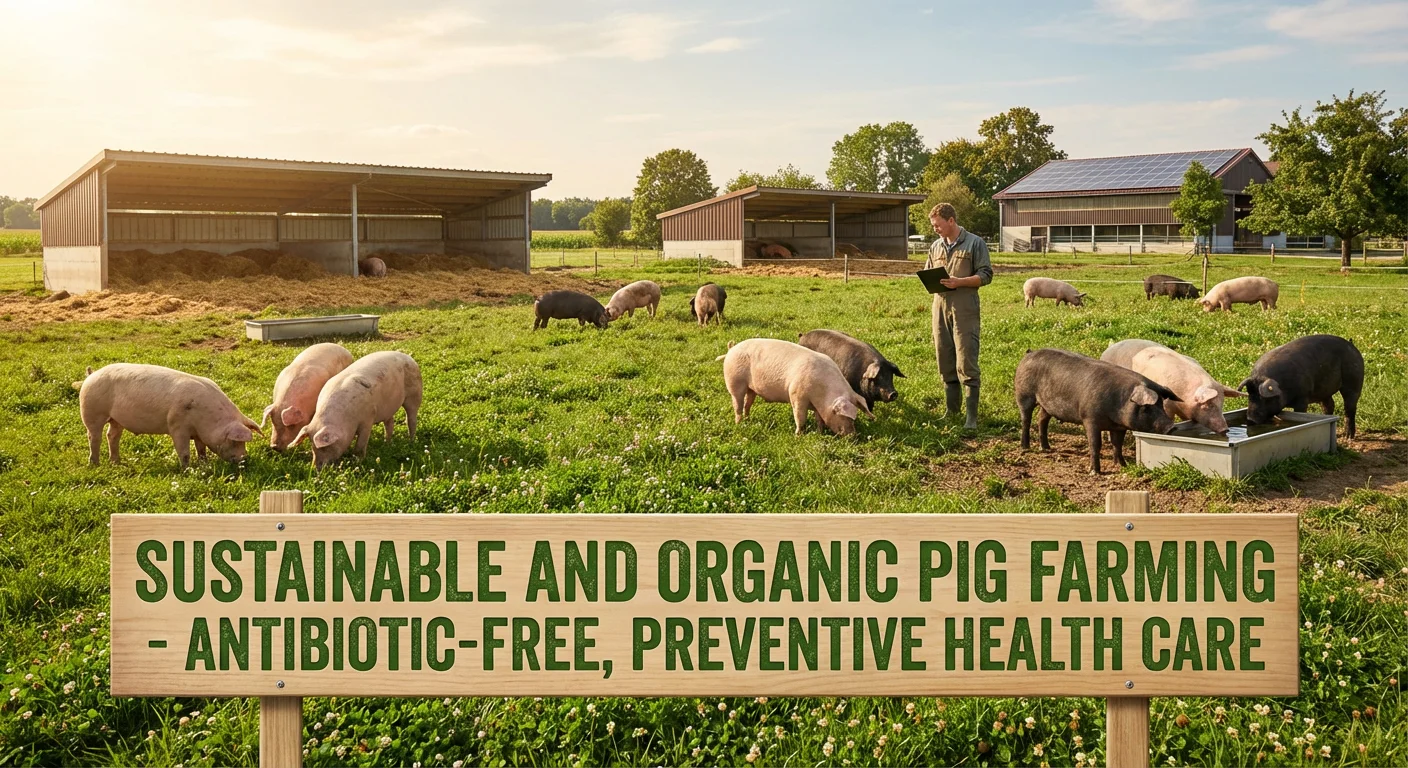
Natural health supports include probiotics (Lactobacillus, Bacillus species), botanical supplements (oregano at 0.1-0.2% of diet reduces intestinal pathogens), and rigorous colostrum management ensuring every piglet nurses within 2 hours of birth. Successful farms report treatment rates below 2%.
- Develop veterinary relationship with organic/alternative production experience
- Create written health protocols before problems occur
- Track all health events to identify patterns and root causes
8. Housing and Animal Welfare
Organic housing prioritizes natural behaviors, outdoor access, and comfortable environments. Effective systems include deep-bedded hoop barns ($40-60/sq ft vs $100-150 for conventional), portable field shelters, and improved conventional buildings with outdoor runs. Space requirements: 8+ sq ft indoor per market pig plus equal outdoor access.
Deep-bedded hoop barns have become the workhorse of sustainable production. These structures—typically 30×60-90 feet—consist of steel hoops covered in fabric with 12-18 inches of bedding providing insulation, cushioning, and rooting opportunities. Pigs naturally dung in corners, keeping bedded areas clean.
| Pig Stage | Conventional Minimum | Organic Standard |
| Grower (50-125 lbs) | 6 sq ft indoor | 8 sq ft + 8 sq ft outdoor |
| Finisher (125-280 lbs) | 8 sq ft indoor | 12 sq ft + 12 sq ft outdoor |
| Gestating sow | 14 sq ft (stall) | 24 sq ft + 24 sq ft outdoor |
| Farrowing sow | 20 sq ft (crate) | 65 sq ft + outdoor access |
9. Organic Certification Process
Organic certification requires 12-36 month transition, detailed records, annual inspections, and compliance with feed, health, and housing standards. The process involves selecting a USDA-accredited certifier, developing an Organic System Plan, passing inspection, and maintaining compliance. Costs range from $500-5,000 annually.
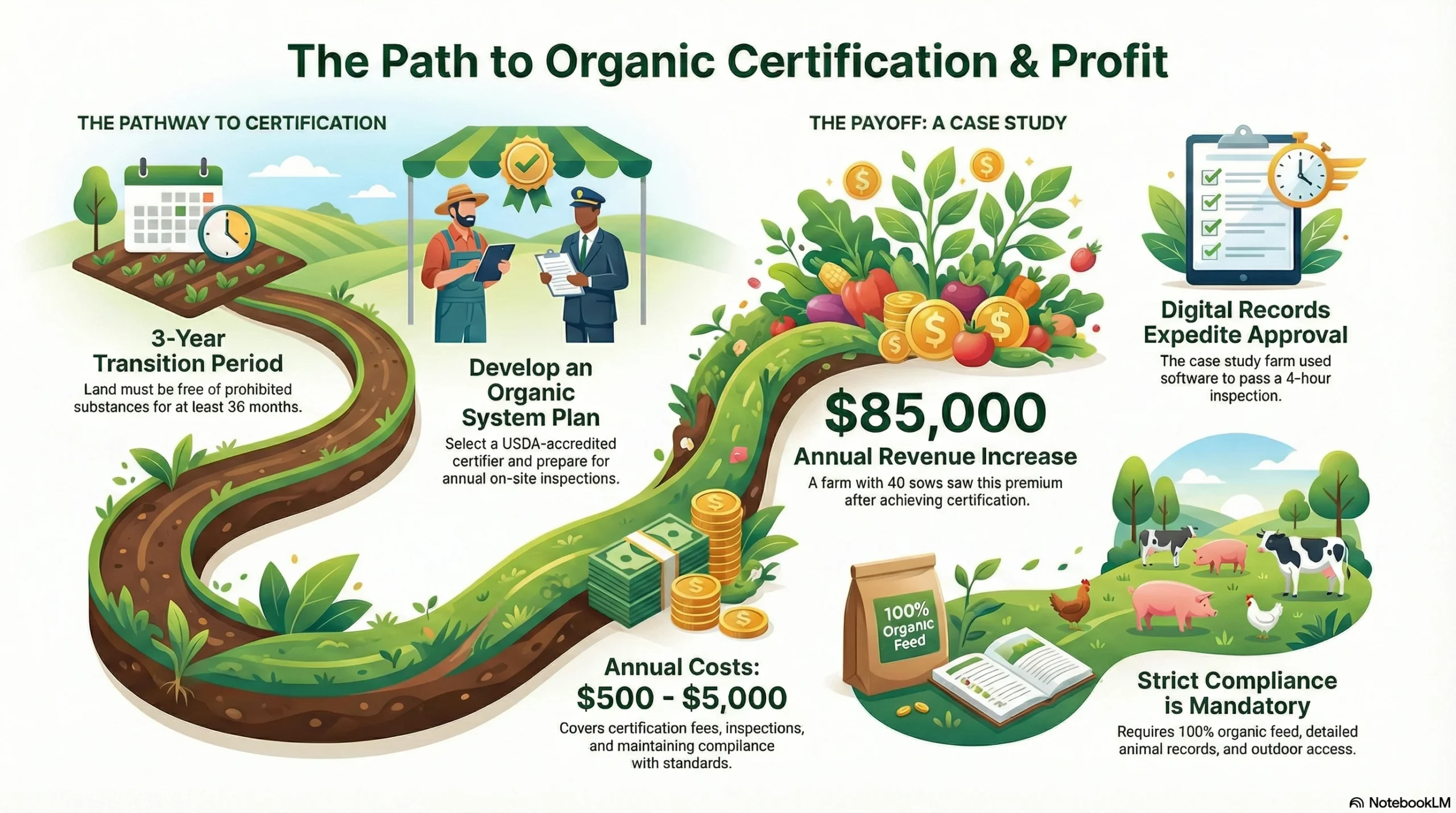
Land must be free from prohibited substances for 36 months. Animals can achieve organic status more quickly if born and raised under organic management. Key compliance requires 100% certified organic feed documentation, detailed animal records (ID, movements, treatments), and proof of outdoor access.
Case Study: Family Heritage Farm in Indiana achieved certification in 28 months using digital management software from day one. Their inspection took just four hours with organized documentation. Total costs: $1,200 annually for 40 sows. Premium revenue increase: ~$85,000 annually.
10. Cost Analysis and ROI
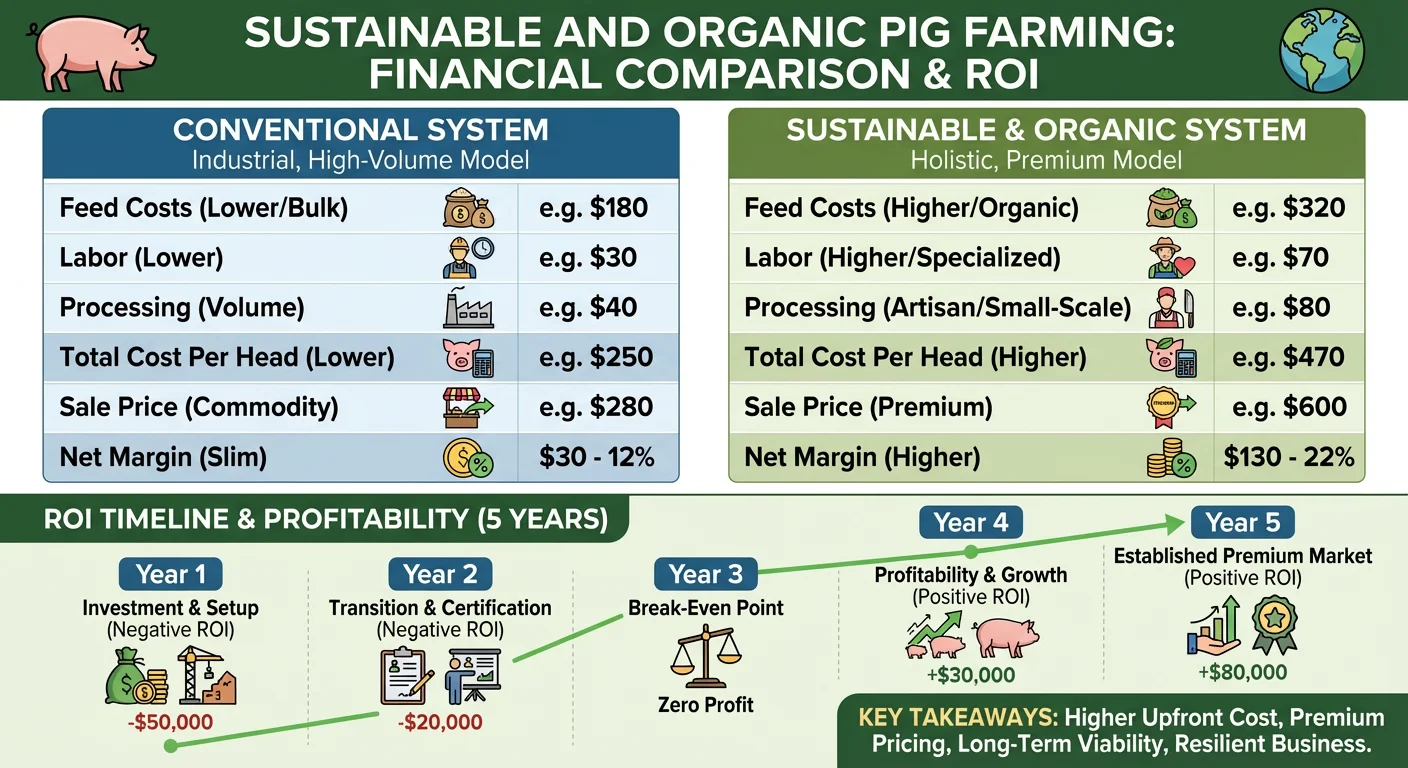
Sustainable operations require 20-40% higher operating costs, offset by 40-100% premium pricing. Typical organic market hog costs $225-280 per head vs $160-190 conventional, with sale prices of $350-450 vs $180-220. Net margins of 15-25% are achievable with established markets.
Feed represents 60-70% of costs. Labor typically runs 15-20%. Infrastructure costs 50-70% less with hoop barns versus conventional confinement. Initial investment for a 50-sow farrow-to-finish: $150,000-300,000 for sustainable systems vs $400,000-600,000 conventional.
| Cost Category | Sustainable/Organic | Conventional |
| Feed (wean to finish) | $165-200 | $100-130 |
| Labor | $15-25 | $8-12 |
| Processing (custom) | $80-120 | $40-60 |
| Total cost per head | $321-435 | $200-277 |
| Sale price | $350-500 | $180-240 |
| Net margin | 15-25% | 3-8% |
ROI Timeline: Year 1-2 investment phase with minimal returns; Year 3-4 break-even to modest profit as certification achieved; Year 5+ full profitability with established customer base.
For a detailed breakdown of cost structures, break‑even prices, and 2026 margin scenarios across different U.S. production models, see our companion guide Pig Farming Economics and Profitability: Guide for U.S. Producers in 2026.
Producers marketing sustainable or organic pork into U.S. retail or export channels also operate inside a strict regulatory environment that governs grading, labeling, welfare, and export eligibility. For a full 2026 overview of these rules and how they shape market access, see U.S. Pork Market and Regulations: The Complete Guide for Producers, Processors & Exporters.
11. Marketing and Premium Product Strategies
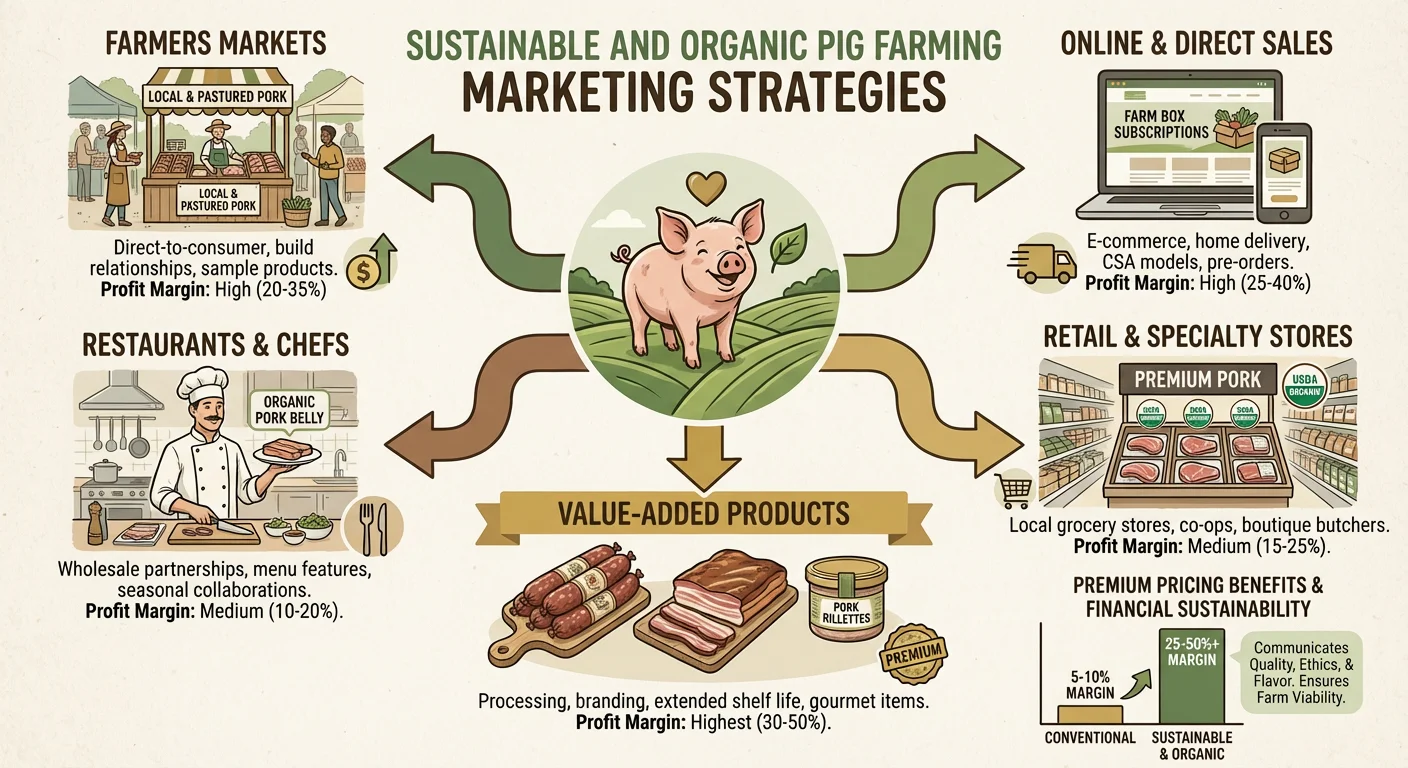
Successful marketing combines multiple channels: farmers markets, direct-to-consumer, restaurant partnerships, and retail accounts. Premium positioning emphasizes farm story, animal welfare, environmental benefits, and superior taste. Direct sales capture 60-80% of retail value versus 15-25% through wholesale.
Farmers markets provide direct customer contact and retail pricing (40-60% margins). Farm store/online sales offer convenience (45-65% margins). Restaurant partnerships provide consistent volume at 20-40% below retail. Value-added products (bacon, sausages) achieve up to 200% markup over fresh cuts.
Case Study: Sunrise Pastures in Vermont markets 400 pigs through five channels: 30% farmers markets ($420/pig), 25% online ($380/pig), 20% restaurants ($320/pig), 15% retail ($280/pig), 10% whole/half pigs ($360/pig). This diversification provided resilience when restaurants closed during COVID.
- Invest in professional branding and photography
- Build email list and communicate regularly
- Offer farm tours to create customer connection
12. Future Trends and Innovations
Sustainable pig farming continues evolving through genomic selection, precision agriculture tools, and carbon market integration. Emerging trends include carbon credits ($30-100/acre by 2027), blockchain traceability commanding 15% premiums, and regenerative agriculture certification.
Cell-cultured meat competition will require stronger story differentiation.
Within five years, affordable genomic testing (<$50/animal) will help select breeding stock for pasture adaptation and disease resistance. Climate-linked loans and insurance will increasingly favor farms documenting environmental performance.
Satellite-based pasture monitoring and individual animal tracking are emerging.
| Trend | Timeline | Action Now |
| Carbon credit expansion | 2025-2027 | Document practices, explore programs |
| Blockchain traceability | 2025-2027 | Improve record systems |
| Climate-linked finance | 2026-2028 | Build environmental data |
| Regenerative certification | 2025-2026 | Meet organic+ standards |
Frequently Asked Questions
1. Is organic pig farming profitable?
Yes. While costs run 20-40% higher, premium prices of 40-100% more than compensate. Net margins of 15-25% are realistic versus 3-8% for commodity production. Key success factors: secure markets before scaling, manage feed costs, maintain efficiency.
2. How long does organic certification take?
12-36 months transition period. Land requires 36 months without prohibited substances. Total costs: $500-5,000 annually. Start documentation early and approach certification as documenting practices you’re already implementing.
3. How do I prevent disease without antibiotics?
Prevention through biosecurity (closed herds, quarantine), stress reduction, optimal nutrition, environmental management, and immune support (vaccination, colostrum, probiotics, botanicals). Successful farms achieve <2% treatment rates.
4. What’s the environmental impact compared to conventional?
40-60% reduction across key metrics. Carbon footprint: 2.5-4.0 kg CO2e/kg meat vs 5.5-7.5 conventional. Some regenerative operations achieve carbon negativity through soil sequestration.
5. Can small farms compete?
Absolutely. Direct marketing captures retail margins. Customer relationships build loyalty. Quality differentiation justifies premiums. Many small operations achieve higher per-pig profitability than larger farms.
6. What technology investments make sense?
Highest ROI: water infrastructure (saves 8+ hours weekly), quality fencing, herd management software ($200-600/year), environmental sensors. Prioritize infrastructure over gadgets; target 3-5 year payback.
Conclusion
Sustainable and organic pig farming represents a comprehensive approach benefiting farmers, animals, consumers, and the environment. The investments you make in genetics, infrastructure, soil health, and market relationships compound over time—farms typically reach full profitability within 3-5 years while building appreciating assets.
The environmental benefits are measurable: reduced carbon footprints, improved water quality, enhanced biodiversity, and regenerated soils. As carbon markets mature and regulations tighten, these benefits will translate into direct financial returns.
Begin with clear goals, start with manageable scale, document everything, and connect with other sustainable farmers. The market is ready for more responsibly-raised pork than current supply provides. Your journey is both a business venture and a contribution to transforming our food system.
About This Guide: Developed from seven years of hands-on organic pig farming experience and consultation with sustainable operations across North America and Europe.