Pig Breeds in the USA: Complete Guide to Selection, Characteristics & Purpose (2026)
TL;DR: Quick Summary
Are you seeking the ideal pig breed for your farm? Here’s what you need to know at a glance:
- Major commercial breeds: Yorkshire, Landrace, Duroc, and Hampshire dominate U.S. production for their rapid growth and feed efficiency.
- Best heritage breeds: Berkshire, Tamworth, and Gloucestershire Old Spot offer superior meat quality and fetch premium prices.
- Small farm favourites: Berkshire, Duroc, and Hampshire balance a manageable size with excellent meat quality.
- Backyard beginners: Start with docile breeds like Berkshire or Gloucestershire Old Spot.
- Key selection factors: Consider your market goals, available space, climate, and experience level.
Introduction: Why Breed Selection Matters
Choosing the right pig breed is one of the most critical decisions you’ll make as a farmer. The diversity of pig breeds in the USA offers tremendous opportunities for small-scale, backyard, and commercial producers alike. Whether you’re raising pigs for the first time or expanding an established operation, understanding breed characteristics directly impacts your profitability, workload, and success.
This comprehensive guide covers everything you need to know about pig breed selection in 2026. We’ll explore heritage and commercial breeds, compare key traits, discuss suitability by farm type, and provide actionable tips to help you make informed decisions. By the end, you’ll have a clear roadmap for choosing breeds that align with your goals and resources.
For detailed information on housing requirements once you’ve selected your breed, see our Pig Housing and Farm Infrastructure Guide. You’ll also want to understand the U.S. pork market and regulations to navigate industry requirements effectively.
Overview of Pig Breeds in the USA
The United States is home to dozens of pig breeds, ranging from high-efficiency commercial lines to rare heritage varieties. Understanding these categories helps you narrow your options based on your farming goals.
Commercial Pig Breeds in the USA
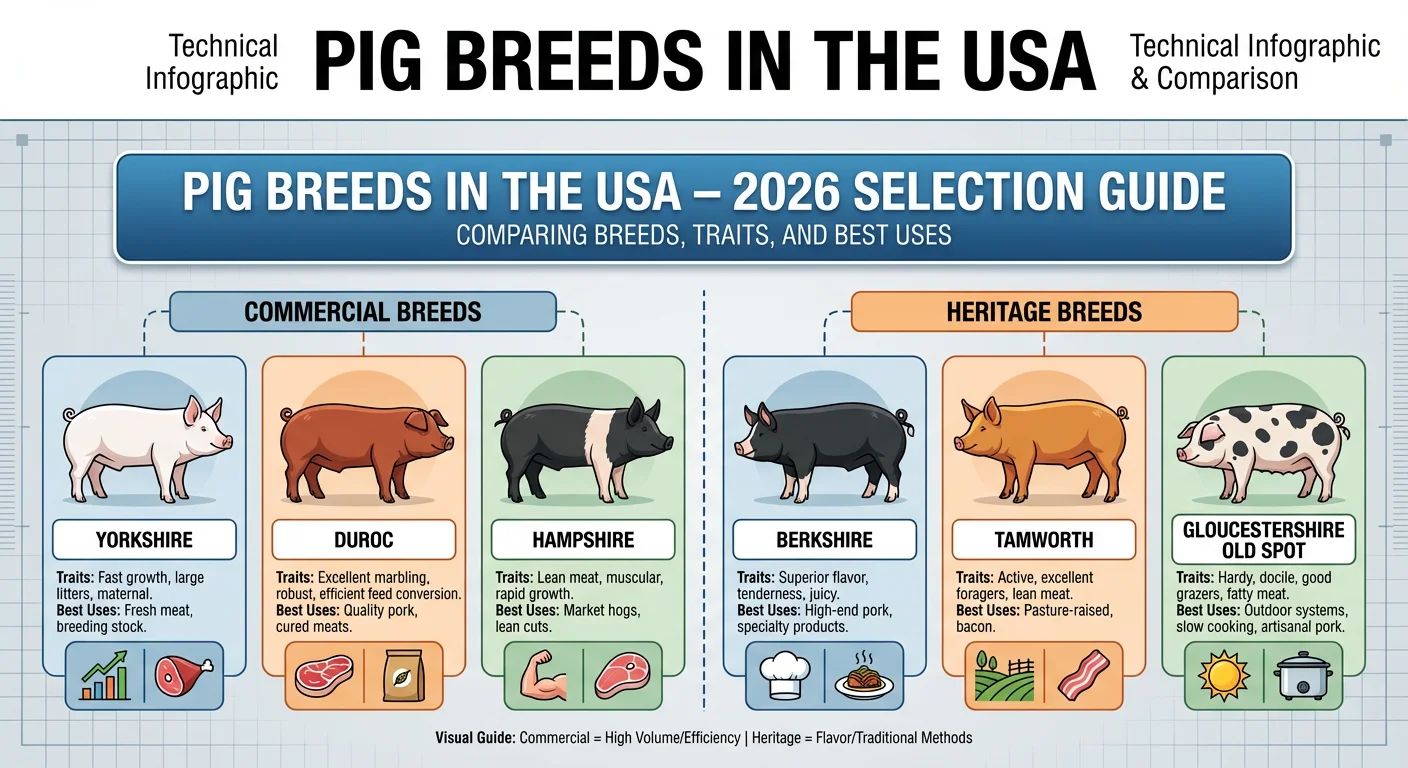
What pig breeds are common in the USA? Commercial operations predominantly rely on Yorkshire, Landrace, Duroc, and Hampshire breeds. These breeds have been selectively developed for maximum efficiency in confined feeding systems.
Commercial breeds excel in growth rate, feed conversion, and carcass yield. According to the National Pork Board, these breeds reach a market weight of 280 pounds in approximately 5-6 months. They’re ideally suited for intensive production systems where efficiency drives profitability. For a deeper understanding of large-scale operations, explore our Commercial Pig Farming USA guide.
Heritage Pig Breeds in the USA
Heritage breeds represent America’s agricultural legacy. The Livestock Conservancy monitors conservation status and promotes breed preservation. Heritage varieties like Berkshire, Tamworth, Red Wattle, and Gloucestershire Old Spot offer exceptional meat quality, foraging ability, and genetic diversity.
These breeds typically grow slower than commercial types but command premium prices at farmers’ markets and through direct sales. Heritage pork often features superior marbling, deeper colour, and more complex flavour profiles.
Rare and Specialty Breeds
Several pig breeds face critical conservation status. Mulefoot, Ossabaw Island, and Choctaw pigs represent unique genetic resources. While these breeds are not mainstream production choices, they offer valuable traits for niche operations and conservation breeding programs.
Breed Characteristics: Size, Growth, and Temperament
Understanding breed characteristics helps you match pig breeds to your farm’s capabilities and market goals. Below, we examine key traits that differentiate popular breeds.
Pig Breed Comparison Chart
The following comparison table (formatted as a Pig Breed Comparison Chart PDF-ready reference) provides at-a-glance information for breed selection:
| Breed | Mature Weight | Growth Rate | Litter Size | Temperament | Feed Efficiency | Primary Use |
| Yorkshire | 500-700 lbs | Excellent | 10-13 | Docile | Excellent | Commercial |
| Landrace | 500-700 lbs | Excellent | 11-14 | Docile | Excellent | Commercial |
| Duroc | 500-750 lbs | Excellent | 9-11 | Active | Excellent | Commercial/Quality |
| Hampshire | 500-650 lbs | Very Good | 8-10 | Active | Very Good | Commercial/Lean |
| Berkshire | 450-600 lbs | Moderate | 8-10 | Very Docile | Good | Premium/Heritage |
| Tamworth | 400-600 lbs | Moderate | 6-10 | Active/Hardy | Moderate | Pasture/Heritage |
| GOS* | 400-600 lbs | Slow-Moder | 8-12 | Very Docile | Moderate | Pasture/Heritage |
*GOS = Gloucestershire Old Spot
Understanding Key Trait Differences
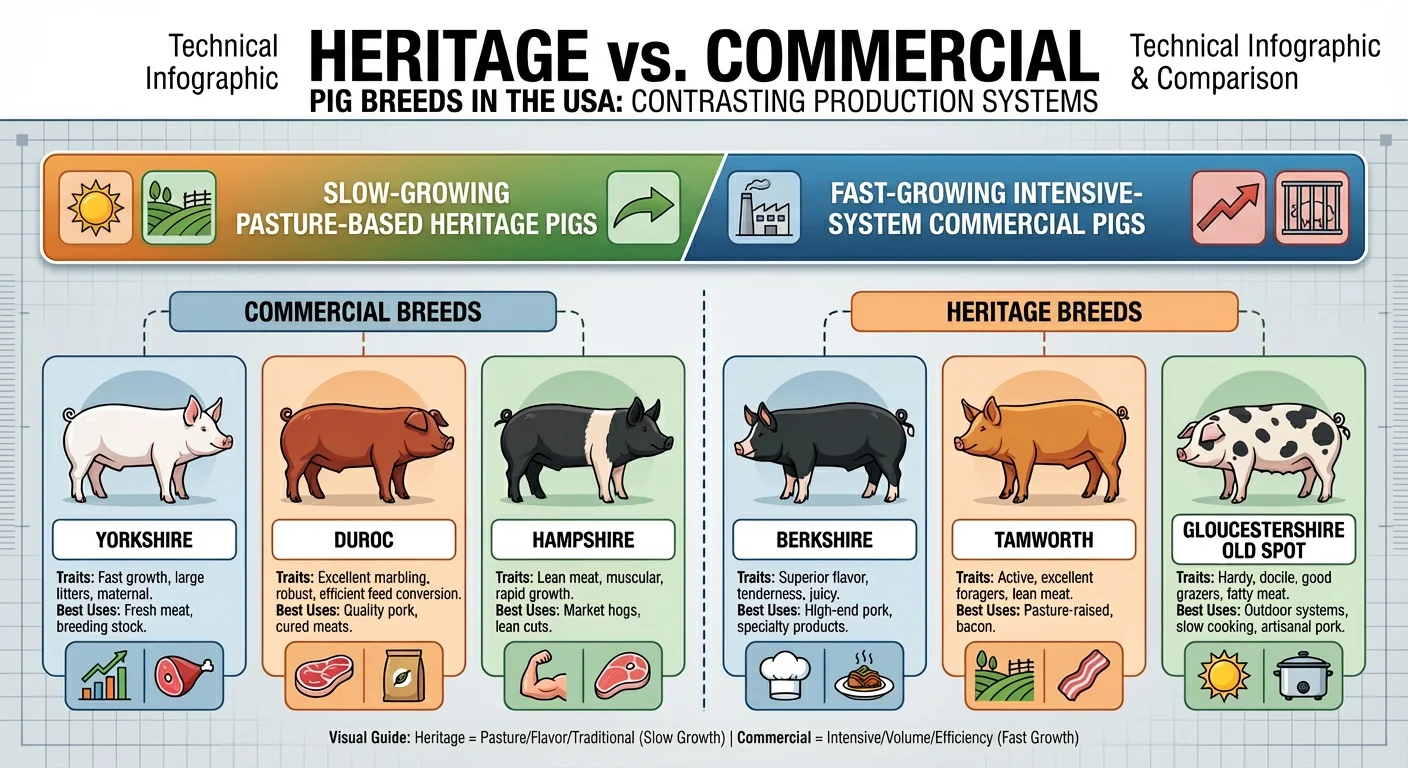
Size and Growth Rate: Commercial breeds typically reach market weight 2-4 weeks faster than heritage breeds. Yorkshire and Landrace pigs can gain 2+ pounds daily under optimal conditions. Heritage breeds grow slower, but they often produce meat with superior texture and flavour.
Feed Efficiency: Feed represents 60-70% of production costs. Commercial breeds convert 2.5–3 pounds of feed per pound gained. Heritage breeds may require 3.5–4 pounds. However, heritage breeds excel at using pasture and alternative feeds, potentially reducing overall costs. For detailed feeding strategies, consult our Pig Nutrition and Feeding Guide.
Temperament: Docile breeds like Berkshire and Gloucestershire Old Spot are ideal for beginners and small operations. Active breeds like Duroc and Hampshire require more experienced handling and secure fencing.
Meat Quality: The American Berkshire Association certifies Berkshire pork for its exceptional marbling and tenderness. Similarly, Duroc is known for excellent intramuscular fat and dark red meat colouring.
Breed-Specific Health Considerations
Different breeds have varying susceptibility to common swine diseases. White breeds (Yorkshire, Landrace) are more prone to sunburn and skin issues. Some Hampshire lines carry the stress gene that affects meat quality. Heritage breeds generally demonstrate stronger disease resistance due to genetic diversity.
Regardless of breed, implementing proper biosecurity and vaccination protocols is essential. Our comprehensive Pig Health and Disease Management guide covers prevention strategies, common diseases, and treatment options for all pig breeds.
Best Pig Breeds for Different Farm Types
Your farm’s scale, infrastructure, and management system significantly influence breed selection. Here’s how to match breeds to your operation.
Best Pig Breeds for Small Farms in the USA
Small-scale producers typically raise 10–50 pigs annually and often sell them directly to consumers. Ideal breeds combine manageable size, excellent temperament, and premium meat quality.
- Berkshire: Exceptional meat quality, calm temperament, strong brand recognition
- Duroc: Excellent growth and meat quality, adaptable to various systems
- Hampshire: Lean carcass, good mothering ability, efficient gains
These breeds work well in outdoor systems with access to pasture. Breed selection affects housing and infrastructure needs—some breeds require more robust fencing than others. See the Pig Housing and Farm Infrastructure Guide for specific requirements by breed.
Best Pigs for Backyard Farming
Backyard operations typically raise 2-10 pigs for personal consumption or limited sales. Docile temperament and moderate size are priorities.
Top recommendations:
- Gloucestershire Old Spot: Extremely docile, excellent forager, moderate growth
- Berkshire: Gentle disposition, premium pork quality, adaptable
- American Guinea Hog: Small size (150-300 lbs), very gentle, excellent for beginners
Beginners should start with heritage breeds known for calm temperament. Review our Small-Scale Pig Farming Guide for step-by-step startup advice.
Pasture-Based and Organic Systems
Pasture-raised systems require breeds that thrive outdoors, forage effectively, and tolerate variable weather conditions.
- Tamworth: Outstanding forager, hardy constitution, produces excellent bacon
- Red Wattle: Exceptional foraging ability, disease resistant, lean meat
- Large Black: Docile, excellent grazer, good mothering, dark pigmentation prevents sunburn
For organic certification requirements and pasture management practices, see our Sustainable and Organic Pig Farming Guide. The USDA National Organic Program provides official certification standards.
Commercial Production Systems
Large-scale commercial operations prioritise efficiency metrics: growth rate, feed conversion, and carcass quality. Understanding commercial pig farming in the USA is essential for producers scaling beyond small-farm operations.
- Yorkshire × Landrace (F1 females): industry-standard maternal line, large litters, excellent milk production
- Duroc (terminal sire): Outstanding growth, meat quality, efficient gains
- Hampshire (terminal sire): Exceptional lean meat yield, muscular conformation
Commercial producers often use three-way crossings for hybrid vigour. Our Pig Farming Economics Guide covers profitability analysis for different breed combinations.
Farm Type Selection Guide
| Farm Type | Recommended Breeds | Key Considerations | Annual Capacity |
| Backyard | GOS, Berkshire, Guinea Hog | Temperament, space limits | 2-10 pigs |
| Small Farm | Berkshire, Duroc, Hampshire | Direct sales, meat quality | 10-50 pigs |
| Pasture-Based | Tamworth, Red Wattle, Large Black | Foraging ability, hardiness | 20-100 pigs |
| Commercial | Yorkshire, Landrace, Duroc crosses | Efficiency, volume, costs | 500+ pigs |
Breeding Considerations and Reproduction
Successful pig farming requires understanding reproductive traits and breeding strategies. Your breed choice significantly impacts breeding program success.
Fertility and Litter Size
Landrace and Yorkshire sows consistently produce the largest litters (11-14 piglets). Hampshire and Berkshire typically farrow 8–10 piglets per litter, but they often demonstrate superior mothering instincts.
The National Swine Registry maintains performance records and genetic evaluations that help producers select high-performing breeding stock.
Mothering Ability
Strong maternal traits reduce piglet mortality and labour requirements. Heritage breeds often excel in natural mothering abilities, such as the Gloucestershire Old Spot, Hampshire, and Red Wattle.
- Excellent: Gloucestershire Old Spot, Hampshire, Red Wattle
- Good: Yorkshire, Landrace, Berkshire
- Variable: Duroc (requires evaluation of individual sows)
Crossbreeding Strategies
Crossbreeding combines desirable traits from multiple breeds while capturing hybrid vigour. Common approaches include:
Two-Way Cross: Berkshire × Yorkshire produces excellent meat quality with improved growth rates.
Three-Way Cross: Yorkshire × Landrace females bred to Duroc boars—the commercial industry standard.
Rotational Cross: Rotating between two or three breeds maintains hybrid vigour over generations.
For comprehensive breeding protocols and heat detection strategies, review our Pig Breeding and Reproduction Guide.
Popular Breeds: Detailed Pros and Cons
Below we examine the advantages and disadvantages of the most popular pig breeds in the USA, helping you weigh options for your specific situation.
Yorkshire (American Large White)
Pros: excellent growth rate, large litters, good mothering, adaptability to confinement, well-documented genetics, and strong industry support.
Cons: Susceptible to sunburn (white skin), less flavourful meat than heritage breeds, leg problems in some lines, requires a quality feed programme.
Landrace
Pros: Landrace pigs have the largest litters of any breed, produce excellent milk, have a docile temperament, and possess a long body that is ideal for bacon production.
Cons: They are prone to sunburn, some lines have weak pasterns (leg joints), they are susceptible to stress, and they require climate-controlled housing.
Duroc
Pros: Outstanding meat quality, excellent marbling, fast growth, hardy and adaptable, good for outdoor systems, disease resistant.
Cons: More aggressive temperament than white breeds, smaller litters, some lines prone to aggression, requires experienced handling.
Hampshire
Pros: leanest carcass of major breeds, excellent muscling, outstanding mothering ability, efficient gains, distinctive appearance.
Cons: Carrier of stress gene in some lines (test before purchasing), smaller litters, can be nervous, less marbling than Duro c.
Berkshire
Pros: World-renowned meat quality, excellent marbling, a very docile temperament, strong brand recognition, and commanding premium prices.
Cons: Slower growth than commercial breeds, smaller litters, higher purchase cost for registered stock, requires premium marketing.
Tamworth
Pros: The Tamworth pig has the best foraging ability, is exceptionally hardy, produces outstanding bacon, has a long snout ideal for rooting, and is resistant to sunburn.
Cons: Slow growth rate, smaller litters, active temperament requires secure fencing, and limited breeding stock availability.
Gloucestershire Old Spot
Pros: The Gloucestershire Old Spot is extremely docile and easy to handle, an excellent forager, has outstanding mothering ability, benefits from heritage premium pricing, and is great for beginners.
Cons: slowest growth of popular breeds, sunburn prone (white with spots), limited breeding stock, higher feed requirements.
Market and Niche Opportunities
Your breed choice should align with market opportunities. Different breeds access different price points and customer segments. Understanding the U.S. pork market and regulations helps you position your products effectively.
Heritage Breed Premiums
Heritage pork typically commands 30-100% premiums over commodity pork. Berkshire, Red Wattle, and Gloucestershire Old Spot lead the heritage market. Direct-to-consumer sales through farmers’ markets, CSAs, and online platforms maximise returns.
Restaurant partnerships offer another avenue for heritage producers. Chefs value consistent quality and provenance stories. Heritage Foods USA connects heritage producers with wholesale and retail markets.
Organic and Pasture-Raised Markets
Consumer demand for pasture-raised and organic pork continues growing. Breeds suited to outdoor production—Tamworth, Red Wattle, Large Black—thrive in these systems while commanding premium prices.
The USDA Agricultural Marketing Service tracks organic market trends and pricing data useful for business planning.
Commodity Markets
Commercial producers selling to packers focus on efficiency metrics. Breeds that maximise lean gains per pound of feed dominate: Yorkshire, Landrace, Duroc, and Hampshire crosses. Market timing and weight optimisation drive profitability in commodity systems. For detailed commercial strategies, visit our Commercial Pig Farming USA guide.
Breed Selection Tips for Beginners and Mixed Operations
Choosing your first pig breed can feel overwhelming. Follow these evidence-based recommendations to make confident decisions.
Start with Your End Goal
Define your market before selecting breeds. Premium direct sales favour heritage breeds, like Berkshire. Volume production requires commercial genetics. Mixed operations may raise Duroc pigs to enhance versatility across various markets.
Match Breeds to Your Infrastructure
Your existing facilities influence breed suitability. White breeds need shade protection. Active breeds require stronger fencing. Cold-climate operations benefit from heritage breeds with thicker fat coverage.
Before purchasing pigs, ensure your Pig Housing and Farm Infrastructure Guide requirements are met for your chosen breed.
Consider Your Experience Level
Beginners should prioritise docile breeds: Berkshire, Gloucestershire Old Spot, or Large Black. These breeds forgive handling mistakes and reduce stress for new farmers.
As experience grows, consider adding breeds with more challenging temperaments but superior production traits. Our Small-Scale Pig Farming Guide provides foundational management practices for new producers.
Prioritize Herd Health
Regardless of breed selection, maintaining herd health is paramount. Some breeds are more disease-resistant than others, but all require proper vaccination, biosecurity, and monitoring protocols. Our Pig Health and Disease Management guide provides essential health management strategies for every breed and operation size.
Source Quality Breeding Stock
Purchase from reputable breeders with health testing records. Request performance data when available. Visit farms to evaluate pig condition and temperament firsthand.
Breed registries provide breeder directories:
- National Swine Registry – Yorkshire, Landrace, Duroc, Hampshire
- American Berkshire Association – Certified Berkshire breeders
- Livestock Conservancy – Heritage and rare breed resources
Plan for Breeding or Finishing
Decide whether you’ll maintain breeding stock or purchase feeder pigs. Breeding requires more infrastructure, expertise, and long-term breed commitment. Finishing operations offer flexibility to change breeds with each batch.
Frequently Asked Questions about Pig Breeds in the USA
What is the most popular pig breed in the USA?
What is the best pig breed for beginners or small farms?
Which pig breed has the best meat quality and marbling?
What is the difference between heritage and commercial pig breeds?
How many piglets does a typical sow have per litter?
Conclusion: Making Your Breed Selection
Selecting the right pig breed is fundamental to your farming success. The diversity of pig breeds in the USA offers options for every operation, from backyard homesteads to large commercial farms.
Commercial breeds deliver maximum efficiency for volume production. Heritage breeds offer premium meat quality and niche market access. Many successful operations blend both approaches through strategic crossbreeding.
Start by matching breeds to your goals, infrastructure, and experience level. As you gain expertise, you can refine your genetic program to optimise production for a specific operation.
Next Steps
Continue building your pig farming knowledge with these related guides:
- Pig Housing and Farm Infrastructure Guide – Facility requirements by breed
- Pig Nutrition and Feeding Guide – Optimizing feed programs
- Pig Breeding and Reproduction Guide – Breeding program management
- Small-Scale Pig Farming Guide – Getting started essentials
- Pig Farming Economics Guide – Profitability analysis
- Sustainable and Organic Pig Farming Guide – Certification and practices
- Commercial Pig Farming USA – Large-scale production
- Pig Health and Disease Management – Health protocols
- U.S. Pork Market and Regulations – Industry standards
External Resources
For additional research and official guidance:
- National Pork Board – Industry resources and best practices
- USDA National Organic Program – Organic certification standards
- The Livestock Conservancy – Heritage breed conservation
- National Swine Registry – Breed registrations and genetics
- American Berkshire Association – Berkshire breed resources
- Heritage Foods USA – Heritage pork marketing
- USDA Agricultural Marketing Service – Market data and trends
—
© 2026 USAPigs.com – Your Complete Resource for Pig Farming in America
Last Updated: 2026

Our Fact Checking Process
We prioritize accuracy and integrity in our content. Here's how we maintain high standards:
- Expert Review: All articles are reviewed by subject matter experts.
- Source Validation: Information is backed by credible, up-to-date sources.
- Transparency: We clearly cite references and disclose potential conflicts.
Our Review Board
Our content is carefully reviewed by experienced professionals to ensure accuracy and relevance.
- Qualified Experts: Each article is assessed by specialists with field-specific knowledge.
- Up-to-date Insights: We incorporate the latest research, trends, and standards.
- Commitment to Quality: Reviewers ensure clarity, correctness, and completeness.
Look for the expert-reviewed label to read content you can trust.