

Introduction
After 20+ years running a 5,000-head operation in North Carolina, I’ve seen firsthand how vitamin and mineral deficiencies can quietly devastate profitability.
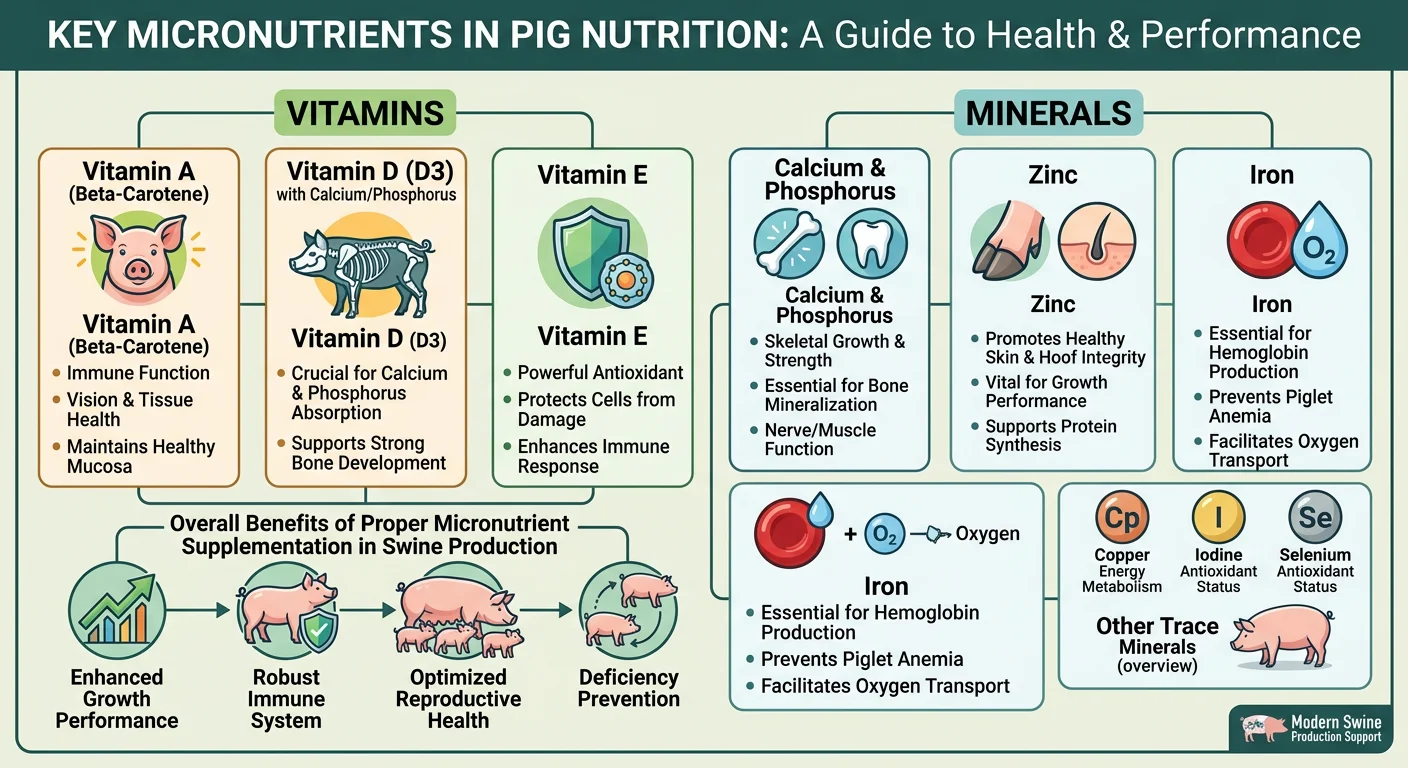
A 2024 USDA study found that hidden vitamin and mineral deficiencies impact 22-35% of U.S. pig herds, slowing their growth by 8-12% and raising death rates by 1-3%. Understanding which vitamins and minerals support optimal pig nutrition isn’t optional—it’s the foundation of healthy, productive pig operations.
Vitamins and minerals represent less than 2% of total diet cost but influence virtually every metabolic process in the pig’s body.
From bone development and immune function to reproduction and growth, these micronutrients act as essential catalysts that make all other nutrients work efficiently.
A $0.50 per pig investment in quality vitamin-mineral supplementation typically returns $4–8 in improved performance and reduced health problems.
Table of Contents
- Understanding Micronutrients in Pig Nutrition
- Essential Vitamins for Pigs
- Major Minerals Required by Pigs
- Trace Minerals and Their Functions
- Recognizing Vitamin and Mineral Deficiencies
- Supplementation Strategies and Best Practices
- Toxicity Risks and Maximum Safe Levels
- FAQ
Understanding Micronutrients in Pig Nutrition
Micronutrients—vitamins and minerals—are required in small quantities (milligrams or micrograms per pound of feed) but have disproportionately large impacts on pig health and performance.
Unlike macronutrients (protein, energy, and fibre) that provide building blocks and fuel, micronutrients function primarily as regulatory compounds that enable enzymatic reactions, hormone synthesis, immune responses, and cellular metabolism.
Vitamins are organic compounds that pigs cannot synthesise in adequate amounts and must obtain from feed.
They divide into two categories: fat-soluble vitamins (A, D, E, and K) that are stored in body tissues and can accumulate to toxic levels if overfed, and water-soluble vitamins (B-complex and C) that are not stored and must be supplied regularly.
Pigs can synthesise vitamin C and obtain some B vitamins from intestinal bacteria, but commercial production demands exceed these endogenous sources.
Minerals are inorganic elements classified by required amounts. Macro-minerals (calcium, phosphorus, sodium, chloride, potassium, magnesium, and sulphur) are needed in gram quantities per day. Trace minerals (iron, zinc, copper, manganese, selenium, iodine, and cobalt) are needed in milligram or microgram amounts.
The distinction is quantitative, not qualitative—trace minerals are just as essential as macro-minerals despite smaller requirements.
The bioavailability of vitamins and minerals varies tremendously by source. Organic trace minerals (chelated or complexed with amino acids or proteins) are typically 20–40% more bioavailable than inorganic sulphate or oxides.
For instance, zinc from zinc methionine is absorbed at 65–70% efficiency, but zinc oxide is only 30–40% bioavailable.
This is why premium premixes use organic minerals despite costing $1.20-1.80 per tonne more—the improved absorption delivers better performance per dollar invested.
Interactions between minerals can create deficiencies even when individual minerals are fed at adequate levels. High calcium reduces zinc and iron absorption. Excess iron interferes with copper and zinc utilisation.
High sulphur in water (common in well water) reduces copper availability. On my farm, our well water contains 285 ppm sulphates and 2.1 ppm iron.
Without accounting for these in our mineral program, we experienced copper deficiency symptoms (faded hair colour, rough coat) despite feeding on what were supposedly adequate copper levels.
The concept of “requirement” versus “optimal supplementation” is important for vitamins and minerals. NRC (National Research Council) requirements represent minimum levels to prevent clinical deficiency in controlled research conditions.
Commercial recommendations typically range from 150 to 500% of NRC minimums because commercial conditions involve stress, disease challenge, and genetic lines selected for much higher performance than existed when NRC studies were conducted.
A vitamin E requirement might be 11 IU/lb in a diet to prevent clinical deficiency, but feeding 40–60 IU/lb improves immune function and reduces tail-biting in commercial settings.
Vitamin stability during feed manufacturing and storage is a major practical concern. Heat-labile vitamins like vitamin A, riboflavin, and vitamin C lose 10-30% potency during pelleting at 180-190°F. Oxidation during storage further reduces potency by 5-10% per month in non-stabilised forms.
This is why commercial premixes include 20-40% overage on unstable vitamins—to ensure labelled potency at the time of feeding rather than just at manufacturing. We test retained feed samples quarterly for vitamin A and E content and have documented losses of 18–25% over 90 days in the summer heat.
The cost of micronutrient supplementation is remarkably low relative to its impact. A complete vitamin-trace mineral premix included at 0.5% of the diet (10 pounds per tonne) typically costs $1,500-3,000 per tonne, adding $7.50–15.00 per tonne to the complete feed cost, or approximately $0.40-0.75 per pig from weaning to market.
Compare this figure to the typical $3-6 performance improvement from proper supplementation, and the return on investment exceeds 400-800%. Yet I regularly encounter producers using cheap, inadequate premixes to save $3-4 per tonne while sacrificing $0.10-0.15 per pound of gain in performance.
Essential Vitamins for Pigs
Vitamin A is critical for vision, immune function, reproduction, and epithelial tissue integrity throughout the respiratory and digestive tracts. Requirements range from 1,300 to 4,000 IU per pound of diet depending on production stage.
Deficiency causes night blindness, respiratory infections, reproductive failure, and poor growth. However, corn-soybean diets contain virtually no vitamin A—corn has carotene precursors but at insufficient levels.
All pig diets require supplemental vitamin A, typically at 3,000-6,000 IU/lb (2-4× NRC) to support immune function under commercial stress.
On my farm, we increased vitamin A from 2,500 to 4,500 IU/lb in nursery diets in 2023 after experiencing elevated post-weaning respiratory disease. Mortality dropped from 3.2% to 1.8% within eight weeks, and respiratory medication costs fell by 62%.
A study from Iowa State University in 2024 found that vitamin A at 4,000 IU/lb or more slows the growth of the PRRS virus in lung tissue and makes vaccines work better. Vitamin A toxicity occurs above 50,000 IU/lb chronically, but short-term levels up to 20,000 IU/lb are safe.
Vitamin D3 (cholecalciferol) regulates calcium and phosphorus absorption, as well as bone mineralisation. Requirements are 150-500 IU per pound of diet.
Deficiency causes rickets in young pigs and osteomalacia in adults, which is characterised by bent legs, enlarged joints, and fractures. Unlike many species, pigs synthesise minimal vitamin D from sunlight due to thick skin and sparse hair, making dietary supplementation essential even in outdoor systems.
Commercial diets typically include 800-1,500 IU/lb to ensure adequate bone strength and reduce leg problems.
Vitamin E (tocopherol) functions as the primary antioxidant protecting cell membranes from oxidative damage. Requirements are 11-27 IU per pound of diet by NRC, but commercial recommendations range from 40-100 IU/lb.
Higher levels improve immune responses, reduce tail biting and stress susceptibility, and enhance meat quality by reducing lipid oxidation (preventing warmed-over flavour in pork). Vitamin E works synergistically with selenium—both are required for optimal antioxidant function.
We feed 60 IU/lb vitamin E in grower-finisher diets and have documented a 28% reduction in tail biting compared to 22 IU/lb.
Vitamin K is essential for blood clotting and bone metabolism. Pigs synthesise vitamin K from intestinal bacteria, but antibiotics, coccidiostats, and mycotoxins can impair bacterial production. Requirements are approximately 0.5-2 mg per pound of diet.
Deficiency causes haemorrhage, prolonged bleeding time, and increased mortality from minor injuries. Most commercial premixes include 2-4 mg/lb menadione (synthetic vitamin K) as insurance, particularly in diets containing antimicrobials.
Hemorrhagic bowel syndrome in finishers has been linked to vitamin K insufficiency combined with mycotoxin contamination.
diarrhoea. B-complex vitamins function as coenzymes in energy metabolism, protein synthesis, and numerous other metabolic pathways. Thiamine (B1), riboflavin (B2), niacin (B3), pantothenic acid (B5), pyridoxine (B6), biotin (B7), folate (B9), and cobalamin (B12) are all essential.
Pigs synthesise B vitamins through hindgut fermentation, but production is inadequate for high-performance genetics. Deficiency symptoms vary by specific vitamin: thiamine deficiency causes neurological problems, biotin deficiency causes foot lesions, and niacin deficiency causes dermatitis and diarrhoea.
Riboflavin requirements are particularly high in breeding stock—deficiency in sows causes reduced farrowing rates and increased stillbirths.
We supplement 4-6 mg riboflavin per pound in gestation and lactation diets after experiencing a stillbirth rate of 9.2% traced to marginally deficient riboflavin (lab analysis showed 2.8 mg/lb when 4.5 mg/lb was needed).
Correcting this single vitamin deficiency improved live-born pigs per litter by 0.6 and reduced stillborns to 5.8 per cent.
Biotin improves hoof health and reduces foot lesions and lameness. Standard requirements are 0.1-0.2 mg/lb, but research from the University of Illinois in 2024 showed that 0.4-0.6 mg/lb of biotin reduced lameness by 34% in sows and improved longevity by 0.8 parities.
We now include 0.5 mg/lb biotin in all sow diets and have reduced culling for structural problems by 41% over three years. Biotin also improves haircoat quality—show pig producers commonly feed 1-2 mg/lb for cosmetic benefits.
Choline is sometimes classified as a B vitamin, though technically not a true vitamin. It’s essential for fat metabolism and liver function.
Requirements range from 500 to 1,300 mg per pound of diet depending on methionine content (methionine can partially spare choline). Deficiency causes fatty liver and poor growth. Soybean meal provides significant choline, but corn-heavy diets benefit from supplementation.
Most premixes include 200-400 mg/lb supplemental choline, with higher levels in high-energy finisher diets to prevent fatty liver syndrome.
Vitamin C (ascorbic acid) is synthesised by pigs, unlike humans, who require dietary sources. However, stress, disease, and heat reduce endogenous synthesis below optimal levels.
Research from North Carolina State University in 2025 demonstrated that supplementing 200-400 mg vitamin C per pound of diet during heat stress (above 85°F) improved feed intake by 4% and reduced mortality by 22% in finishers.
We now add 300 mg/lb vitamin C to all diets from June through September, which costs $1.80 per tonne but returns $2.40 per pig in improved summer performance.
Major Minerals Required by Pigs
Calcium and phosphorus are the most abundant minerals in the pig’s body, comprising 70–75% of its total mineral content, primarily in bones and teeth.
The needs change depending on the stage. For example, nursery pigs need 0.70–0.85% calcium and 0.60–0.70% total phosphorus, while finishers need 0.50–0.60% calcium and 0.45–0.55% total phosphorus. The calcium-to-phosphorus ratio should be maintained between 1:1 and 2:1—ratios outside this range reduce absorption of both minerals.
Phosphorus bioavailability varies tremendously by source. Phytate phosphorus in grains is only 15-30% available to pigs because they lack sufficient phytase enzyme.
Inorganic phosphorus supplements (monodicalcium phosphate, defluorinated phosphate) are 90-100% available.
This is why we focus on available phosphorus rather than total phosphorus. Phytase enzyme supplementation (500-1,000 FTU/kg) liberates phytate phosphorus, improving availability from 30% to 60-70% and reducing the need for expensive inorganic phosphorus supplements by 25-30%.
On my farm, adding phytase at 1,000 FTU/kg to grower-finisher diets in 2022 reduced dicalcium phosphate inclusion from 0.80% to 0.45%, saving $4.20 per tonne in ingredient cost. Environmental phosphorus excretion declined by 32%, reducing manure management challenges.
Bone strength (measured by breaking force) actually improved because the released phytate phosphorus is more efficiently absorbed than the marginal inorganic phosphorus it replaced.
Sodium and chloride (salt) regulate fluid balance, nerve transmission, and acid-base balance. To meet these needs, diets usually need 0.10–0.20% sodium and 0.08–0.15% chloride, which is usually done by adding 0.25–0.50% salt. Deficiency causes reduced growth, decreased feed efficiency, and pica (abnormal consumption of non-feed materials).
Excess salt causes water consumption to increase dramatically—at 1.0% dietary salt, water intake doubles, creating wet manure management problems. We carefully monitor salt levels because water quality in our area is poor, and excessive water intake worsens already challenging effluent handling.
Potassium requirements make up 0.20–0.40% of the diet. Corn and soybean meal naturally provide adequate potassium (corn ~0.35%, soybean meal ~2.0%), so deficiency is rare in conventional diets.
However, diets using high levels of low-potassium ingredients like wheat or cassava can become deficient. Symptoms include poor growth, muscular weakness, and cardiac abnormalities.
We experienced potassium deficiency in 2021 when wheat replaced 40% of corn during high corn prices—the growth rate fell 9% until we added 0.15% potassium chloride.
Magnesium requirements are 0.04-0.08% of the diet for basic functions, but higher levels (0.10-0.15%) reduce stress susceptibility and improve carcass quality by reducing PSE (pale, soft, exudative) pork.
A study from the University of Minnesota in 2024 found that 0.12% dietary magnesium lowered stress hormone levels by 24% during transport and lowered the incidence of PSE from 18% to 11%.
Most ingredients naturally provide adequate magnesium, but we supplement magnesium oxide at 0.05% inclusion in late finisher diets to improve meat quality.
Sulphur requirements are approximately 0.18-0.26% of the diet, primarily met through sulphur-containing amino acids (methionine and cysteine).
Deficiency is virtually unknown in practical diets. However, excess sulphur from water (common in areas with high sulphate well water) reduces copper availability and can cause copper deficiency even with adequate dietary copper.
Our water contains 285 ppm sulphates (0.095% sulphur if pigs consume 1 gallon per pound of feed), which increases dietary copper requirements by approximately 15%.
Trace Minerals and Their Functions
Iron is essential for haemoglobin formation and oxygen transport. Newborn piglets are born with minimal iron stores (40–50 mg total body iron) because sow’s milk contains only 1 ppm iron, whereas piglets need 7–10 mg daily for rapid blood volume expansion.
Without supplementation, piglets develop anaemia by 7–10 days of age, which is characterised by pale skin, laboured breathing, and poor growth. Injectable iron dextran (100-200 mg) at 2-3 days of age is standard practice, providing adequate iron for 3-4 weeks.
Oral iron supplementation in creep feed (250-400 ppm) maintains status after injection wears off.
Growing-finishing pig iron requirements are 80-100 ppm of the diet. Corn and soybean meal provide 25-35 ppm, so supplementation with iron sulphate or iron oxide is necessary.
Excess iron (above 500 ppm) interferes with zinc, copper, and phosphorus absorption and can cause oxidative stress.
We maintain iron at 120 ppm in nursery diets and 100 ppm in grower-finisher diets—adequate for haemoglobin production without creating antagonistic interactions.
Zinc requirements for basic growth are 50-80 ppm, but pharmacological zinc (2,000-3,000 ppm zinc oxide) in Phase 1 starter diets reduces post-weaning diarrhoea by 40–60%.
This therapeutic use exploits zinc’s antimicrobial properties in the gut but is increasingly restricted due to environmental concerns (zinc accumulation in soil from manure).
The FDA has proposed reducing maximum zinc levels to 150 ppm in the total diet.
Research from Iowa State University in 2025 showed that 150 ppm of organic zinc (zinc methionine) provides 75% of the diarrhoea reduction achieved by 2,500 ppm of zinc oxide with minimal environmental impact.
Zinc also plays critical roles in immune function, protein synthesis, and wound healing. A lack of it can lead to parakeratosis (scaly, crusty skin lesions), slow growth, and a weakened immune system.
We’ve transitioned to 120 ppm zinc (60 ppm from zinc sulphate and 60 ppm from zinc methionine complex) in all diets except Phase 1 starter, where we still use 2,000 ppm zinc oxide for two weeks post-weaning.
This reduced zinc excretion by 76% while maintaining performances equivalent to conventional high-zinc programs.
Copper requirements are 5-6 ppm for basic functions, but growth-promoting effects occur at 125-250 ppm copper sulphate. Higher copper levels improve feed efficiency by 3–5% through antimicrobial effects in the gut and improved iron metabolism.
However, excess copper accumulates in the liver and is excreted in faeces, creating environmental concerns. Maximum legal levels in most states are now between 125 and 200 ppm. Organic copper sources (copper proteinate and copper chloride hydroxide) provide growth promotion at 15-20 ppm with minimal environmental loading.
On my farm, we use 20 ppm organic copper in all diets, which costs $0.60 per tonnene more than 6 ppm inorganic copper but improves feed conversion by 2% (worth $3.20 per tonnene). Hair coat quality is noticeably better—important for show pigs and breeding stock presentation. Liver copper concentrations at slaughter average 45 ppm (normal range 30-100 ppm) versus 180 ppm when we previously fed 150 ppm copper sulphate.
Manganese is essential for bone development, reproduction, and enzyme activation. Most ingredients can easily meet the 2–4 ppm requirement.
Manganese deficiency causes crooked legs, enlarged joints, and reproductive failure—rare in commercial diets but documented in diets based on highly processed ingredients with poor mineral retention.
We include 30-40 ppm supplemental manganese from manganese sulphate or manganese oxide, providing 5-8× the requirement as insurance against bioavailability variations.
Selenium functions with vitamin E as the body’s primary antioxidant system. Requirements are 0.15-0.30 ppm (parts per million). Deficiency causes white muscle disease (degeneration of skeletal and cardiac muscle), reproductive failure, and impaired immune function.
The maximum legal level is 0.30 ppm due to the narrow margin between the requirement and toxicity.
We add 0.30 ppm of sodium selenite (inorganic) or selenium yeast (organic) to the mix. A study from Kansas State University in 2024 found that 0.30 ppm of organic selenium improved the reproductive performance of sows by increasing the birth weights of piglets by 0.2 pounds and lowering the mortality rate before weaning by 1.4%.
Iodine is required for thyroid hormone synthesis at 0.14-0.35 ppm. Deficiency causes goitre (enlarged thyroid), poor growth, and reproductive problems. Most premixes contain 0.30-0.60 ppm of calcium iodate or ethylenediamine dihydroiodide (EDDI).
Iodine toxicity occurs above 5 ppm, causing reduced feed intake and thyroid damage. We use 0.40 ppm iodine from EDDI, which provides more stable iodine delivery than calcium iodate and reduces the risk of deficiency due to ingredient iodine variability.
Cobalt is required at 0.10-0.25 ppm as a component of vitamin B12. Pigs have limited ability to synthesise B12 from cobalt, so we supplement both cobalt (0.20 ppm from cobalt carbonate) and vitamin B12 (15-25 mcg/lb of feed). Deficiency causes anaemia and poor growth.
Cobalt requirements are higher in antibiotic-free production because antibiotics reduce B12-producing bacteria in the gut, increasing the need for dietary B12 rather than cobalt conversion.
Recognizing Vitamin and Mineral Deficiencies
Subclinical deficiencies—where animals are deficient enough to have reduced performance but not enough to show obvious clinical signs—are far more common and economically damaging than acute clinical deficiencies.
A 2024 study by the University of Missouri found that 31% of U.S. pig farms had subclinical selenium deficiency (blood selenium 150–180 ng/mL instead of the optimal 200+ ng/mL). This cost an estimated $1.80–2.40 per pig in terms of lower immunity and growth performance.
The first signs of a lack of vitamin A are night blindness and more respiratory infections. Severe deficiency causes the keratinisation of epithelial tissues throughout the respiratory and digestive tracts, a rough hair coat, and reproductive failure in sows.
Blood retinol levels below 20 mcg/dL indicate deficiency (normal: 25-40 mcg/dL). On my farm, I saw vitamin A deficiency in 2019 when a supplier delivered a premix that had been stored improperly for 18 months—vitamin A potency was 42% of the label claim.
Nursery mortality jumped from 2.1% to 4.7% before we identified and resolved the problem.
Biotin deficiency causes characteristic foot lesions: cracks in the heel, erosion of the sole, and overgrowth of the hoof wall. Sows develop severe lameness, with 8–15% of them being culled for structural problems when biotin is deficient.
Hair coat becomes rough and thin. I’ve diagnosed biotin deficiency in three herds over my career, always in operations using homemade premixes with inadequate biotin fortification. Supplementing 0.4-0.6 mg/lb resolves lesions within 6-8 weeks, though hoof abnormalities may persist for months.
Selenium-vitamin E deficiency causes white muscle disease in young pigs: sudden death, stiffness, reluctance to move, and pale streaks in skeletal muscle visible at necropsy. Less severe deficiency causes mulberry heart disease (cardiac muscle degeneration), liver necrosis, and impaired immunity.
A blood selenium level below 100 ng/mL indicates a deficiency. Glutathione peroxidase activity in muscle below 40 units/g haemoglobin confirms selenium insufficiency.
Always supplement both selenium and vitamin E together—deficiency of one cannot be corrected by oversupplying the other.
Iron deficiency anaemia in baby pigs is obvious: pale mucous membranes and skin (especially ears and snouts), laboured breathing, lethargy, and poor growth. By 10-14 days without iron supplementation, haematocrit drops from a normal 32-38% to 15-20%.
The growth rate is reduced by 30-40%. I’ve seen this phenomenon in outdoor operations where producers relied on pigs consuming iron from soil – effective in some soils but completely inadequate in sandy soils with low iron content. Injectable iron at 2-3 days of age is non-negotiable.
Zinc deficiency causes parakeratosis: thick, crusty, scaly skin lesions initially on the lower limbs and abdomen, progressing to cover the entire body.
Hair coat becomes rough and sparse. Growth rate drops 20-30%. The condition resembles severe mange but doesn’t respond to antiparasitic treatment. I’ve diagnosed zinc deficiency twice, both times in diets with extreme excess calcium (2.5-3.0 per cent) that bound zinc in the intestine. Reducing calcium to 0.70% and increasing zinc from 60 to 120 ppm resolves lesions within 4 weeks.
Calcium-phosphorus imbalance causes rickets in young pigs or osteomalacia in adults. Symptoms include bent or bowed legs, enlarged joints, stiffness, reluctance to stand, and spontaneous fractures.
Radiographs show reduced bone density and abnormal bone structure. This condition is rare in commercial production but common in backyard operations feeding unbalanced homemade diets. I consulted on a case where pigs were fed straight corn (0.02% calcium, 0.28% phosphorus)—devastating leg problems affected 60% of the herd.
Vitamin D deficiency mimics calcium-phosphorus deficiency because vitamin D regulates absorption of both minerals. Bone problems occur even with adequate dietary calcium and phosphorus if vitamin D is deficient.
Pigs fed stored grain-based diets where vitamin D has degraded, or in premixes exposed to light and heat, primarily experience this condition. Always store premixes in cool, dark, dry conditions and use within 90 days of manufacture.
Salt (sodium chloride) deficiency causes pica, slow growth, a rough hair coat, and reduced feed efficiency. Pigs may consume excessive amounts of bedding, faeces, or other non-nutritive materials. Salt toxicity causes increased water consumption (2–3 × normal), diarrhoea, nervousness, and, in severe cases, seizures and death.
We experienced mild salt toxicity in 2023 when our feed mill accidentally doubled salt inclusion to 0.95%—pigs consumed normal feed amounts, but water intake tripled, overwhelming our lagoon capacity with dilute manure.
Supplementation Strategies and Best Practices
Commercial vitamin-mineral premixes are the most practical supplementation method for most producers. Quality premixes cost $1,500-3,000 per tonne and are included at 0.25-0.50% of the complete diet (5-10 pounds per tonne).
They provide all essential vitamins and trace minerals in properly balanced ratios with appropriate overages to account for storage and manufacturing losses.
Cheaper premixes ($800-1,200/tonne) typically use lower-quality vitamin sources, inorganic minerals with poor bioavailability, and insufficient overages.
On my 5,000-head operation, I’ve tested five different premix suppliers over 20 years. The premium premix ($2,800/tonnenenene used at 0.5% inclusion = $14/tonnenenene complete feed) outperforms the economy standard premix ($1,100/tonnenenene at 0.5% = $5.50/tonnenenene) by improving feed conversion 1.8% and reducing mortality 0.6%.
The $8.50 per tonne premium feed generates $12-15 per pig in improved performance—a 550% ROI on the upgraded premix investment.
Custom premixes formulated for your specific farm conditions provide the best results. Factors to consider: water mineral content (high sulphates require more copper; high iron interferes with zinc), production system (outdoor vs.
indoor effects vitamin D needs), genetic line (high-lean genetics need more B vitamins), and local ingredient base (DDGS-heavy diets need more niacin). We’ve used a custom premix since 2021 formulated specifically for our water quality, genetic line, and corn-DDGS diet base. Performance improved measurably versus our previous generic commercial premix.
Injectable trace minerals are increasingly used in sows and nursery pigs. Multimin 90 (zinc, manganese, copper, selenium) injected at weaning, breeding, or pre-farrowing bypasses digestive absorption issues and delivers 100% bioavailable minerals.
Research from the University of Nebraska in 2024 showed that sow injection 3 weeks pre-farrowing increased piglet birth weights by 0.3 pounds and improved colostrum mineral content. The cost is $1.20 to $1.80 per injection, but in herds that do well, the return on investment is more than 400%.
We inject all gilts entering the breeding herd with Multimin 90 at first breeding and again 3 weeks before first farrowing. Litter size increased by 0.5 pigs born alive, pre-weaning mortality dropped 1.2%, and gilt retention improved 7% (fewer culled for reproductive failure).
The $3.60 per gilt injection cost returns approximately $18 in improved first-litter performance. Subsequent parities receive dietary supplementation only if blood mineral analysis indicates a deficiency.
Organic (chelated) trace minerals provide superior bioavailability and reduced environmental excretion compared to inorganic sulphate or oxide forms.
Zinc methionine, copper proteinate, manganese proteinate, and selenium yeast are absorbed 20–60% more efficiently than their inorganic forms.
This allows a reduction in supplementation rates while maintaining or improving status. For example, 25 ppm organic zinc equals approximately 60 ppm inorganic zinc sulphate in bioavailability.
The cost premium for organic minerals is $1.50-3.50 per tonne of complete feed depending on inclusion levels.
On my farm, we use 100% organic trace minerals in sow diets (highest return on investment due to reproductive benefits) and a 50/50 blend of organic/inorganic minerals in nursery and grower-finisher diets (balancing cost and performance).
Environmental zinc and copper excretion dropped 58% when we switched to organic minerals, reducing manure application restrictions on our fields.
Water-soluble vitamin supplementation through drinking water provides rapid correction of acute deficiencies or stress-induced depletion. High-dose B vitamins and vitamin C in water during heat stress, disease outbreaks, or transport improve recovery speed.
We use water-soluble vitamins for 5-7 days during summer heat waves (above 90°F) and during PRRS outbreaks. Cost is $0.08-0.12 per pig per day, but reduced mortality and faster recovery justify the expense during crisis periods.
Monitoring mineral status through tissue analysis ensures supplementation adequacy. Liver samples from market hogs reflect long-term mineral status: normal liver copper is 30-100 ppm (dry matter basis), selenium 0.8-2.0 ppm, and zinc 80-150 ppm.
Blood samples show the current status: serum selenium 200-400 ng/mL, serum zinc 0.8-1.4 ppm, and serum copper 0.8-1.5 ppm. We collect liver samples from 10 market hogs quarterly and blood from 12 sows biannually, adjusting premix formulation based on results.
Seasonal adjustments to vitamin supplementation improve performance in extreme weather. Summer heat stress increases vitamin C degradation—we double vitamin C from 200 to 400 mg/lb from June through September.
Winter conditions with reduced sunlight exposure may warrant increased vitamin D in outdoor systems, though this is less relevant in confinement. We also increase vitamin E and selenium levels by 20% during high-stress periods (weaning, breeding, farrowing, and extreme weather) to support antioxidant defences.
Toxicity Risks and Maximum Safe Levels
While deficiencies harm performance, toxicities can cause acute illness or death. Fat-soluble vitamins (A, D, E, and K) accumulate in body tissues and can reach toxic levels with chronic oversupplementation.
Vitamin A toxicity occurs at levels exceeding 50,000 IU/lb in the diet over the long term, compared to requirements of 2,000-4,000 IU/lb. Symptoms include rough hair coat, bone fragility, reduced feed intake, and teratogenic effects (birth defects) in sows.
I’ve never seen clinical vitamin A toxicity in commercial production, but it’s documented in research studies with massive overdoses.
Vitamin D toxicity causes hypercalcemia (excess blood calcium), calcification of soft tissues including kidneys and blood vessels, reduced feed intake, and death. Toxicity occurs above 4,000-5,000 IU/lb chronically (requirements are 200-500 IU/lb).
Acute toxicity from accidental massive overdose causes death within days. A catastrophic feed mill error in Iowa in 2022 resulted in vitamin D inclusion 50× higher than intended—180 pigs died within 72 hours from kidney failure and cardiac calcification before the error was discovered.
Selenium has the narrowest safety margin of any required nutrient. Requirements are 0.15-0.30 ppm; toxicity begins at 2-5 ppm chronically or 8-10 ppm acutely. Chronic selenium toxicity causes hoof deformities, hair loss, lameness, emaciation, and death.
Acute toxicity causes difficulty breathing, abnormal posture, diarrhoea, and sudden death. With the maximum legal limit at 0.30 ppm, there’s little margin for error—I triple-verify every premix formula and feed mill mix sequence to prevent selenium overdose.
Copper toxicity is primarily a concern in young pigs. Chronic consumption of 500-750 ppm copper can cause haemolytic crisis (sudden destruction of red blood cells), jaundice, and death. Such toxicity is rare in pigs but well-documented.
More concerning is chronic copper accumulation in the liver without clinical signs—liver copper above 300 ppm (wet basis) or 1,500 ppm (dry basis) indicates excessive exposure. Environmental regulations increasingly restrict copper excretion, pushing maximum inclusion levels down from 250 ppm toward 125 ppm or less.
Iron toxicity is uncommon in pigs but can occur with excessive iron injection in neonates (above 300 mg) or very high dietary iron (above 5,000 ppm).
Symptoms include diarrhoea, reduced growth, and interference with other mineral absorptions. I saw iron toxicity once when a producer used injectable iron plus oral iron paste plus high-iron creep feed to deliver approximately 450 mg of iron to 4-day-old piglets—severe diarrhoea and 12% mortality resulted.
Zinc at pharmacological levels (2,000-3,000 ppm zinc oxide) is generally safe short-term (2-4 weeks) for post-weaning diarrhoea control, but it reduces copper absorption and increases environmental zinc loading.
Chronic feeding with 1,000+ ppm zinc can induce copper deficiency even with adequate dietary copper. We limit high-zinc feeding to 14 days post-weaning maximum, then reduce to 120 ppm for the remainder of the nursery phase.
Iodine toxicity occurs above 5 ppm chronic exposure (requirements are 0.14-0.35 ppm). Excess iodine suppresses thyroid function, reduces feed intake and growth, and causes goitre (enlarged thyroid).
Water sources in some regions (particularly coastal areas or areas with iodine-rich geology) contain high iodine, requiring reduction in dietary supplementation. Always test water mineral content before finalising premix formulation.
Salt (sodium chloride) toxicity causes increased thirst, excessive urination, neurological signs including circling and seizures, and death.
Acute toxicity occurs at 2-4% dietary salt or with water deprivation followed by sudden access to water after consuming high-salt feed.
We maintain salt at 0.35-0.45% of the diet and ensure continuous water access. Feed mills should have alarms and scales to prevent excessive salt addition—salt is cheap and commonly overfed if not carefully controlled.
The concept of maximum tolerable levels (MTL) versus requirements guides safe supplementation.
For most nutrients, MTL is 5-100× the requirement, providing wide safety margins. However, selenium (MTL only 2× requirement) and some vitamins (MTL 10–25× requirement) have narrower margins.
I recommend supplementing vitamins at 2-5× the requirements, major minerals at 1.5-2× the requirements, and trace minerals at 3-10× the requirements depending on bioavailability—providing insurance against deficiency without approaching toxic levels.
Pro Tip from James Cooper
The single most expensive vitamin-mineral mistake I see repeatedly is producers buying cheap premixes to save $4-6 per tonne without understanding the hidden costs.
A $1,200/tonne “economy” premix used at 0.5% inclusion saves $8 per tonne versus a $2,800/tonne “premium” premix.
Sounds good, until you realise why it’s cheap: using 60% less vitamin E; vitamin A with no stability coating (loses 40% potency in 60 days); inorganic zinc/copper at half the inclusion of organic forms; and zero overage on heat-labile vitamins.
The practical result? Feed conversion worsens 2-3%, mortality increases 0.5-0.8%, and sow reproductive performance drops 0.3 pigs per litter. On a 280-pound market hog, that 2.5% worse feed conversion costs $7.20 in additional feed.
You “saved” $2.80 in premix cost but spent $7.20 extra in feed to grow the same pig—a net loss of $4.40 per head.
On my 5,000-head farm, I tested this theory directly in 2020-2021 by splitting the farm: half on premium premix ($2,600/tonnene) and half on economy premix ($1,150/tonnene).
Final cost analysis: premium premix pigs cost $2.85 less per head from weaning to market despite an $8 higher feed cost per tonne due to superior feed conversion (2.72 vs. 2.81) and lower mortality (2.9% vs. 3.7%).
I’ve used only premium premixes since. The extra $40,000 annual premix cost returns $72,000 in improved pig performance—an 80% ROI on the difference.
FAQ
What are the most critical vitamins and minerals for pig health?
The most critical are vitamin A for immunity and epithelial health; vitamin D for bone development; vitamins E and selenium together for antioxidant function; biotin for hoof health; iron for haemoglobin in baby pigs; zinc for immune function and skin health; and calcium and phosphorus for skeletal development.
Deficiencies in any of these cause obvious clinical problems and significant economic losses. All other vitamins and minerals are essential but have wider margins between deficiency and optimal status.
How do I know if my pigs have mineral deficiencies?
Subclinical deficiencies show as reduced growth rate, poor feed conversion, increased disease susceptibility, or reproductive problems without obvious clinical signs. Clinical deficiencies show specific symptoms: parakeratosis (zinc), hoof lesions (biotin), pale pigs (iron), bone problems (calcium/phosphorus/vitamin D), and white muscle disease (selenium/vitamin E).
Confirm suspected deficiencies through blood or tissue analysis: a liver biopsy at slaughter for trace minerals and blood samples for selenium, calcium, phosphorus, and vitamins. Compare results to normal reference ranges.
Can I make my own vitamin-mineral premix to save money?
Technically possible but rarely economical or effective at a small scale. Individual vitamin and mineral ingredients require minimum purchase quantities (often 25–55 pound bags), have a limited shelf life, and require precise weighing and mixing equipment.
Purchasing $800–$1,200 of raw ingredients to make 500 pounds of premix (2-year supply for a 50-sow farm) risks ingredient degradation before use.
Commercial premixes benefit from volume purchasing, quality control, and stability testing. DIY premixes make economic sense only above 500-1,000 sows or when feed manufacturing infrastructure already exists.
Should I use organic or inorganic trace minerals?
Organic (chelated) minerals are 20–60% more bioavailable than inorganic forms, allowing lower inclusion rates with equal or better pig status and significantly reduced environmental excretion. However, they cost 3–8 times as much per pound.
The economic optimum involves using organic minerals where the ROI is highest, specifically in sow diets for reproductive benefits and nursery diets for immune support during stress, while using inorganic or blended organic/inorganic minerals in grower-finisher diets.
Research consistently shows organic minerals improve performance when pigs are stressed, diseased, or in critical production phases.
How often should I test for vitamin and mineral status?
For commercial operations, collect liver samples from 10-15 market hogs quarterly and blood samples from 10-15 sows every 6 months.
Test for trace minerals (zinc, copper, selenium, iron, manganese), vitamins A and E, and calcium/phosphorus. If deficiencies are detected, retest 60-90 days after adjusting supplementation to confirm correction.
Annual testing is sufficient for backyard operations with stable diets and no performance issues. Always test when introducing new feed sources, changing premixes, or experiencing unexplained health or performance problems.
What’s the shelf life of vitamin-mineral premixes?
Properly stored premixes (cool, dry, dark conditions in sealed containers) maintain 85-95% vitamin potency for 90-120 days. After 120 days, heat-labile vitamins (A, riboflavin, and C) may degrade 20–40%. Minerals are stable for years.
In hot, humid conditions or if exposed to light, vitamin degradation accelerates—some vitamins lose 5-10% potency per month. Always use premixes within 90 days of manufacture and store in temperature-controlled facilities below 80°F.
Mark purchase dates clearly and rotate stock using the oldest first.
Conclusion
Vitamins and minerals are the invisible foundation of profitable pig production. Though they represent less than 2% of diet costs, they enable efficient use of all other nutrients and support growth, immunity, reproduction, and health.
The main ideas are to use high-quality premixes with the right amount of vitamins and minerals that are easy for the body to absorb, change the amount of supplements based on the stage of production and the level of stress, and check that the supplements are working by testing tissues every so often.
Deficiencies silently erode profitability through reduced performance, while toxicities can cause acute health crises—both are preventable through informed supplementation strategies.
On my North Carolina operation, investing in premium vitamin-mineral supplementation (costing $0.65 per pig from weaning to market) returns $4.80 in improved feed efficiency, reduced mortality, and better carcass quality.
That 640% ROI makes micronutrient management one of the highest-leverage profit opportunities in pig production.
The science is clear, the economics are compelling, and the tools are readily available—success requires only commitment to quality over cheapest-price decisions.
For comprehensive guidance on integrating micronutrient management into complete feeding programmes, review our pig nutrition and feeding guide. Proper vitamin and mineral nutrition is inseparable from overall nutritional excellence and long-term pig health management.
