Pig Health and Disease Management in the USA: Prevention, Vaccination, and Biosecurity
Understanding Pig Health Management for Small-Scale Farms
Pig health management is the systematic practice of preventing disease, monitoring wellness, and maintaining biosecurity measures to keep pigs healthy throughout their lives. For small-scale operations, effective management combines daily observation, preventive care, and knowing when professional veterinary help is essential.
Raising healthy pigs doesn’t require a veterinary degree. But it does require attention. Good pig health starts with understanding what normal looks like—how your animals move, eat, drink, and interact. Once you know normal, you’ll spot problems before they become emergencies.
Small-scale pig operations face unique challenges. You’re probably not running a climate-controlled barn with dedicated staff. Maybe your pigs live outdoors or in a converted shed. That’s fine. Plenty of heritage breeders and homesteaders raise thriving pigs without commercial-scale infrastructure. What matters is building consistent habits around observation, prevention, and biosecurity.
This guide walks you through everything you need to know about keeping your pigs healthy—from daily monitoring routines to vaccination decisions to protecting your herd from outside disease threats. We’ll focus on practical, actionable information that works for real-world small farm situations.
Common Pig Health and Disease Management Issues in the USA Every Owner Should Know
Pig diseases in the USA range from relatively minor respiratory infections to devastating foreign animal diseases that could shut down the entire swine industry. Knowing which diseases pose real risks to your operation helps you make smarter prevention decisions.
Respiratory Diseases
Respiratory problems are probably the most common health issue you’ll encounter. Pigs cough, sneeze, and develop pneumonia with frustrating regularity—especially when weather changes or stress increases.
Mycoplasma pneumonia causes a persistent dry cough that spreads through a herd like wildfire. Infected pigs often look okay otherwise, but growth slows and feed efficiency drops. You’ll hear that distinctive “barking” cough across the pen.
PRRS (Porcine Reproductive and Respiratory Syndrome) deserves special attention. It’s endemic in U.S. commercial herds and causes respiratory disease in growing pigs, plus reproductive failures in breeding stock. PRRS spreads easily and persists in recovered animals for months.
Swine influenza moves fast. One day, you have healthy pigs; three days later, half the barn is off feed with fevers and labored breathing. Most recover, but secondary bacterial infections can turn ugly quickly.
[Internal Link Placeholder: Respiratory Disease Prevention in Pigs: Causes, Symptoms, and Treatment]
Enteric and Digestive Diseases
Scours—watery diarrhea—kills more piglets than just about anything else. The causes vary by age.
Transmissible gastroenteritis (TGE) and Porcine Epidemic Diarrhea (PED) cause explosive watery diarrhea in pigs of all ages. Piglets under two weeks old often die within 24-48 hours. Both diseases ripped through U.S. herds in recent years, and they remain a serious biosecurity concern.
E. coli scours typically hits baby pigs in the first week of life. Colostrum quality matters enormously here—piglets that don’t get adequate colostrum are sitting ducks.
Ileitis affects growing pigs and finishers, causing bloody diarrhea or chronic poor growth. You might not see obvious symptoms, just pigs that never seem to catch up.
Reproductive Diseases
If you’re breeding pigs, reproductive diseases cost you money fast.
Parvovirus causes mummified fetuses and stillbirths, especially in gilts bred for the first time. Vaccination is cheap and effective—there’s no excuse for losing litters to parvo.
Leptospirosis leads to abortions, stillbirths, and weak piglets. It’s zoonotic, too, meaning you can catch it. Rodent control matters here.
Brucellosis is a reportable disease and a serious zoonotic risk. It’s rare in modern commercial operations but can show up in feral pig populations. Any breeding problems combined with swollen joints should raise red flags.
Reportable and Foreign Animal Diseases
Some diseases carry legal obligations. If you suspect certain conditions, you’re legally required to report them to state or federal animal health officials. This isn’t optional.
African Swine Fever (ASF) tops the worry list. It’s not currently in the United States, and keeping it out is a national priority. ASF kills nearly 100% of infected domestic pigs. There’s no vaccine, no treatment. If ASF gets established here, the economic devastation would be measured in billions.
Classical Swine Fever (CSF), also called hog cholera, was eradicated from the U.S. decades ago but remains a threat in some parts of the world.
Foot-and-Mouth Disease (FMD) affects all cloven-hoofed animals. An FMD outbreak would shut down livestock movement nationwide overnight.
Your responsibility as a pig owner: know the signs of unusual disease and report immediately. Blisters around the mouth and feet. Unexplained high death rates. Hemorrhaging under the skin. Don’t wait. Don’t guess. Call your veterinarian or the state veterinarian’s office.
Why Prevention Beats Treatment Every Time
Prevention is cheaper than treatment. That’s not just a saying—it’s arithmetic. A $30 vaccine prevents a disease that could cost you hundreds in treatment, lost growth, and dead pigs. Biosecurity measures that take ten minutes a day protect against outbreaks that could wipe out your entire operation.
Small-scale pig health management works best when you think prevention first. Most diseases that affect pigs are easier to keep out than to eliminate once they’re established. Once PRRS gets into your herd, for example, it’s there for years. Same with mycoplasma. Prevention isn’t just about saving money on vet bills—it’s about avoiding problems that have no good solutions.
Here’s the uncomfortable truth: sick pigs rarely perform as well, even after recovery. Growth slows. Feed conversion suffers. Breeding animals may have reduced fertility. Even when you “save” a sick pig, you’ve often lost money compared to prevention.
Building Your Pig Vaccination Program
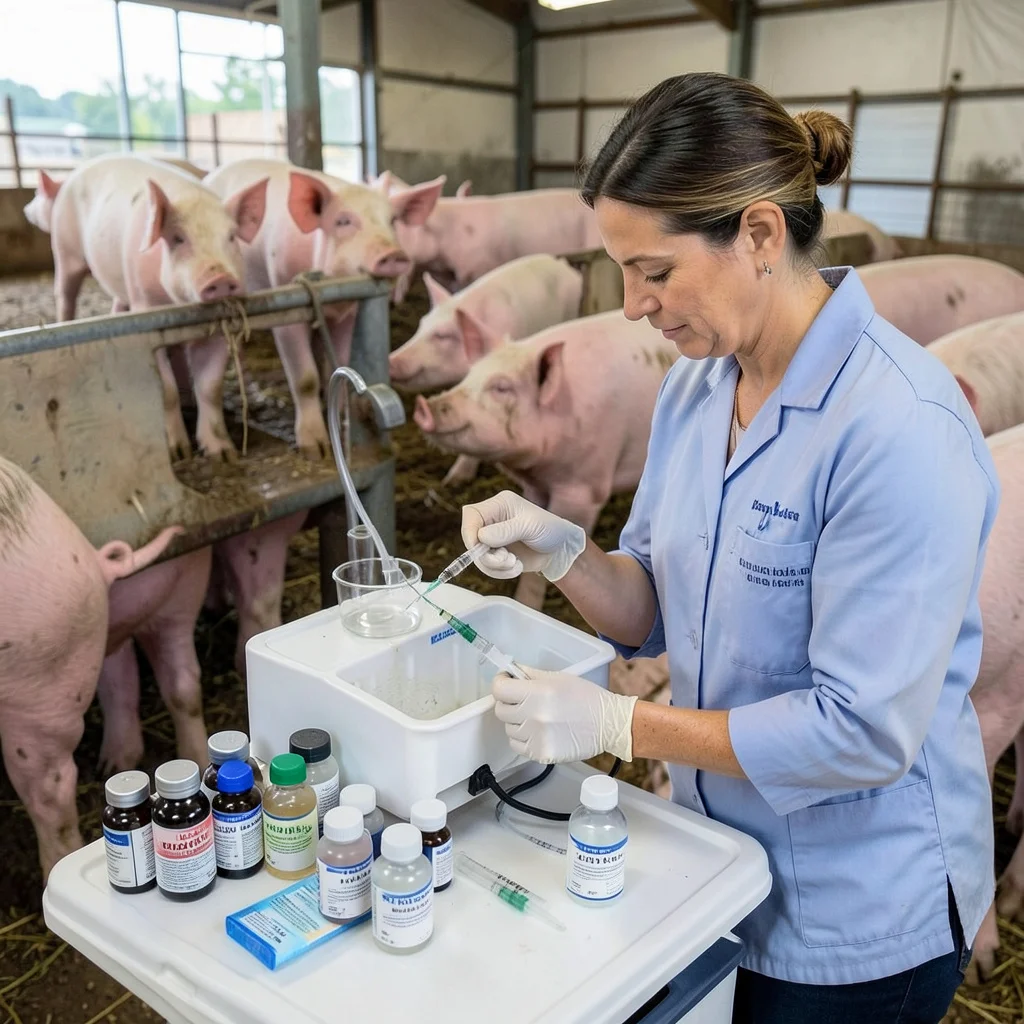
A pig vaccination protocol is a scheduled plan for administering specific vaccines at appropriate life stages to protect against common diseases. Protocols vary based on regional disease risks, herd history, and veterinary recommendations.
Why You Need a Veterinarian
Let me be direct: vaccination programs should be developed with a veterinarian. Period. The internet is full of generic schedules, but your herd isn’t generic. Disease pressure varies by region. Your management system creates specific risks. Your herd may already be exposed to certain pathogens.
A veterinarian helps you:
- Identify which diseases actually threaten your herd
- Choose appropriate vaccines and timing
- Avoid unnecessary vaccinations that waste money
- Handle vaccines correctly so they actually work
- Respond when things don’t go as planned
The risks of self-directed vaccination programs are real. Wrong vaccines. Wrong timing. Improper storage renders vaccines useless. Adverse reactions you don’t know how to handle. Skipping necessary vaccinations because you didn’t know they mattered.
Find a vet who works with pigs. Not all do. In rural areas, your options might be limited, but it’s worth the drive to establish a relationship with someone who understands swine.
Core Vaccinations by Life Stage
The following represents typical recommendations, but your specific protocol must be tailored by your veterinarian.
Piglet Vaccinations
Most piglet vaccinations happen between 3-10 weeks of age. Common targets include:
- Mycoplasma hyopneumoniae – Usually given at 3-4 weeks, sometimes with a booster
- Circovirus (PCV2) – Typically around 3 weeks of age
- Erysipelas – Often starts around 8-10 weeks
Some producers vaccinate for ileitis (Lawsonia) in growing pigs, depending on farm history.
Growing Pig Vaccinations
Growing pigs may receive boosters for diseases vaccinated earlier, plus:
- Influenza – If flu is a problem in your area or herd
- Erysipelas booster – Especially important before animals go outdoors
Breeding Stock Vaccinations
Breeding animals need protection before breeding and throughout their productive lives:
- Parvovirus – Critical before first breeding; gilts should be vaccinated twice
- Leptospirosis – Often combined with parvo in a “parvo-lepto” vaccine
- Erysipelas – Regular boosters for breeding stock
- E. coli – Sows vaccinated pre-farrowing to improve colostrum antibodies
- Clostridial diseases – Sometimes included in breeding herd protocols
Breeding gilts should complete their vaccination series at least two weeks before breeding. Sows typically receive boosters during gestation.
Vaccine Handling Basics
Even the best vaccines fail if you handle them wrong:
- Store vaccines at proper temperatures (usually 35-45°F)
- Never freeze vaccines unless specifically indicated
- Check expiration dates before purchasing and using
- Use clean, sterile equipment for every injection
- Follow the dose instructions exactly—more isn’t better
- Use vaccines promptly after mixing or opening
When vaccines need to be reconstituted, mix only what you’ll use within an hour or two. Once mixed, most vaccines begin losing potency.
Essential Biosecurity Practices for Small Farms
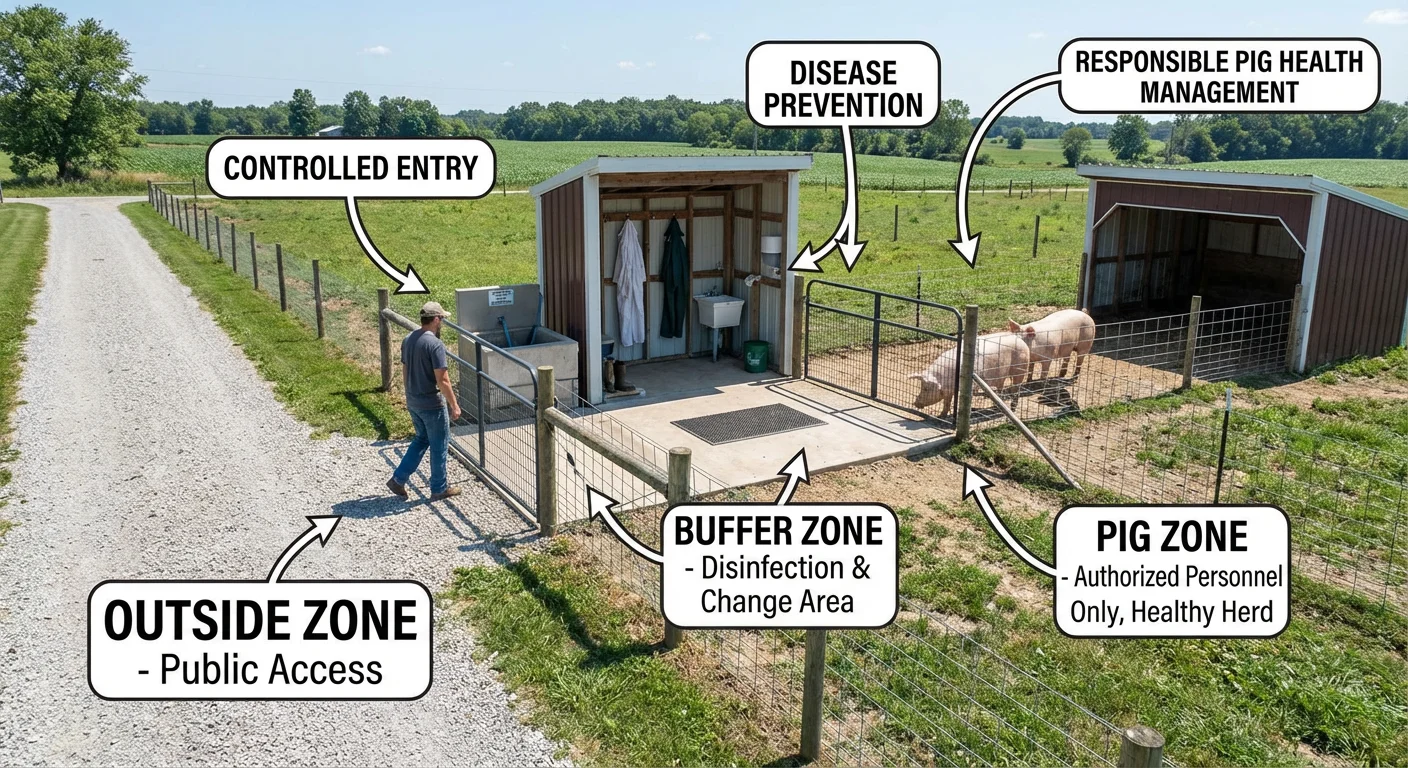
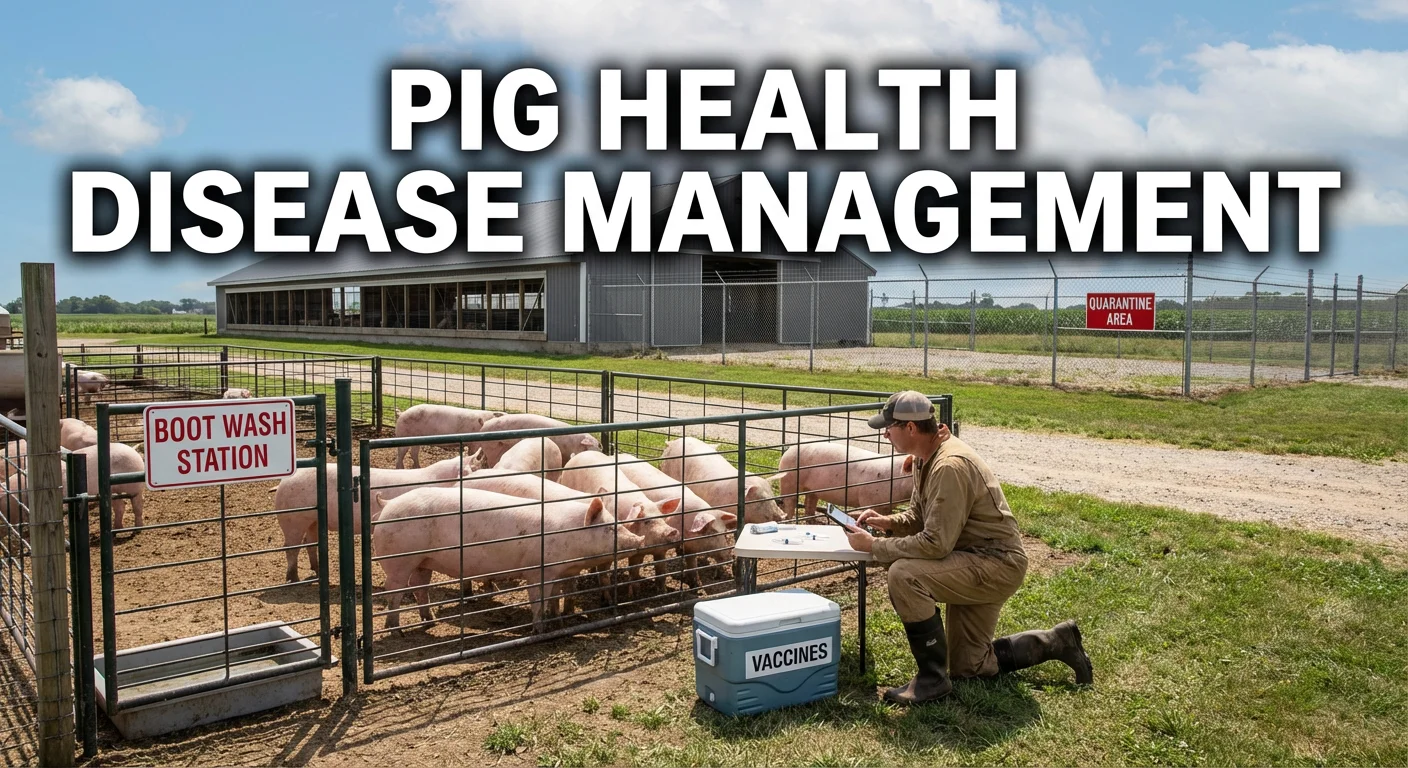
Pig biosecurity practices are the procedures and physical barriers that prevent disease-causing organisms from entering your farm, spreading within your herd, or leaving your property to infect other operations.
Biosecurity sounds complicated, but the principles are simple: limit what comes onto your farm, control movement within your farm, and clean up thoroughly and regularly.
The Three Zones Concept
Think of your farm in three zones:
Outside zone – The world beyond your property. Disease threats live here: other pigs, wildlife, contaminated equipment, infected boots, and delivery trucks.
Buffer zone – The transition area where outside meets inside. This is where you change clothes, disinfect boots, and park vehicles that don’t belong in pig areas.
Pig zone – Where your pigs actually live. This should be the cleanest, most protected area on your property.
Everything that enters the pig zone should pass through the buffer zone and be cleaned, changed, or disinfected appropriately.
People and Visitor Protocols
People are the biggest disease vectors. We don’t mean to spread disease, but we’re incredibly efficient at it.
For yourself:
- Designate farm-only boots and clothing
- Shower or change before entering pig areas after visiting other farms
- Avoid contact with other pigs for at least 24-48 hours before working with yours
For visitors:
- Ask about recent contact with pigs
- Provide clean boots or disposable boot covers
- Keep visitor numbers to a minimum
- Don’t let casual visitors enter pig housing
The toughest call: telling friends they can’t pet your pigs right after visiting another farm. Have that conversation anyway.
Vehicle and Equipment Control
Trucks, trailers, and equipment carry disease on tires, surfaces, and in organic matter.
- Delivery vehicles should stay outside the pig zone
- Livestock trailers should be cleaned and disinfected between loads
- Don’t borrow equipment from other pig farms without thorough cleaning
- Feed trucks should follow consistent routes that don’t cross-contaminate
If you haul your own animals, consider your trailer a potential disease vector. Clean it after every use. Let it dry completely before loading new animals.
Feed and Water Security
Contaminated feed and water spread disease efficiently.
- Store feed in rodent-proof containers
- Keep feed storage areas clean and dry
- Protect water sources from wildlife access
- Regularly clean and disinfect waterers
Feed contamination was implicated in PED outbreaks. Take feed biosecurity seriously.
Dead Animal Handling
Dead pigs need prompt, appropriate disposal:
- Remove carcasses quickly—they attract predators and scavengers
- Use composting, burial, or rendering, depending on local regulations
- Never feed dead pigs to other pigs or dogs
- Clean and disinfect areas where animals died
Check your state regulations for approved disposal methods. Some states restrict burial; others have specific composting requirements.
Wildlife and Feral Pig Risks
Wild animals pose real biosecurity threats. Birds, rodents, and especially feral pigs can introduce diseases your domestic herd has never encountered.
The Feral Pig Problem
Feral pig populations have exploded across much of the United States. These animals carry diseases, including:
- Pseudorabies
- Brucellosis
- Classical swine fever (in some countries)
- Potentially African swine fever if it reaches North America
Feral pigs also carry parasites and can interbreed with domestic pigs if given access.
Protection measures:
- Perimeter fencing that excludes feral pigs
- Double fencing around pig housing where feral pigs are prevalent
- Report feral pig sightings to state wildlife agencies
- Never allow contact between domestic and feral pigs
If you hunt feral pigs, treat hunting clothes and equipment as contaminated. Never bring feral pig carcasses near domestic pig housing.
Bird and Rodent Control
Birds and rodents spread disease through droppings, direct contact, and by contaminating feed.
- Screen openings to exclude birds from pig housing
- Maintain active rodent control programs
- Remove feed spills promptly
- Eliminate rodent harborage areas around buildings
Rodents spread leptospirosis. Birds can carry influenza. Neither belongs in your pig areas.
Quarantine Procedures: Your First Line of Defense
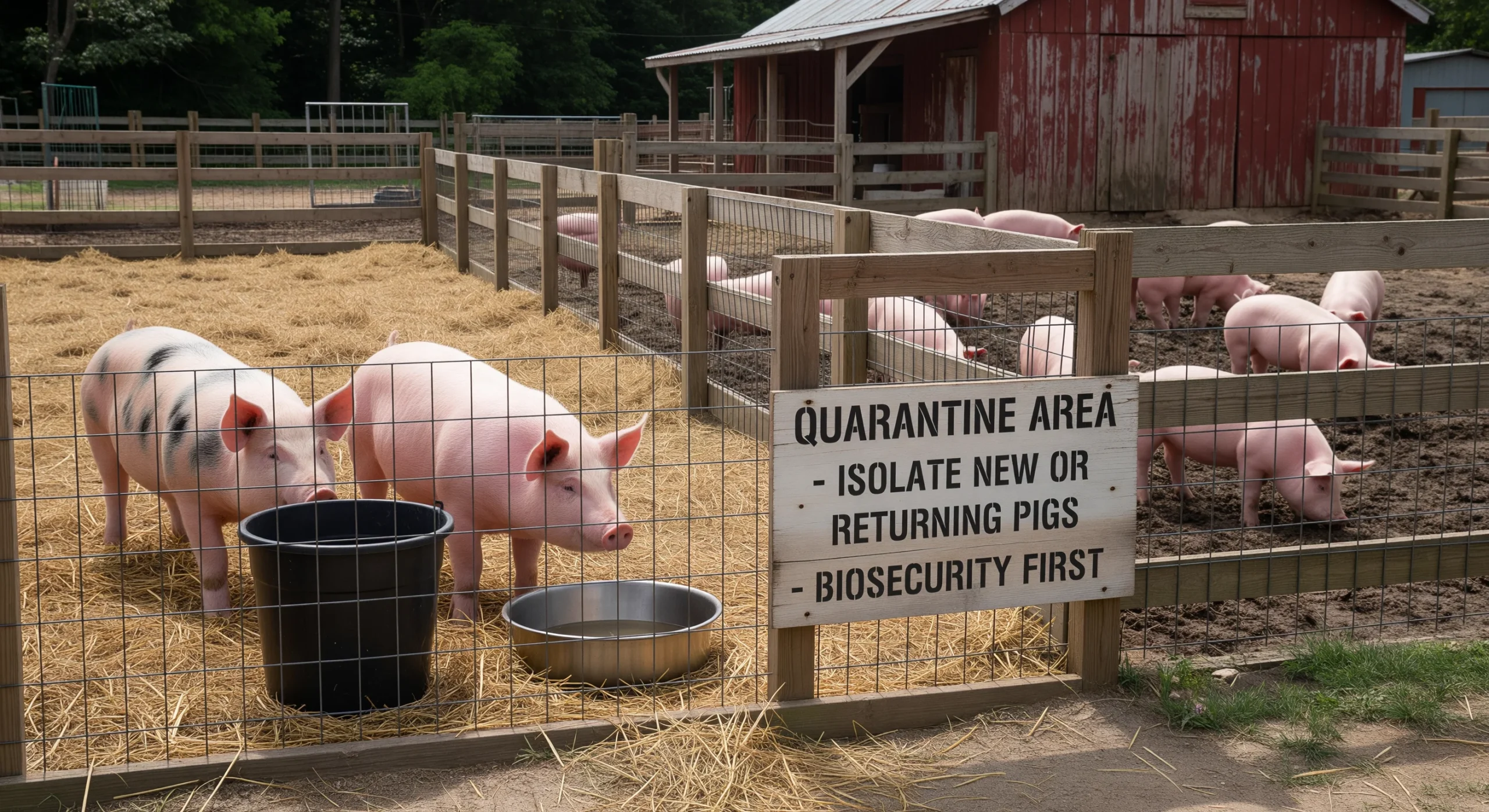
Quarantine means isolating new or returning animals before they contact your existing herd. It’s one of the most effective—and most neglected—biosecurity practices.
Why Quarantine Matters
New pigs look healthy at purchase. Many diseases have incubation periods where animals are infected but not yet showing signs. Without quarantine, you introduce a pig that seems fine, and two weeks later, half your herd is sick.
Quarantine allows time for:
- Diseases are becoming apparent
- Testing for specific pathogens if needed
- Acclimation to your farm’s organisms
- Veterinary examination before herd introduction
Setting Up Quarantine Facilities
Quarantine space should be:
- Physically separate from your main herd—ideally, a different building
- At least 30 feet from other pig housing (further is better)
- Supplied by separate equipment, waterers, and feed buckets
- Cleaned and disinfected between uses
If you can’t build separate facilities, ata minimum, use a different pen at the far end of your building with no shared air space or equipment.
Quarantine Duration and Protocols
Standard quarantine runs 30-60 days, depending on disease concerns and veterinary advice.
During quarantine:
- Observe new animals daily for any disease signs
- Work with new animals last—after caring for your main herd
- Use separate boots and clothing for the quarantine area
- Consider diagnostic testing for specific diseases
Only move animals to the main herd after quarantine completes with no health concerns.
Daily Health Monitoring: What to Watch For
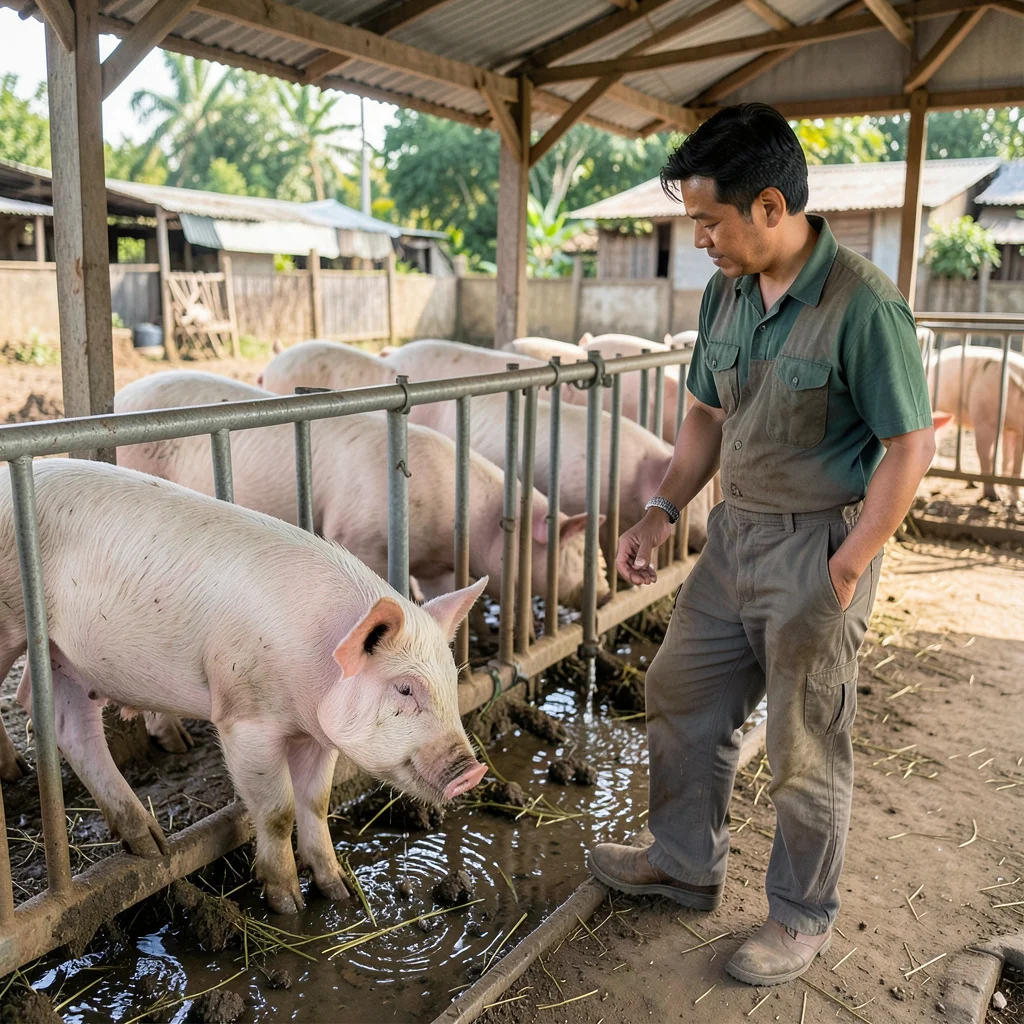
A daily health monitoring routine is a systematic observation protocol performed each time you interact with your pigs, focused on detecting early signs of illness or injury before they become serious problems.
The best pig health management happens at the waterer, the feeder, and during quiet observation. Twice-daily monitoring takes maybe ten minutes but catches problems early when intervention works best.
Your Daily Monitoring Checklist
Walk through this list every time you check your pigs:
Appetite and Eating Behavior
- Are all pigs coming to feed?
- Is anyone hanging back or uninterested?
- Any dropped feed or difficulty chewing?
- Normal drinking behavior?
Movement and Posture
- Is everyone standing normally?
- Any lameness, stiffness, or reluctance to move?
- Pigs lying apart from the group?
- Hunched posture or tucked abdomen?
Respiratory Signs
- Coughing—dry or wet?
- Labored breathing or “thumping”?
- Nasal discharge?
- Open-mouth breathing?
Skin and Coat
- Normal color and condition?
- Any redness, spots, or lesions?
- Hair standing up (rough coat)?
- Wounds or injuries?
Manure
- Normal consistency and color?
- Diarrhea in any pens?
- Blood in feces?
- Unusual odor?
General Attitude
- Normal activity level?
- Social interactions typical?
- Any isolation or aggression changes?
- Alert and responsive?
Red Flags That Demand Immediate Attention
Some signs require action now, not tomorrow:
- Fever over 104°F in any pig
- Multiple pigs are suddenly off feed
- Difficulty breathing or blue discoloration
- Bloody diarrhea, especially in young pigs
- Neurological signs—trembling, circling, inability to stand
- Sudden unexplained deaths
- Blisters or erosions around the mouth or feet
Any of these warrants same-day veterinary contact.
Decision-Making Framework: Observe, Isolate, or Call the Vet
Not every health concern is an emergency. Part of good pig health management is knowing when to watch, when to act, and when to call for help.
When to Observe
Minor issues often resolve without intervention:
- Single pig slightly off feed but otherwise normal
- Mild lameness with no swelling or heat
- Minor wounds that appear clean
- Single loose stool in an otherwise healthy pig
Observation protocol: Check the animal more frequently (every few hours). Look for improvement or worsening. If no improvement in 24 hours, move to the next level.
When to Isolate
Isolation protects your herd while you figure out what’s happening:
- Any respiratory symptoms—coughing, nasal discharge
- Diarrhea, especially in young pigs
- Skin lesions that might be contagious
- Fever combined with any other symptom
- Unknown cause of illness
Isolation protocol: Move the animal to a separate area with dedicated equipment. Increase monitoring. Consider temperature checks twice daily. Prepare to call your vet.
When to Call the Veterinarian
Some situations need professional help:
- Fever not responding within 24 hours
- Multiple sick animals
- Severe symptoms in any category
- Any neurological signs
- Sudden deaths
- Symptoms matching reportable disease descriptions
- Any time you’re unsure
Call sooner rather than later. Early intervention usually means better outcomes and lower costs.
Common Mistakes Small-Scale Pig Keepers Make
After talking to hundreds of small-scale producers and extension agents, certain patterns emerge. These mistakes are common, understandable, and preventable.
Mistake #1: Skipping Quarantine
“The pigs looked healthy.” “I know the seller.” “I don’t have space for quarantine.”
Every one of those excuses has preceded a disease outbreak. Quarantine works. Use it.
Mistake #2: Ignoring Biosecurity Because “My Farm is Small”
Disease doesn’t care about your herd size. A backyard operation with three pigs can absolutely get PRRS, PED, or worse. Small operations are often more vulnerable because they lack the infrastructure and protocols larger farms use routinely.
Mistake #3: Self-Prescribing Antibiotics
Antibiotics don’t fix everything, and using them incorrectly creates resistance problems. Don’t buy injectable antibiotics at the feed store and start treating based on internet advice. Work with a veterinarian who can diagnose properly and prescribe appropriately.
Mistake #4: Vaccination Without Strategy
Random vaccination wastes money and doesn’t protect your herd effectively. Some producers vaccinate for diseases that aren’t present in their area while skipping vaccines that would actually help. Get professional input.
Mistake #5: Inadequate Records
When problems arise, your vet needs history. When did you vaccinate? What did you feed? When did symptoms start? Who’s related to whom? Good records make diagnosis easier and help track what works.
Mistake #6: Waiting Too Long to Call for Help
Sick pigs decline fast. A problem that’s easily fixed on Monday becomes complicated by Wednesday and catastrophic by Friday. When in doubt, call.
Your Role in Protecting the National Swine Herd
Small-scale pig owners sometimes feel disconnected from “industry” concerns. But disease doesn’t respect those boundaries. Your three backyard pigs matter to national swine health.
Why You Matter
Feral pigs often contact backyard operations before commercial farms. New pathogens entering the country might show up first in small, diverse herds. Your observations—and your willingness to report unusual disease—help protect everyone.
When you maintain biosecurity, quarantine new animals, and report suspicious illness, you’re contributing to disease surveillance that benefits every pig producer in the country.
Your Legal Responsibilities
Certain diseases must be reported to animal health officials. This isn’t optional. If you see signs consistent with African swine fever, classical swine fever, foot-and-mouth disease, or other reportable conditions, you’re legally required to report.
This protects you, too. Early detection of a foreign animal disease meansa rapid response that might contain the outbreak before it destroys your herd, your neighbor’s herd, and the regional swine industry.
Who to Call
- Your veterinarian (first call for any health concern)
- State veterinarian’s office
- USDA Veterinary Services: 1-866-536-7593
Program that number into your phone. If you ever see something truly alarming—sudden deaths, blistering around mouths and feet, hemorrhaging—don’t wait. Call immediately.
Creating Your Farm Health Plan
A written health plan keeps you organized and ensures nothing falls through the cracks. It also demonstrates responsible ownership if questions ever arise about your operation.
Elements of a Basic Health Plan
Your plan should include:
Herd information
- Number and type of pigs
- Housing and facilities description
- Normal stocking density
Health protocols
- Vaccination schedule (developed with your vet)
- Parasite control program
- Routine health monitoring procedures
Biosecurity measures
- Entry protocols for people and vehicles
- Quarantine procedures
- Cleaning and disinfection schedules
Emergency contacts
- Primary veterinarian
- Emergency/after-hours vet
- State veterinarian’s office
- Closest veterinary diagnostic lab
Record-keeping systems
- Health treatment records
- Vaccination records
- Mortality records
- Breeding and production records
Review and update your plan annually, or whenever you make significant changes to your operation.
Frequently Asked Questions
How often should pigs be vaccinated?
Vaccination schedules depend on the specific vaccines, your herd’s disease risks, and your production system. Most commercial vaccines require initial doses plus boosters. Breeding animals typically need regular boosters—often before each farrowing or annually, depending on the disease. Your veterinarian should design a protocol specific to your operation. Don’t assume an online schedule fits your situation.
What are the first signs that a pig is getting sick?
The earliest signs are usually behavioral: reduced appetite, separating from the group, slower movement, or less interest in their environment. Physical signs follow: fever, coughing, diarrhea, skin changes, or lameness. Because pigs are prey animals, they often hide illness initially. By the time symptoms are obvious, the disease may be advanced. This is why daily observation matters so much.
Can I raise pigs without using any vaccines?
Technically, yes, but it’s risky. Some producers in isolated situations with closed herds and no disease history operate without vaccination. However, most veterinarians recommend at least core vaccines for common endemic diseases. The cost of vaccination is minimal compared to the cost of treating sick pigs or losing animals to preventable disease. Discuss your specific situation with a veterinarian before deciding to skip vaccines.
How long should I quarantine new pigs before introducing them to my herd?
Standard recommendations call for 30-60 days of quarantine. Longer is better if you’re bringing in pigs from an unknown disease status or from areas with significant disease pressure. During quarantine, observe animals closely and consider diagnostic testing for diseases of concern. Only move animals to your main herd after quarantine completes without any health issues.
Do I need to worry about diseases if I only have a few backyard pigs?
Absolutely. Herd size doesn’t determine disease risk. Backyard pigs can contract the same diseases as commercial operations. In some ways, small herds face a higher risk because they often have more wildlife contact, less biosecurity infrastructure, and more casual visitor access. Take biosecurity seriously regardless of your operation’s size.
What’s the single most important thing I can do for pig health?
If forced to choose one thing, establish a relationship with a veterinarian before you have problems. A vet who knows your operation can help you design vaccination protocols, respond quickly to illness, and catch issues before they become disasters. The second most important thing: practice consistent daily observation so you catch problems early.
Moving Forward With Confidence
Pig health and disease management can feel overwhelming when you’re starting. There’s a lot to learn, and the stakes feel high—because they are. Your pigs depend on you.
But here’s the good news: the fundamentals aren’t complicated. Watch your pigs every day. Keep disease out with reasonable biosecurity. Vaccinate strategically with veterinary guidance. Know when you need help, and ask for it early.
You don’t need to become a veterinarian. You need to become a good observer, a careful planner, and a willing learner. The resources exist—extension services, veterinary support, producer networks, and guides like this one.
Start with the basics. Build good habits. Learn as you go. Your pigs will be healthier for it.