Complete Guide to Pig Parasite Management in 2026

Introduction
Last fall, I visited a 300-head finishing operation in Iowa, where the owner couldn’t understand why his pigs were gaining 0.3 pounds less per day than his neighbor’s herd.
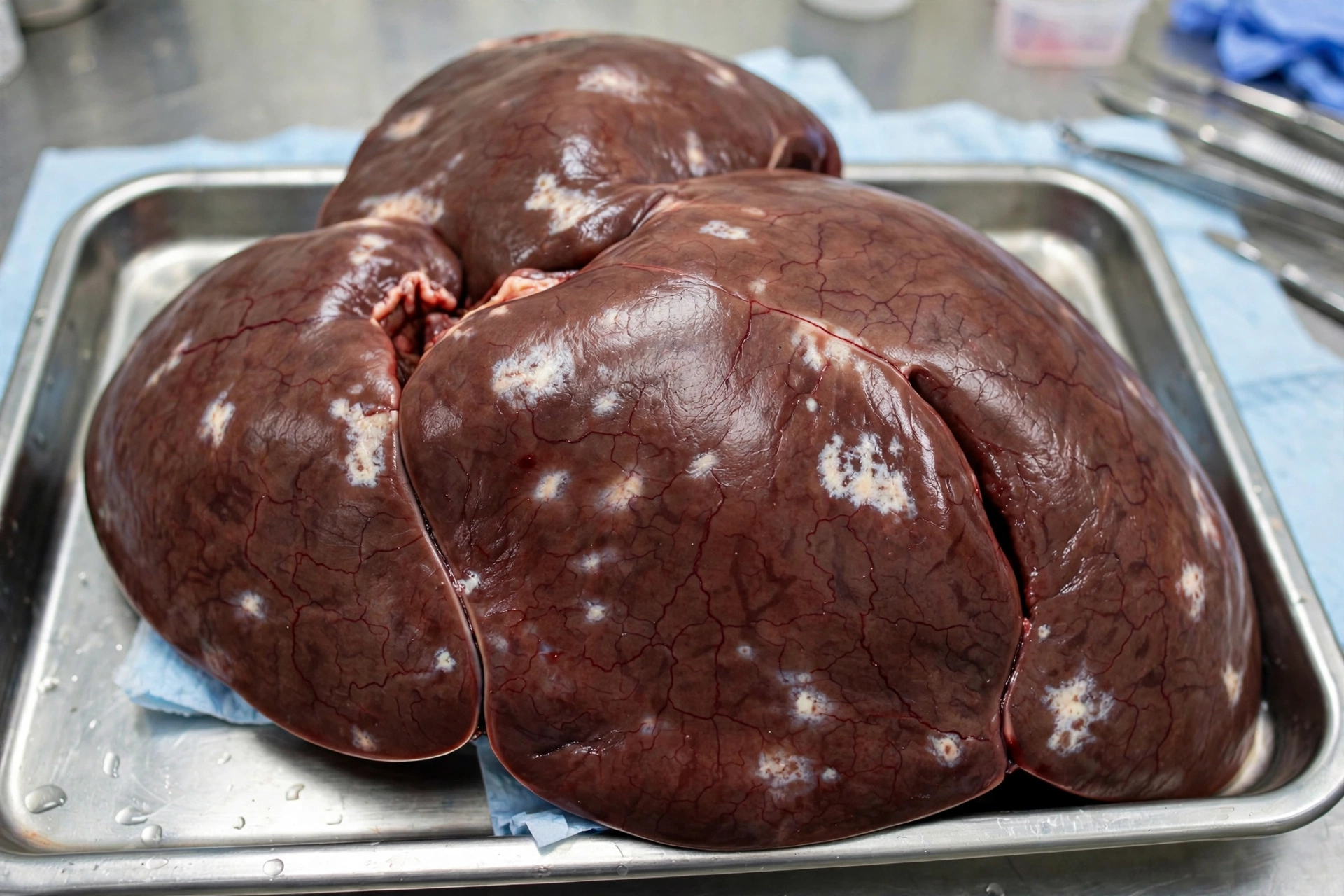
After examining just five livers at a local processor, the problem became obvious—every single one showed severe “milk spot” scarring from roundworm migration.
That producer was losing nearly $18,000 annually to parasites he didn’t even know existed. This scenario plays out across countless U.S. pig farms every year, which is why mastering pig parasite management is absolutely critical for profitable production.
Whether you’re running a commercial pig farming operation or managing a small-scale backyard herd, internal parasites in pigs, like roundworms, and external parasites in pigs, including mange mites, silently drain profits through reduced growth rates, poor feed conversion, and compromised immunity.
The good news? With strategic deworming pig protocols and proper environmental management, you can eliminate 90% of parasite-related losses.
This comprehensive guide covers everything I’ve learned treating thousands of pigs across the Midwest, from diagnostic techniques to cost-effective prevention strategies that actually work in real-world conditions.
Table of Contents
- Why Pig Parasite Management Matters More Than Ever
- Common Internal Parasites in Pigs
- Common External Parasites in Pigs
- How to Diagnose Parasites in Your Herd
- Strategic Deworming Protocols That Work
- Antiparasitic Drugs: Which Ones Actually Work
- Environmental Management for Long-Term Control
- Organic Parasite Management Approaches
- Monitoring Your Parasite Control Program
- True Cost of Parasites on Your Bottom Line
Why Pig Parasite Management Matters More Than Ever
Here’s what most producers don’t realise: parasites cost the U.S. swine industry approximately $750 million annually, according to 2024 data from the USDA Economic Research Service. But those are just the direct costs.
When you factor in reduced growth rates, poor feed efficiency, and increased susceptibility to respiratory diseases, the real number is probably double that.
In my practice, I see two types of operations: those that take pig parasite management seriously and those that wonder why their numbers never match their neighbour’s. The difference in performance is staggering.
Properly managed herds consistently achieve 0.10-0.15 pounds higher average daily gain and 0.15-0.20 points better feed conversion ratios. Over a 1,000-head finishing cycle, this translates to an additional profit of $15,000 to $25,000.
The parasites haven’t changed much over the decades, but production systems have. Modern confinement facilities with slatted floors create different parasite pressures than outdoor operations.
Understanding these differences is essential for developing effective control strategies, whether you’re focused on sustainable pig farming with pasture access or total confinement finishing.
What worries me most is the emerging resistance to macrocyclic lactones (ivermectin-type drugs) that we’re starting to see in some herds. A 2025 study from the University of Nebraska documented reduced efficacy in 12% of operations surveyed—proof that we can’t just rely on drugs alone.
Integrated pig parasite management combining chemical control, environmental sanitation, and smart management practices is no longer optional; it’s essential for long-term herd health and profitability.
Common Internal Parasites in Pigs
Roundworms: The Profit Thieves
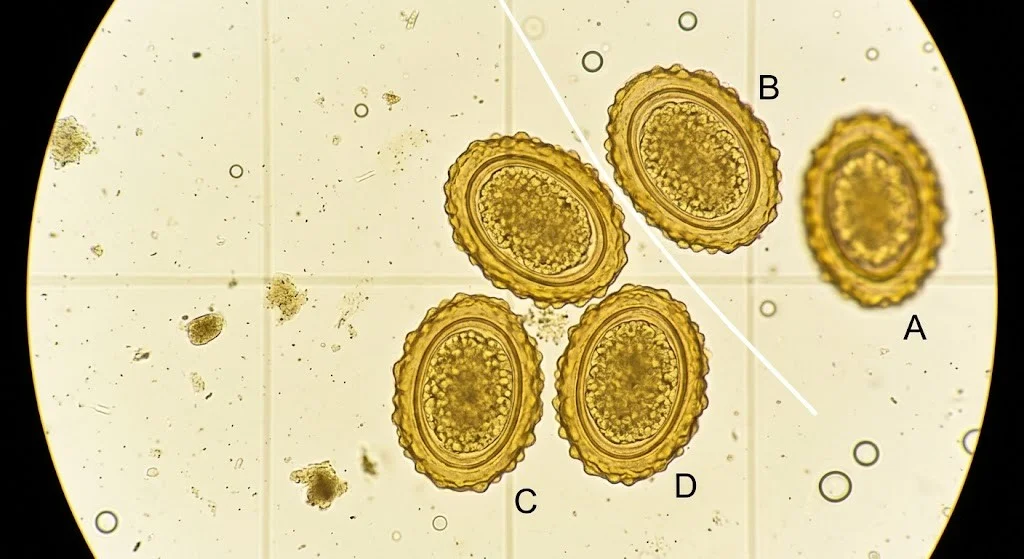
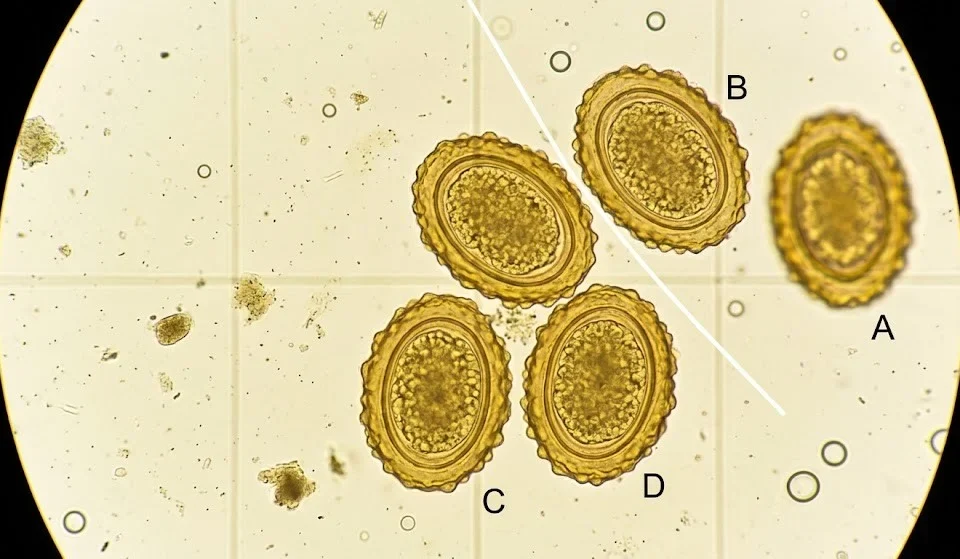
Roundworms (Ascaris suum) are by far the most economically damaging internal parasites in pigs. These large worms—sometimes reaching 16 inches long—live in the small intestine, where they steal nutrients and damage gut lining. But the real damage happens during their lifecycle when larvae migrate through the liver and lungs.
I’ll never forget opening up a market hog’s liver and seeing it absolutely covered in white “milk spots”—scar tissue from roundworm larvae tunnelling through months earlier. That liver was condemned at slaughter, but the production losses started long before.
Research from Iowa State University Extension shows that pigs with moderate roundworm infections grow 8-12% slower and need 0.15-0.25 points more feed per pound of gain.
The lifecycle creates persistent challenges. Adult female worms produce up to 200,000 eggs daily, which pass out in manure and can survive in soil or bedding for 3 to5 years. Young pigs pick up infections from contaminated environments—farrowing crates, nursery floors, and finishing pens—creating continuous reinfection cycles that deworming pigs alone can’t break without environmental management.
Clinical signs vary by infection intensity. Light infections might show no obvious symptoms beyond slightly slower growth. Moderate to heavy infections cause a pot-bellied appearance, rough hair coats, and occasional coughing (when larvae migrate through lungs). I’ve seen severe cases cause complete intestinal blockage requiring surgery, though that’s rare in commercial production.
According to USDA FSIS slaughter data, approximately 60% of market hogs show some degree of liver scarring from previous roundworm exposure. That statistic tells me most operations have ongoing parasite pressure even if they think they have it under control.
Whipworms: The Silent Growth Robbers
Whipworms (Trichuris suis) don’t get as much attention as roundworms, but they’re just as important for effective pig parasite management. These thread-like worms embed their anterior ends in the caecum and colon lining, causing chronic inflammation and bloody diarrhoea.
What makes whipworms particularly frustrating is their incredible egg persistence. While roundworm eggs survive for 3-5 years, whipworm eggs can remain viable in moist soil for up to 7 years.
They resist most common disinfectants, making environmental control extremely difficult. I’ve worked with outdoor operations where pasture rotation alone couldn’t break the cycle because eggs persisted through multiple seasons.
The prepatent period (the time from infection to egg shedding) runs 6-7 weeks, meaning young pigs infected at weaning won’t show eggs in faecal tests until they are 12-14 weeks of age. This timing creates diagnostic challenges—by the time you detect the problem, significant damage has already occurred.
University of Minnesota research from 2024 documented a 10–18% reduction in average daily gain due to whipworm infections in growing-finishing pigs. That performance is on par with roundworms, but many pig farmers don’t specifically target whipworms when they deworm their pigs.
The key is using anthelmintics with proven whipworm efficacy (primarily fenbendazole) at appropriate doses and durations.
Stomach Worms and Nodular Worms
Stomach worms (Hyostrongylus rubidus) and nodular worms (Oesophagostomum species) cause less dramatic disease than roundworms or whipworms but contribute to overall parasite burden, especially in outdoor and pasture-based systems relevant to sustainable pig farming approaches.
Stomach worms dig into the lining of the stomach, which can cause gastritis, a loss of appetite, and slow growth. Individual worms measure only 0.5–1.0 cm, but heavy infections of thousands create measurable production losses.
The lifecycle is completed in about 21 days, allowing for rapid population growth when conditions favour transmission.
Nodular worms create small nodules in intestinal walls during larval development. While rarely causing clinical disease in modern U.S. production, they contribute to reduced nutrient absorption and can complicate other health challenges. Most broad-spectrum dewormers effectively control both stomach and nodular worms as secondary benefits.
Coccidia: The Piglet Killer
Coccidia (primarily Isospora suis) represent a different category—single-celled protozoan parasites rather than worms. But they deserve mention in any discussion of pig parasite management because of their devastating impact on nursing and newly weaned piglets.
Coccidiosis typically strikes piglets aged 7 to21 days, causing watery to pasty yellow diarrhoea that persists despite antibiotic treatment. The parasite damages intestinal cells, causing severe dehydration and growth setbacks.
According to a 2025 American Association of Swine Veterinarians survey, coccidia appear in 35% of U.S. farrowing operations, with severe outbreaks killing 10% to20% of affected litters.
What’s particularly frustrating about coccidia is that it thrives in clean, well-managed facilities. Oocysts build up over multiple farrowing cycles in even the best-maintained operations. The standard preventive approach uses toltrazuril (Baycox), administered orally at 3-5 days of age, before clinical signs appear.
Kansas State University research from 2024 indicated that this protocol reduced piglet diarrhoea by 65% and improved weaning weights by 0.8 to 1.2 pounds in endemic herds.
Common External Parasites in Pigs
Mange Mites: The Invisible Performance Thief
Sarcoptic mange mites (Sarcoptes scabiei var. suis) cause more economic damage than any other external parasites in pigs. These microscopic parasites burrow into skin, creating intense itching, thick, crusted lesions, and significant welfare concerns. What worries me most is how easily mange spreads and how dramatically it impacts performance even before obvious clinical signs appear.
I diagnosed my first mange outbreak in a 500-sow operation where productivity had mysteriously declined over six months. Closer examination revealed subtle, crusty ear margins and restless behaviour—classic early signs of mange.
After treating the entire herd with doramectin, the average daily gain in finishing pigs improved by 0.15 pounds, and feed conversion dropped by 0.20 points. The mites had been stealing $20,000 annually in hidden production losses.
The complete mite lifecycle occurs on the pig in just 10 to 15 days, with rapid spread through direct pig-to-pig contact. Mites can survive off-host for 2–5 days on equipment and bedding, making biosecurity critical.
University of Illinois research from 2024 documented that mange-infected finishing pigs achieved 0.15 lb/day lower gains and 0.20 points worse feed conversion compared to mite-free groups.
Diagnosis often relies on clinical signs rather than definitively finding mites. Skin scrapings recover mites in less than 50% of infected pigs even with proper technique. The characteristic crusty ear lesions, combined with intense itching behaviour, usually provide sufficient evidence to start treatment.
I teach producers the “ear scratch test”—rub the ear margin and watch for a vigorous hind leg scratching reflex, indicating mange.
Economic losses extend beyond growth performance. Severe mange causes skin damage that persists to slaughter, resulting in carcass trim averaging $3-$5 per infected market hog, according to USDA Agricultural Marketing Service data. In breeding stock, mange reduces body condition and may impair reproductive performance through chronic stress.
Hog Lice: The Blood Suckers
Hog lice (Haematopinus suis) are the largest lice affecting livestock at 5-6 mm long, which are large enough to be seen without magnification. These blood-sucking parasites attach to the skin in folds around the neck, jowl, flanks, and inside the legs, causing anaemia in heavy infestations, particularly in young pigs.
The complete lice life cycle occurs on the pig in about 30 days, with eggs (nits) firmly cemented to hair shafts. Lice spread primarily through direct contact, though they can survive off-host for 2 to3 days on equipment.
Modern all-in/all-out production systems reduce lice transmission compared to continuous-flow facilities where different age groups mix.
According to 2024 National Animal Health Monitoring System data, approximately 15% of U.S. pig operations report lice problems, with the highest prevalence in operations with fewer than 500 head, where biosecurity may be less stringent.
Heavy lice infestations make people restless, irritate their skin, and cause anaemia, which shows up as pale mucous membranes.
Treatment for lice is straightforward—macrocyclic lactones (ivermectin and doramectin) provide excellent control. The key is treating all pigs in contact groups simultaneously and retreating in 14 days to kill lice hatching from eggs that survived initial treatment.
Environmental spraying is generally unnecessary unless lice problems persist after multiple treatment rounds.
How to Diagnose Parasites in Your Herd
Effective pig parasite management starts with accurate diagnosis. You can’t control what you can’t measure, yet I’m constantly surprised by how many producers treat parasites blindly without confirming what they’re actually fighting.
Here’s my practical approach to parasite diagnosis refined through thousands of farm visits.
Fecal Examination: The Diagnostic Cornerstone
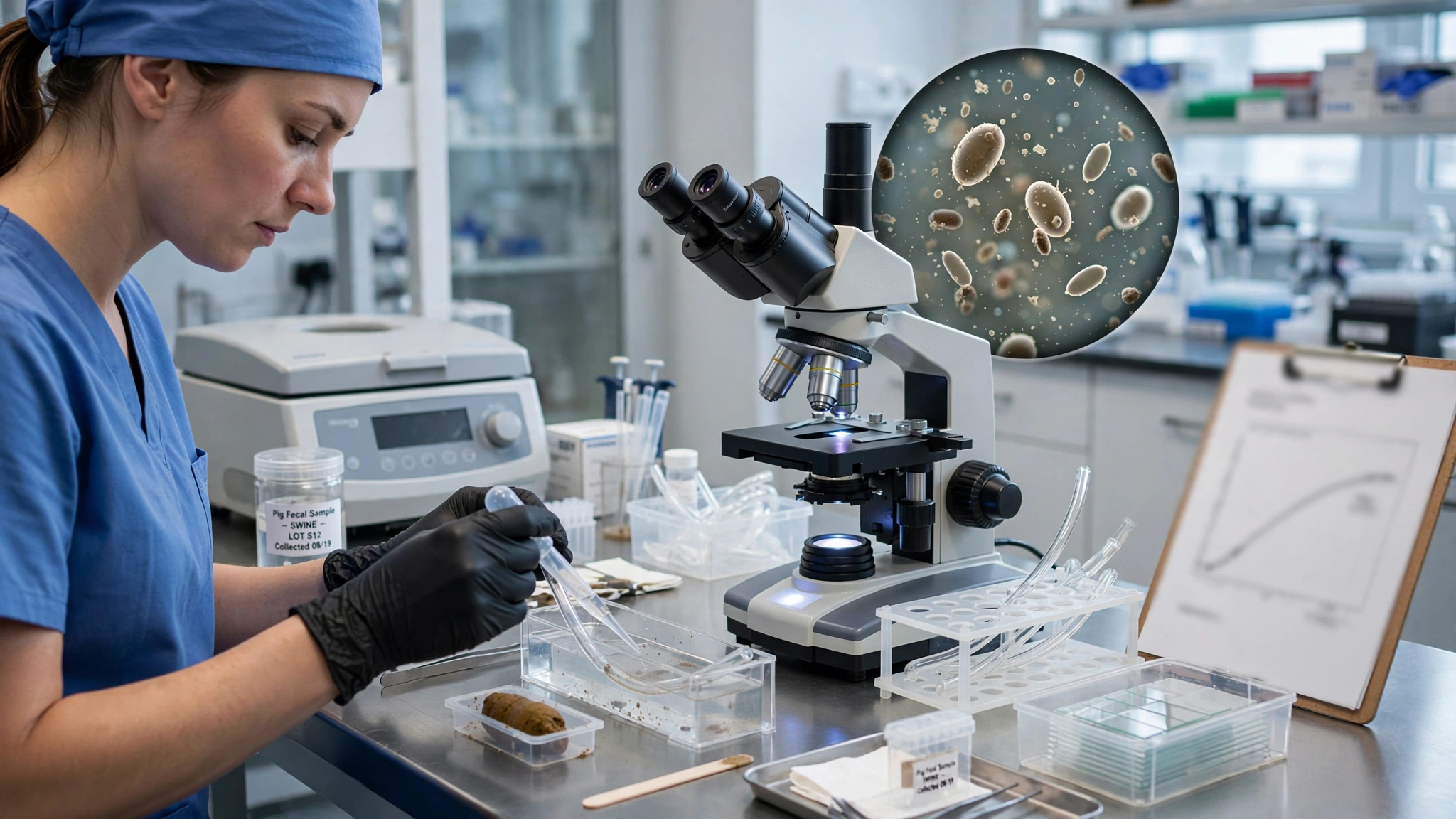
Faecal examination represents the primary tool for diagnosing internal parasites in pigs. The standard faecal flotation method uses dense sugar or salt solutions to float parasite eggs to the surface, where they’re collected and identified microscopically.
For practical herd management, I recommend the quantitative McMaster technique providing eggs per gram (EPG) counts that indicate infection intensity. Here’s how I interpret roundworm EPG results:
- Under 5 EPG: Low burden, no immediate treatment needed
- 5-20 EPG: Moderate infection, schedule strategic deworming
- Over 20 EPG: Heavy parasitism, urgent intervention required
Whipworm counts typically run lower, with 5-10 EPG considered moderate and above 15 EPG indicating significant problems that require immediate attention.
Sampling strategy dramatically impacts diagnostic accuracy. Individual pig samples identify heavily parasitised animals but may miss herd-level issues. Pooled samples combining faeces from 10 to 15 pigs per group provide cost-effective screening, though they dilute individual high counts.
My standard protocol uses pooled samples for routine monitoring combined with individual samples from poor-performing pigs showing clinical signs.
Timing matters critically for faecal testing. Most parasites require 4-8 weeks from infection to egg shedding (the prepatent period), so recently infected pigs test negative despite harbouring migrating larvae. For roundworms with a 6-7 week prepatent period, pigs should be at least 8-10 weeks old for meaningful testing.
Testing 2-3 weeks post-weaning often yields false negatives since infections acquired from sow environments haven’t matured yet.
Slaughter Checks: The Real-World Validation
Post-mortem liver examination at slaughter provides my favourite diagnostic tool because it shows the true parasite exposure that faecal tests might miss. Those white “milk spots” on livers indicate roundworm larval migration even if current infections have cleared or weren’t detected in faeces.
I recommend examining 10-15 livers per finishing group using this severity scoring system system:
- Score 0: No lesions (ideal target)
- Score 1: Few scattered spots (<10% liver surface)
- Score 2: Moderate scarring (10-30% surface affected)
- Score 3: Extensive damage (>30% surface scarred)
Target programmes toward less than 20% of livers showing any scarring and less than 5% with severe lesions. Higher rates indicate inadequate control, requiring program review. The beauty of slaughter checks is they’re convenient, free, and provide objective evidence of parasite control program effectiveness.
Clinical Monitoring: Reading the Signs
While laboratory tests provide definitive diagnosis, clinical monitoring catches problems before they show in faecal counts. I teach producers to watch for the following:
Roundworm indicators:
- Pot-bellied appearance in growing pigs
- Rough, dull hair coats
- Occasional coughing (larval migration)
- Slower growth compared to group mates
Whipworm signals:
- Chronic mucoid or bloody diarrhea
- Poor growth despite good appetite
- Dehydration and weight loss
Mange symptoms:
- Intense scratching and rubbing
- Crusty ear margins
- Hair loss and thickened skin
- Restless behavior
Lice evidence:
- Visible insects on skin (white to gray colored)
- Nits attached to hair shafts
- Pale mucous membranes (anemia)
- Scratching and irritation
The most valuable diagnostic tool is often just spending time observing pigs. Parasitised animals behave differently—less active, slower growth, rougher appearance. Trust your eyes and investigate when groups don’t look right.
Strategic Deworming Protocols That Work
After treating parasites in hundreds of operations, I’ve learned that successful deworming pig programmes balance efficacy against costs, labour, and resistance concerns.
Cookie-cutter approaches fail because every operation faces unique parasite pressures based on facility design, management practices, and environmental conditions. Here’s how to build protocols that actually work in different production systems.
Breeding Herd: The Foundation of Control
Pre-farrowing sow treatment forms the cornerstone of effective pig parasite management. Treating sows 7-14 days before farrowing prevents massive environmental contamination with parasite eggs during the vulnerable neonatal period,, when piglets have no immune protection.
My usual procedure is to give injectable ivermectin or doramectin at a dose of 0.3 mg/kg 10 days before the baby is born. This timing kills adult worms before they contaminate farrowing environments while providing residual protection during early lactation.
Treating earlier than 14 days allows new worms to mature from tissue-dwelling larvae before farrowing; treating later risks missing the window before environmental contamination occurs.
Iowa State University research from 2024 proved this approach reduces piglet roundworm exposure by 85% compared to untreated controls, translating to measurably better nursery performance and reduced medication needs.
The cost runs about $1.50-$2.00 per sow, including drugs and labour—arguably the highest-return investment in pig parasite management.
For boars, treatment every 6 months maintains control without excessive intervention. Some operations treat boars at the same time as sow groups for convenience and labour efficiency.
Progressive operations are shifting toward selective treatment based on faecal monitoring rather than blanket, whole-herd protocols. This approach treats only sows with detectable infections, reducing drug use by 40-60% while maintaining adequate control in well-managed facilities with effective sanitation.
However, selective treatment requires consistent monitoring and works best in operations with strong biosecurity and modern facility designs.
Nursery Pig Protocols
Nursery pigs typically receive their first deworming at 6-8 weeks of age (2-4 weeks post-weaning), addressing infections acquired from sow environments before they significantly impact growth during this critical development phase.
Two main approaches work well:
In-feed fenbendazole: 5-10 mg/kg body weight for 3-7 consecutive days offers low labour requirements and treats entire groups simultaneously. This method dominates commercial production, representing probably 80% of nursery deworming. The challenge is ensuring adequate and uniform feed consumption across all pigs.
Injectable ivermectin: 0.3 mg/kg provides more precise dosing and broader spectrum activity, including external parasites. Best suited for smaller operations where individual pig handling is practical. Labour requirements limit use in large-scale production.
Some high-health systems eliminate routine nursery deworming entirely, relying instead on excellent facility sanitation, all-in/all-out management, and strategic sow treatment to maintain parasite-free status.
This approach works well in modern enclosed nurseries but becomes impractical in facilities with older infrastructure or continuous flow management. Regular checks of the faeces and the slaughter process show that there are no major parasite burdens.
Finishing Pig Strategies
Traditional finishing protocols involve a single treatment at 12-16 weeks of age, timed to control parasites before they significantly impact growth performance during the final push to market weight.
In-feed fenbendazole remains the workhorse of finishing pig deworming due to low cost ($0.30-$0.50 per pig) and ease of administration through modern feed delivery systems. Some operations prefer injectable products for greater broad-spectrum efficacy, though higher costs ($0.60-$0.80 per pig) and labour requirements limit adoption in large finishing sites.
The trend I’m seeing—and frankly encouraging—is the elimination of routine finishing deworming in operations where risk assessment suggests minimal parasite burden. Factors supporting no-treatment protocols include the following:
- Modern enclosed facilities with fully slatted floors
- Robust pre-farrowing sow treatment programs
- Strict all-in/all-out management
- Monitoring data showing low parasite prevalence
According to 2025 National Pork Board survey data, approximately 35% of U.S. finishing sites have eliminated routine deworming, up from just 15% in 2020. This reflects genuine progress in biosecurity and facility design across the industry.
Outdoor and Pasture Systems
Operations with outdoor access or pasture-based production face entirely different challenges requiring more intensive pig parasite management. Environmental contamination creates constant reinfection pressure that single treatments can’t control.
These systems typically require deworming every 4-8 weeks during the growing phase, combined with rotational grazing to reduce parasite exposure. The specific interval depends on stocking density, pasture conditions, and monitoring results.
I worked with a 200-sow outdoor operation that couldn’t break the whipworm cycle despite aggressive treatments.
We implemented true pasture rotation with 12-month rest periods and strategic deworming timed to larval migration patterns. Within two production cycles, parasite burdens dropped 75% and growth rates improved dramatically.
The lesson: outdoor systems need integrated approaches combining chemical control, grazing management, and environmental strategies.
Antiparasitic Drugs: Which Ones Actually Work
Understanding anthelmintic options helps producers select appropriate products for their specific parasite challenges. Not all dewormers work equally against all parasites—matching drugs to your actual parasite problems saves money and improves results.
Macrocyclic Lactones: The Broad-Spectrum Workhorses
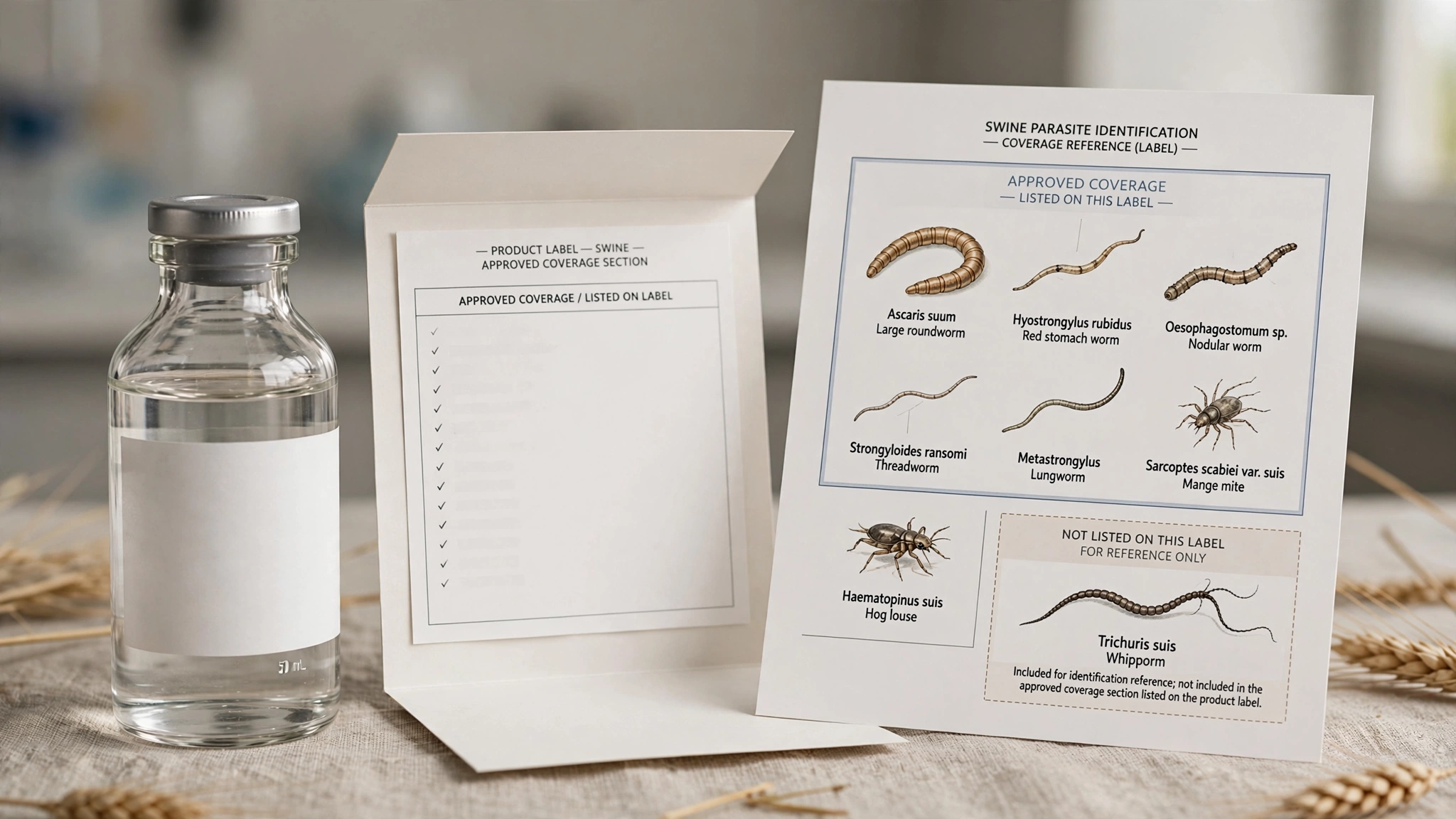
Ivermectin and doramectin belong to the macrocyclic lactone class, providing broad-spectrum control of both internal and external parasites in pigs. These drugs disrupt nerve transmission in parasites, causing paralysis and death.
Injectable formulations (0.3 mg/kg subcutaneously or intramuscularly) offer excellent efficacy against the following:
- Roundworms (Ascaris suum): 95-99% reduction
- Nodular worms (Oesophagostomum spp.): 95-98% reduction
- Stomach worms (Hyostrongylus rubidus): 90-95% reduction
- Mange mites (Sarcoptes scabiei): 98-100% elimination
- Lice (Haematopinus suis): 98-100% elimination
The major limitation is poor activity against whipworms (Trichuris suis), which typically achieves only a 40-60% egg count reduction. For operations with significant whipworm problems, ivermectin alone won’t solve the issue.
Withdrawal times: Ivermectin requires 18 days pre-slaughter for market pigs and 5 days for breeding stock. Doramectin has similar restrictions. Always follow label directions and consult FDA Center for Veterinary Medicine guidelines for current requirements.
In-feed ivermectin premix offers whole-group treatment with lower labour requirements, but ensuring adequate and uniform consumption challenges successful implementation. Some producers prefer injection for breeding stock where individual treatment is practical, reserving in-feed products for large finishing groups.
Doramectin advantages: Slightly longer residual activity makes doramectin particularly valuable for mange control, often achieving a cure with a single treatment versus two ivermectin doses. The cost difference is minimal ($0.10-$0.20 per dose), making doramectin my first choice for mange outbreaks.
Benzimidazoles: The Whipworm Specialists
Fenbendazole demonstrates excellent efficacy against gastrointestinal nematodes but provides zero external parasite control. This limitation becomes an advantage in operations where external parasites aren’t issues—you’re not spending money on spectrum you don’t need.
Standard dosing runs 3-9 mg/kg body weight for 3-5 consecutive days, administered through feed. The in-feed route dominates modern production (99% of usage), fitting perfectly with computerised feed delivery systems.
Efficacy against key parasites:
- Roundworms: 96-99% egg reduction
- Whipworms: 85-95% reduction (dose and duration dependent)
- Nodular worms: 92-97% reduction
- Stomach worms: 88-94% reduction
Purdue University research from 2024 demonstrated that fenbendazole at 5 mg/kg for 3 days achieved 96% roundworm control and 92% whipworm reduction, with sustained suppression lasting 4–6 weeks post-treatment.
Higher doses (9 mg/kg) and longer durations (5-7 days) improve whipworm efficacy in heavily contaminated environments.
Withdrawal time: Only 2 days pre-slaughter with no withdrawal for breeding animals—a significant advantage for operations marketing pigs on short notice.
Cost advantage: Fenbendazole typically costs $0.30-$0.50 per pig for standard treatment versus $0.60-$0.80 for injectable ivermectin, making it the most economical choice when external parasites aren’t concerns.
Anticoccidial Drugs: The Piglet Protectors
Toltrazuril (Baycox) addresses protozoal coccidiosis distinct from helminth parasites but deserves mention in comprehensive pig parasite management programmes due to its devastating impact on nursing piglets.
Administered orally at 20 mg/kg once at 3-5 days of age, toltrazuril prevents and treats Isospora suis coccidiosis before clinical signs appear. Kansas State research from 2024 showed routine treatment in farrowing operations reduced piglet diarrhoea by 65% and improved weaning weights by 0.8-1.2 pounds in herds with endemic coccidiosis.
The drug has no withdrawal period when used in nursing piglets and costs approximately $0.75-$1.25 per dose. In operations with confirmed coccidiosis problems, the use of the product represents excellent return on investment through reduced mortality and improved piglet performance.
Drug Resistance: The Growing Concern
Emerging resistance to macrocyclic lactones worries me more than most producers realise. University of Nebraska research from 2025 documented reduced ivermectin efficacy against roundworms in 12% of surveyed operations, with faecal egg count reductions below 85% compared to the expected 95%+.
Suspected resistance typically occurs in operations using injectable ivermectin exclusively for 10+ years with minimal management changes. The parasites adapt and survive treatments that once achieved near-complete elimination.
Prevention strategies:
- Rotate anthelmintic classes (not just products within same class)
- Use fecal monitoring to verify treatment efficacy
- Improve facility sanitation to reduce drug dependence
- Consider refugia-based approaches leaving some parasites untreated to maintain drug-susceptible populations
- Avoid under-dosing, which selects for resistant parasites
When faecal testing reveals suspected resistance (inadequate egg count reduction post-treatment), switch to a different drug class and intensify environmental management to reduce overall parasite pressure.
Environmental Management for Long-Term Control
Here’s the truth most producers would rather not hear: you can’t drug your way out of parasite problems without addressing environmental contamination. I’ve seen operations spend thousands annually on dewormers while ignoring the millions of parasite eggs accumulating in facilities—it’s like bailing water without plugging the leak.
Effective pig parasite management requires integrated approaches targeting parasites at every lifecycle stage, not just the adults living inside pigs. Environmental strategies form the foundation of sustainable control programmes that reduce drug dependence and prevent resistance development.
All-In/All-Out Management: The Game Changer
All-in/all-out (AIAO) production with thorough cleaning between groups provides the single most effective environmental control strategy. This system prevents parasite transmission between age groups while allowing complete facility depopulation for aggressive sanitation.
My recommended protocol:
- Complete depopulation – Remove all pigs from the room/barn
- Dry removal – Scrape and remove all organic matter before washing
- High-pressure washing – Use 140-160°F hot water at 2000+ PSI
- Disinfection – Apply approved disinfectants (though most show limited efficacy against parasite eggs)
- Thorough drying – Minimum 48 hours drying time
- Downtime – 3-7 day rest period before restocking
University of Minnesota research from 2024 showed that facilities with complete AIAO and aggressive cleaning protocols reduced environmental parasite contamination by 90-95% compared to continuous- flow systems. That difference translates directly to reduced infection pressure and better pig performance.
The sad truth is that most common disinfectants don’t work well against roundworm and whipworm eggs. Physical removal through pressure washing eliminates 90-95% of eggs from smooth surfaces—making facility design critical for long-term control.
Facility Design Impacts
Floor type dramatically influences parasite survival and transmission success. Fully slatted floors allow faeces to drop through into pits, preventing direct pig contact with contaminated material. University of Minnesota studies documented 70% lower environmental contamination in facilities with fully slatted plastic floors compared to solid concrete, even under identical cleaning protocols.
Partially slatted systems require careful management of solid areas where pigs rest and feed. Frequent scraping or flushing minimises parasite exposure, with daily removal providing optimal results. Solid concrete floors demand the most intensive management to prevent egg accumulation.
Surface characteristics are relevant for parasite control effectiveness. Smooth, sealed concrete allows thorough cleaning and provides poor egg attachment surfaces. Rough, porous concrete absorbs moisture and organic matter, creating ideal egg survival conditions.
New construction increasingly uses smooth plastic slats or coated concrete specifically designed for optimal cleaning and minimal parasite harbouring.
Some operations apply specialised floor sealers or epoxy coatings to improve cleanability in older facilities, though cost-effectiveness depends on facility size and parasite pressure. In my experience, these treatments work well for operations with persistent contamination issues that can’t afford complete floor replacement.
Managing Outdoor and Pasture Systems
Outdoor operations face entirely different environmental challenges since contamination is inevitable and sustained. Parasite eggs accumulate in soil, where they can survive for years waiting for susceptible hosts.
Rotational grazing between paddocks allows natural die-off before pigs return. The problem is that roundworm eggs can live in soil for 1 to 3 years, depending on the conditions. This means that long rotation intervals (at least 12 to 18 months) are needed to significantly reduce the number of parasites.
Whipworm eggs persist even longer—up to 5 to7 years under favourable conditions—making simple rotation insufficient for complete control.
University of Wisconsin research from 2024 tested various pasture management strategies for outdoor pig systems. The most effective approach combined:
- Plow and crop rotation – Converting pig paddocks to crops that pigs won’t consume
- Strategic grazing timing – Using pigs during hot, dry periods when egg survival is lowest
- Multispecies grazing – Following pigs with cattle or sheep (which don’t host pig parasites) to biologically clean pastures
This integrated system reduced parasite reinfection by 85% compared to simple grass pasture rotation. The key insight: most parasite eggs die from environmental exposure (sunlight, desiccation) rather than time alone. Managing for dry, sunny conditions accelerates natural die-off.
Feeding and watering station placement creates hotspots of contamination in outdoor systems. Moving feeders and waterers regularly distributes manure across larger areas, preventing concentrated contamination. Some producers use portable huts and equipment specifically designed for frequent relocation.
Slurry and Manure Management
Pits under slatted floors accumulate millions of parasite eggs in slurry, creating reinfection risk during agitation and pumping. Parasite eggs survive standard anaerobic storage for 6–12 months, though some die-off occurs.
Strategies that help:
- Minimize pit agitation near pigs when possible
- Time pumping for empty periods in AIAO systems
- Consider thermophilic aerobic digestion (eggs destroyed at 131°F or higher for 24+ hours)
- Apply slurry to cropland not accessed by pigs
Composting solid manure with proper temperature management (131-140°F for several days) effectively destroys parasite eggs. University of Minnesota guidelines recommend maintaining temperatures above 131°F for a minimum of 3 days to ensure complete egg destruction.
Some progressive operations use biodigesters for energy generation while simultaneously destroying parasite eggs through sustained high-temperature anaerobic digestion. The dual benefit of renewable energy plus parasite control makes these systems increasingly attractive despite higher initial costs.
Organic Parasite Management Approaches
Organic and natural pork production faces unique pig parasite management challenges since USDA National Organic Program regulations prohibit routine synthetic anthelmintic use. The regulations allow synthetic parasiticides only when natural methods prove insufficient, with extended withdrawal times (typically double standard or longer).
This creates practical tension between maintaining organic certification, ensuring animal welfare, and achieving economic production levels. After consulting with dozens of organic operations over the years, I’ve learnt that successful programmes integrate multiple strategies rather than relying on any single approach.
Breed Selection and Genetics
Heritage breeds developed in outdoor production systems often demonstrate greater resistance to parasitic infections compared to modern commercial genetics selected under parasite-free confinement conditions.
University of Vermont research from 2024 found that Tamworth and Large Black pigs in pasture systems had 30-40% lower parasite burdens than commercial crossbreds under identical management.
This doesn’t mean heritage breeds are immune to parasites—they still require active management—but they tolerate infection better while maintaining acceptable growth rates. For organic producers prioritising pig breeds suitable for pasture systems, this natural resistance offers genuine advantages.
The genetic mechanisms aren’t fully understood, but they likely involve differences in immune function, grooming behaviours, and possibly variations in the intestinal environment that make conditions less favourable for parasite establishment.
Ongoing research at several land-grant universities aims to identify specific genetic markers for parasite resistance that could be incorporated into breeding programmes.
Nutritional Approaches
Adequate protein, vitamins A and E, and trace minerals (particularly copper, selenium, and zinc) support robust immune function, helping pigs resist and clear parasitic infections.
This approach provides basic nutritional management that should be standard in any operation, though it becomes particularly important when chemical parasite control options are limited.
Beyond basic nutrition, various supplements and feed additives claim antiparasitic properties. Let me be blunt about what actually works based on published research:
Diatomaceous earth (DE) fed at 2% of the diet is commonly recommended based on the theory that sharp diatom particles damage parasite cuticles. However, controlled university trials consistently show minimal to no reduction in parasite burdens compared to untreated controls.
A comprehensive 2025 review by the Organic Farming Research Foundation concluded DE provides no reliable antiparasitic effect in swine, though it may offer minor benefits through improved gut health. If you’re using DE for parasite control, you’re likely wasting money.
Herbal anthelmintics, including garlic, wormwood, black walnut, and various plant extracts, are marketed for organic use. While some compounds show antiparasitic activity in laboratory settings, field trials in pigs consistently demonstrate inadequate efficacy for practical parasite management.
Garlic fed at levels up to 3% of the diet reduced roundworm egg counts by only 15-25% in controlled trials—far below the 90%+ reduction needed for adequate control.
Copper sulphate at 0.5-1.0% of the diet for 7-10 days demonstrates some antiparasitic activity against roundworms. However, copper toxicity concerns, environmental contamination risks from high copper manure, and variable efficacy limit widespread adoption.
This approach requires careful oversight by veterinarians experienced with copper metabolism in swine.
The honest assessment: no natural feed additive provides efficacy comparable to conventional anthelmintics. Organic producers must accept somewhat higher parasite burdens while preventing clinical disease through integrated management.
Pasture Management for Organic Systems
Since organic operations typically use outdoor or pasture-based production, environmental management becomes even more critical. The strategies discussed in the previous section apply doubly for organic systems that can’t rely heavily on chemical treatments.
The most successful organic pig parasite management programmes I’ve seen combine:
- Extended pasture rotations (minimum 12-18 months between pig groups)
- Strategic stocking density (lower density reduces contamination rate)
- Multispecies grazing (ruminants biologically clean pastures)
- Pasture renovation (periodic plowing and cropping interrupts parasite cycles)
- Genetic selection (choosing breeds with natural resistance)
These approaches require more land and management intensity than conventional systems, contributing to higher production costs that must be recovered through premium pricing for organic pork.
Strategic Use of Approved Products
When preventive measures prove insufficient and animal welfare suffers, USDA organic regulations allow the use of synthetic parasiticides with appropriate withdrawal periods. Most certifiers require double the standard withdrawal time, and all treatments must be documented with veterinary justification.
I advise organic producers to establish parasite burden thresholds triggering treatment decisions.
- Individual pigs showing clinical disease should always be treated
- When fecal monitoring reveals average EPG exceeding 20-30 for roundworms or 10-15 for whipworms, consider strategic group treatment
- If growth rates fall more than 15% below breed/age standards due to parasites, treatment is justified
The key is maintaining good records demonstrating that natural methods were attempted first and treatments were necessary for animal welfare—not routine preventive use.
Monitoring Your Parasite Control Program
You can’t manage what you don’t measure. Yet in my practice, I regularly encounter producers spending thousands annually on dewormers without any objective data confirming their programmes actually work. Systematic monitoring determines whether pig parasite management investments achieve desired outcomes and identifies needed adjustments before performance suffers.
Fecal Monitoring Programs
I recommend sampling 10-15 pigs per production group every 3-6 months for routine surveillance, with increased frequency during program establishment or following management changes. Pooled samples reduce laboratory costs while providing adequate group-level assessment.
Interpretation focuses on trends rather than single-point measurements since environmental and seasonal factors create normal variation in egg counts. Establish baseline counts, implement interventions, and then track changes over multiple sampling periods to evaluate program effectiveness.
Target thresholds vary depending on the specific parasite and the production stage.
For roundworms in finishing pigs:
- A group average under 10 EPG with less than 20% of samples exceeding 20 EPG indicates adequate control
- Averages above 15 EPG or more than 30% of samples over 20 EPG suggest program adjustments needed
For whipworms (more difficult to control):
- Target group averages below 5 EPG
- Accept that complete elimination is unrealistic in many systems
- Focus on keeping levels below thresholds causing clinical disease
When results exceed targets, systematically review the following:
- Treatment timing (are you hitting vulnerable parasite stages?)
- Drug efficacy (is resistance developing?)
- Environmental management (are facilities adequately cleaned?)
- Biosecurity (are new infections being introduced?)
The most valuable monitoring comes from comparing treated and untreated groups when possible. This controlled approach provides the clearest evidence of program effectiveness and return on investment.
Growth Performance Monitoring
Production metrics provide practical assessment of parasite impact beyond laboratory data. Compare average daily gain, feed conversion efficiency, and coefficient of variation (uniformity) within groups before and after implementing parasite control programmes.
Well-designed university studies demonstrate a 5-12% improvement in ADG and a 0.10-0.20 point improvement in FCR following effective parasite control in previously parasitised groups. Operations already maintaining excellent control see minimal additional benefit from program intensification—important data preventing unnecessary spending.
I recommend establishing baseline performance metrics over 2-3 production cycles before modifying programmes, then monitoring for 6-12 months to evaluate results. Short-term fluctuations from health challenges, weather, or feed quality can mask parasite control effects requiring sustained monitoring for valid assessment.
Key performance indicators to track:
- Average daily gain by production phase
- Feed conversion ratio
- Coefficient of variation (uniformity indicator)
- Mortality rate
- Days to market weight
- Full-value pig percentage (proportion reaching target weight without health issues)
Modern farm management software makes tracking these metrics easier than ever. The data-driven operations I work with consistently outperform competitors who make management decisions based on gut feelings rather than actual numbers.
Slaughter Monitoring
Examining 10-15 livers per finishing group at slaughter provides convenient, cost-effective monitoring that is particularly relevant for market hogs. Use the severity scoring system I described earlier (0-3 scale based on milk spot coverage) to track parasite exposure over time.
Target programmes toward:
- Less than 20% of livers showing any scarring
- Less than 5% with severe lesions (score 3)
Higher prevalence indicates inadequate control, requiring program review. The specific advantage of slaughter monitoring is that it’s free, convenient (occurs during normal marketing), and provides objective evidence of program effectiveness that can be tracked across multiple production cycles.
I worked with a 5,000-head finishing operation that slaughter-checked 15 livers monthly for 18 months while testing different deworming protocols. The data clearly showed that pre-farrowing sow treatment, combined with single nursery treatment, achieved identical results to more expensive multi-treatment protocols.
That operation saved $12,000 annually by eliminating unnecessary finishing treatments without compromising parasite control.
Economic Analysis
Calculate total program costs including anthelmintics, labour, facility improvements, and monitoring expenses. Compare against measurable benefits from improved growth rates, feed efficiency, reduced mortality, and enhanced carcass quality.
Break-even analysis identifies the minimum performance improvement necessary to justify program costs. For example, a 1,200-head finishing operation spending $1.20 per pig on deworming ($1,440 total annual cost) achieves a positive return if:
- Growth improvement exceeds 1.5 lbs per pig at $0.80/lb market price, OR
- Feed conversion improves by 0.08 points, saving feed costs
Most well-designed programmes in parasitised herds easily exceed these thresholds. The challenge is operations are already maintaining good control—additional program intensity may not generate sufficient additional benefit to justify increased costs.
This analysis becomes particularly important when considering expensive interventions like facility modifications, enhanced sanitation protocols, or premium anthelmintic products. The return on investment must be clear and documented through actual performance data, not assumed based on product marketing claims.
True Cost of Parasites on Your Bottom Line
Understanding the complete economic impact of parasitic infections helps producers make informed decisions about control program investments. The costs extend far beyond obvious treatment expenses to include hidden production losses that significantly affect profitability in both commercial and small-scale operations.
Direct Treatment Costs
These are the easy numbers to calculate:
- Injectable ivermectin: $0.60-$0.80 per market pig
- In-feed fenbendazole: $0.30-$0.50 per pig for standard treatment
- Pre-farrowing sow treatment: $1.50-$2.00 per sow, including drug and labor
- Toltrazuril for piglet coccidiosis: $0.75-$1.25 per dose
For a 500-sow operation marketing 12,000 pigs annually, direct deworming costs total approximately $6,000-$9,000 annually, representing $0.50-$0.75 per market pig. Although significant, these direct costs represent the smallest portion of parasite-related economic impact.
Reduced Growth Performance: The Silent Profit Thief
Growth rate reductions create the largest economic impact from parasitic infections. National Pork Board research from 2024 established that moderate roundworm infections (15-30 EPG) reduce average daily gain by 0.10-0.15 lbs per day during the growing-finishing phase (approximately 120 days, from 50 to 280 lbs).
Here’s the math that should concern every producer:
- 0.10 lb/day slower growth × 120 days = 12 lbs lighter market weight
- 0.15 lb/day slower growth × 120 days = 18 lbs lighter market weight
- At $0.75/lb live weight: $9.00-$13.50 lost value per infected pig
- In a 1,000-head finishing group with 60% infection prevalence: $5,400-$8,100 total losses from reduced growth alone
Those numbers assume moderate infections. Heavy parasite burdens cause even more dramatic growth depression, approaching a 15-20% reduction in ADG, with losses exceeding $20 per pig.
Feed Conversion Deterioration
Parasites damage the intestinal lining, reducing nutrient absorption while stealing nutrients for their own growth and reproduction. The result: pigs need more feed per pound of gain even when growing slower.
Research compiled across multiple universities shows parasitised pigs require 0.10-0.25 points higher feed conversion ratios depending on infection severity. Let’s calculate the impact:
Baseline pig growing from 50 to 280 lbs at FCR 2.85:
- Total feed consumed: (280 – 50) × 2.85 = 655 lbs
Same pig with parasites at FCR 3.05:
- Total feed consumed: (280 – 50) × 3.05 = 702 lbs
- Additional feed wasted: 47 lbs per pig
At $0.15/lb feed cost, parasite-induced feed waste costs $7.05 per pig. Across 1,000 head, feed waste from parasitism totals $7,050—nearly matching the growth depression losses.
Carcass Quality Impacts
External parasites in pigs, particularly severe mange, cause skin thickening, scarring, and trim requirements at slaughter. According to USDA grading data from 2024, pigs with active mange lesions experience 3-8% carcass weight loss from skin trim, averaging $6-$15 per affected pig depending on market prices and infection severity.
While modern treatment programmes prevent severe lesions in well-managed operations, outbreaks in poorly controlled facilities create significant unexpected losses. I’ve consulted on mange outbreaks where 40-60% of a finishing group showed skin damage at slaughter, resulting in $8,000-$15,000 in additional trim losses beyond the production impacts during growth.
Health Interactions and Medication Costs
Parasites compromise immune function, predisposing pigs to secondary bacterial and viral infections. The 2024 Journal of Swine Health and Production study I referenced earlier found parasitised finishing pigs required 25% more antibiotics for respiratory disease treatment compared to properly dewormed cohorts.
Additional costs from parasite-induced immunosuppression:
- Increased medication expenses: $1.50-$2.50 per pig
- Higher mortality rates: 1.2 percentage point increase (from 3.5% to 4.7%)
- In a 1,000-head group, that’s 12 additional deaths valued at $100-$150 each = $1,200-$1,800 lost
Total Economic Impact
Comprehensive modelling incorporating all parasite-related costs suggests moderate parasite burdens cost commercial operations $12-$25 per market pig in lost productivity and increased expenses:
| Cost Category | Impact per Pig | 1,000 Head Group |
|---|---|---|
| Reduced growth | $9-$14 | $5,400-$8,400 |
| Feed waste | $5-$8 | $3,000-$4,800 |
| Medications | $1.50-$2.50 | $900-$1,500 |
| Mortality | $1.20-$1.80 | $720-$1,080 |
| Carcass trim | $2-$5 | $1,200-$3,000 |
| Total Losses | $18.70-$31.30 | $11,220-$18,780 |
Compare these losses against pig parasite management program costs of $1,200-$1,500 (drugs, labour, and monitoring) for the same 1,000-head group. The net benefit ranges from $9,720 to $17,280, providing strong economic justification for systematic parasite control.
For a 5,000-head annual production facility, preventing parasite-related losses through effective management programmes translates to $48,500-$86,400 in additional profit—money currently being left on the table by operations with inadequate parasite control.
Even small-scale operations feel the impact. A backyard producer raising 20 pigs annually to market weight loses $240-$500 to parasites without proper control—a significant portion of potential profit from a small herd. The investment in strategic deworming and facility management pays clear dividends regardless of operation scale.
Comparison Table: Antiparasitic Drugs for Pigs
| Drug | Route | Roundworms | Whipworms | Stomach/Nodular Worms | Mange | Lice | Withdrawal Time | Cost per Pig | Best For |
|---|---|---|---|---|---|---|---|---|---|
| Ivermectin | Injectable | 95-99% | 40-60% | 90-98% | 98-100% | 98-100% | 18 days | $0.60-$0.80 | Comprehensive control including external parasites |
| Doramectin | Injectable | 95-99% | 40-60% | 92-98% | 98-100% | 98-100% | 18 days | $0.70-$0.90 | Mange outbreaks requiring extended residual |
| Fenbendazole | In-feed | 96-99% | 85-95% | 88-97% | 0% | 0% | 2 days | $0.30-$0.50 | Cost-effective GI parasite control, especially whipworms |
| Toltrazuril | Oral | 0% | 0% | 0% | 0% | 0% | None (piglets) | $0.75-$1.25 | Piglet coccidiosis prevention/treatment only |
Pro Tip from Mike Jennings:
“The single highest-return investment in pig parasite management across hundreds of operations is treating sows 10 days before farrowing and aggressively sanitising the farrowing room.” This simple protocol stops 80-90% of piglet parasite exposure for under $2 per sow, greatly reducing the need for expensive nursery and finishing treatments and leading to better growth performance. Most producers focus on treating symptoms in growing pigs while ignoring the source—infected sows contaminating environments during farrowing when piglets have zero immunity.”
“My second tip: Never assume your deworming program is working without periodic validation. I routinely find operations spending thousands annually on protocols that don’t control their actual parasite problems. A $200-$300 annual investment in strategic faecal monitoring often reveals you’re using the wrong drugs, the wrong timing, or fighting parasites that aren’t actually your main issues. Base programmes on data from your specific operation, not assumptions or what worked for your neighbour’s different system.”
FAQ
How often should I deworm my pigs?
Deworming frequency depends entirely on your production system and actual parasite pressure—there’s no one-size-fits-all answer. Total confinement operations with excellent sanitation and all-in/all-out management often achieve adequate control by treating sows pre-farrowing and finishers once at 12–16 weeks of age.
Outdoor or pasture systems typically require treatment every 4 to8 weeks due to environmental reinfection from contaminated soil.
I strongly recommend faecal monitoring every 3–6 months to determine whether your current program maintains adequate control or needs adjustment.
Always validate a protocol’s performance through periodic testing or slaughter checks to avoid wasting money on unnecessary treatments and to catch developing problems early.
What are the signs my pigs have parasites?
Internal parasite signs include poor growth rates compared to pen mates, rough, dull hair coats, a pot-bellied appearance in growing pigs, and chronic diarrhoea (particularly with whipworms).
You might observe occasional coughing during roundworm larval lung migration. External parasites cause intense scratching and rubbing behaviour, hair loss, thickened, crusty skin (especially on ear margins with mange), and visible lice on the skin surface.
However, many parasite infections remain subclinical with only subtle production impacts like slower growth or higher feed conversion—you won’t see obvious clinical disease until infections are severe.
This is why I emphasise preventive programmes based on risk assessment and monitoring data rather than waiting for obvious clinical signs that indicate you’ve already lost significant productivity.
Can I use ivermectin for both internal and external parasites?
Yes, ivermectin provides excellent broad-spectrum control of most internal parasites (roundworms, nodular worms, and stomach worms) and all common external parasites in pigs (mange mites and lice).
Injectable ivermectin at 0.3 mg/kg achieves 95-99% efficacy against these parasites, making it valuable for comprehensive pig parasite management when both internal and external parasites are a concern.
However, understand its limitations—ivermectin shows poor activity against whipworms (only 40-60% reduction) and zero activity against coccidia. Operations with specific whipworm or coccidiosis problems should use fenbendazole for whipworms or toltrazuril for coccidia instead of or in addition to ivermectin.
Also consider that injectable ivermectin costs roughly double what in-feed fenbendazole costs, so you’re paying for a broader spectrum you may not need if external parasites aren’t issues in your operation.
Do I need to worry about parasites in modern confinement facilities?
Absolutely yes, though typically less severe than outdoor systems. Roundworms remain prevalent in most U.S. confinement operations—according to 2024 slaughter data, approximately 60% of market hogs show liver scarring from previous roundworm infections even from well-managed facilities.
Slatted floors and all-in/all-out management reduce environmental contamination compared to older continuous-flow facilities, but parasite eggs persist in slurry pits and can contaminate new groups during pit filling and agitation.
Whipworm eggs survive for years in facilities resisting most disinfectants. Even modern, well-managed confinement systems benefit significantly from strategic parasite control, particularly pre-farrowing sow treatment, preventing environmental contamination during the vulnerable neonatal period.
The operations achieving true parasite-free status combine modern facilities with aggressive treatment programmes, excellent biosecurity, and consistent monitoring—not just facility design alone.
How long do parasite eggs survive in the environment?
Survival varies dramatically by parasite species and environmental conditions, which is why facility sanitation and management practices play such critical roles in long-term control.
Roundworm and whipworm eggs can persist for 1–5 years (whipworms up to 7 years) in soil and bedding under favourable conditions—moisture, moderate temperatures, and protection from direct sunlight.
This extraordinary persistence means you can’t break parasite cycles through chemical treatments alone without addressing environmental contamination.
Coccidia oocysts survive for 6-12 months in cool, damp facilities, accumulating over multiple farrowing cycles. In contrast, external parasites like mange mites and lice survive only 2–5 days off the host, making environmental control less important for these parasites than treating the pigs themselves.
The practical implication: internal parasite control requires integrated long-term approaches combining strategic deworming, facility sanitation, and management practices like pasture rotation, while external parasite control focuses primarily on treating affected animals and preventing direct transmission.
Is organic parasite control effective enough for profitable production?
Organic parasite control can maintain acceptable productivity by combining multiple strategies, including extended pasture rotation, rigorous facility sanitation, breed selection for natural resistance, optimised nutrition supporting immune function, and the strategic use of approved parasiticides when necessary for animal welfare. However, be realistic about limitations—purely natural approaches using herbal products or diatomaceous earth consistently demonstrate inadequate efficacy in controlled university trials, failing to achieve the 90%+ parasite reduction needed for optimal production.
Most successful organic operations accept somewhat higher parasite burdens than conventional systems while preventing clinical disease through integrated management and treating individual animals or groups when welfare is compromised.
The USDA organic rules say that synthetic parasiticides can be used when natural methods don’t work, but they have longer withdrawal times. Economic viability depends on recovering higher production costs through premium pricing for certified organic pork.
Organic production usually costs 15-30% more than conventional methods because it requires more management, has lower stocking densities, and has slower growth rates due to higher parasite levels.
Conclusion
Effective pig parasite management in 2026 requires understanding parasite lifecycles, implementing strategic treatment protocols matched to your specific production system, and maintaining rigorous facility sanitation that breaks reinfection cycles.
The economic impact goes beyond just the cost of treatment. It also includes slower growth rates, less efficient feed use, weaker immunity, and problems with carcass quality. In herds that aren’t well controlled, producers can lose more than $20–30 per market pig.
Successful programmes rely on treating sows 7-14 days before farrowing to prevent large environmental contamination during the vulnerable neonatal period, using strict all-in/all-out management with thorough facility cleaning between groups, and using targeted deworming in growing pigs based on actual risk assessment and monitoring data instead of routine treatments.
Modern operations increasingly move toward strategic programmes guided by faecal monitoring, slaughter checks, and production performance metrics, rather than calendar-based protocols that assume all pigs need identical interventions.
For comprehensive guidance on maintaining overall herd health and maximising production efficiency beyond just parasite control, review our complete resource on pig health and disease management.
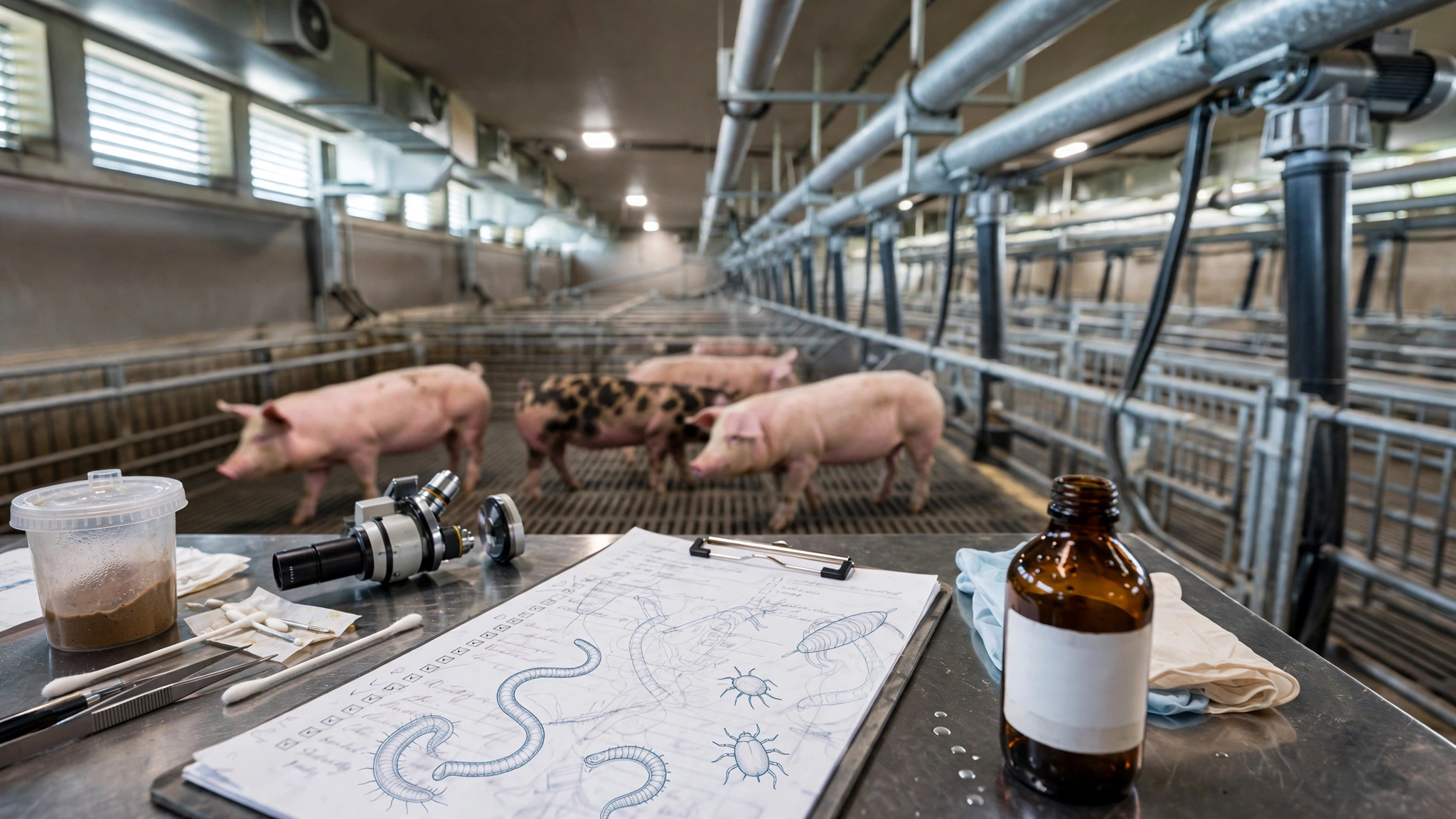
Whether you’re managing a large-scale commercial operation or a small backyard herd, the fundamental principles remain consistent: prevent contamination through biosecurity and sanitation, break parasite life cycles through environmental management, treat strategically when monitoring indicates intervention is necessary, and continuously verify program effectiveness through objective data collection.
Don’t assume your parasite control program is working—verify results through systematic monitoring, including faecal examination, slaughter liver checks, and production performance analysis. Be willing to modify your approaches when data reveals inadequate control or unnecessary interventions that waste money.
The most successful operations I work with make data-driven decisions backed by actual numbers rather than assumptions, consistently outperforming competitors who rely on gut feelings and outdated protocols.
Invest the time and modest costs required for proper monitoring—the return on that investment typically exceeds 10:1 through optimised program efficiency and improved herd performance.