Pig Immunity Nutrition: Requirements, Limits, and What the Evidence Supports
Pig immunity nutrition is the practice of meeting the herd’s nutrient requirements so immune function is not the thing that gets shortchanged when disease pressure arrives. It is not a matter of raising one nutrient above the rest; in at least one case, raising a nutrient too far is regulated by federal law. This guide sits within our wider resource on pig health and disease management.
Quick Answer
Pig immunity nutrition works by meeting published requirements consistently rather than by exceeding them. Immune function suffers when any essential nutrient becomes limiting, so balance matters more than any single addition. Two nutrients—selenium and vitamin E—carry particular weight for immune and antioxidant function, and selenium is the one nutrient in swine diets with a strict federal ceiling: the FDA limits added selenium to 0.3 ppm of the diet.
Key Takeaways
- Added selenium is limited by FDA regulation to 0.3 ppm in any swine diet. This is a legal ceiling, not a target to work up to.
- Selenium toxicity has been produced at 5 ppm to 8 ppm — roughly 20 to 30 times the required level.
- NRC 2012 estimates the vitamin E requirement for growing-finishing pigs at 11 ppm.
- Selenium and vitamin E have closely related functions, but their requirements are independent of each other.
- Cobalt has no benefit when added to swine diets in elemental form.
How Nutrition Affects Pig Immunity
Nutrition affects immunity by determining whether the nutrients an immune response consumes are available without starving growth. Two branches of the immune system draw on that supply. Innate immunity — the immediate, non-specific defenses that include physical barriers and rapid-response cells — depends on intact tissue and functioning antioxidant enzymes. Adaptive immunity — the slower, pathogen-specific response that produces antibodies — draws heavily on amino acids and on the vitamins that support cell division.
Both compete with growth for the same feed. A pig mounting an immune response partitions nutrients toward that response, which is why a health challenge shows up as reduced gain before it shows up as visible illness. You cannot override that biological priority through feed. What you can do is ensure the diet is not the limiting factor when it happens.
That framing matters because it sets a realistic expectation. Nutrition does not “boost” immunity in the way supplement marketing implies. It removes a constraint. A pig whose diet meets requirements can mount the response its genetics and health status allow; a pig short on a single essential nutrient cannot, regardless of what else is in the feed.
Why NRC Minimums Are Not Feeding Targets
NRC requirement values are floors set to prevent deficiency, deliberately positioned low to discourage oversupplementation—they are not the level at which performance is optimized. Reading them as targets misunderstands what they are for.
Both approaches can lead to problems, and both errors are common. Formulating exactly at the minimum leaves no margin for variation in ingredient content, storage losses, or intake shortfalls in a sick pig eating less than usual. Formulating far above the minimum, on the theory that more is better, wastes money, increases nutrient excretion, and — for certain minerals — approaches ranges where harm begins.
Commercial diets are therefore formulated above NRC minimums with a deliberate safety margin, informed by the ingredients actually being used and the health status of the herd. The published requirement is the reference point for that judgment, not the answer to it. For the underlying values across all nutrient classes, see our guide to the vitamins and minerals pigs require.
Pig Immunity Nutrition Has Legal Ceilings, Not Just Floors
Selenium is the clearest case where “more is better” is both wrong and unlawful, and it is the nutrient most often mishandled in discussions of immune nutrition.
Selenium: Requirement, Federal Ceiling, and Toxicity
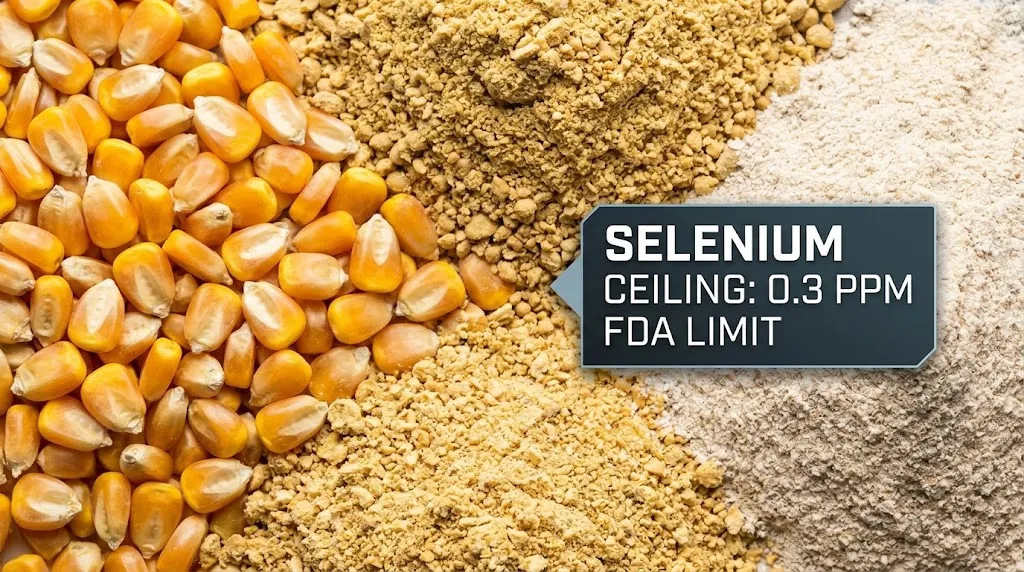
Selenium is a trace mineral regulated by the FDA, and the maximum amount that can be added to swine diets is 0.3 ppm, according to the MSD Veterinary Manual on nutritional requirements for pigs. That restriction applies to any swine diet, for any class of pig.
The requirement sits close to that ceiling. NRC 2012 places the dietary selenium requirement at 0.3 mg/kg for nursery pigs and 0.15 mg/kg for growing-finishing pigs and sows.
Look at what that means in practice. For a nursery pig, the requirement and the legal maximum for added selenium are the same number. There is no headroom to “enhance” a nursery diet with more selenium, and any recommendation to do so is a recommendation to break a federal feed regulation.
Selenium functions through selenoproteins — enzymes that contain selenium at their active sites, including glutathione peroxidase, which reduces free radicals generated during immune activation. That antioxidant role is genuine, which is why selenium appears in every serious discussion of immune function. It is also why the margin for error is so narrow.
| Selenium | |
|---|---|
| Requirement: nursery pigs | 0.3 mg/kg (NRC 2012) |
| Requirement, growing-finishing, and sows | 0.15 mg/kg (NRC 2012) |
| Maximum added. U.S. | 0.3 ppm of the diet (FDA) |
| Deficiency signs | Sudden death in fast-growing weaned pigs, white muscle disease, mulberry heart disease, liver necrosis, impaired reproduction, edema |
| Chronic toxicity | 5 to 10 ppm — poor growth rate, hoof separation at the coronary band |
| Acute toxicity | Above 10 to 20 ppm — posterior paralysis, central nervous system lesions |
Why “More Is Better” Breaks Down Here
Selenium is unusual among nutrients in that toxicity occurs at concentrations only slightly above those required for normal metabolism. Toxicity has been produced at 5 ppm to 8 ppm—approximately 20 to 30 times the required level, as documented in Kansas State University’s swine nutrition guide entry on selenium.
Twenty to thirty times sounds like a wide margin until you consider how selenium reaches a pig. It arrives from the base ingredients, from the vitamin-trace mineral premix, and potentially from an injectable product—three routes, easily double-counted. The most common cause of selenium problems in swine production is not deliberate oversupplementation. The most common cause of selenium problems is a mixing error or an unaccounted second source.
The practical rule: confirm what your premix already supplies before adding selenium from any other route, and do not treat 0.3 ppm as a level to build toward.
Vitamin E and Selenium: Linked but Independent
Selenium and vitamin E have closely related functions, but their requirements are independent of one another. This is the single most useful correction in immune nutrition, because the assumption that raising one covers a shortfall in the other is both widespread and wrong.
Their deficiency signs overlap almost completely—white muscle disease, mulberry heart disease, sudden death, and impaired reproduction appear with a shortfall in either. That overlap is precisely what causes the confusion. A herd showing those signs has a problem with one, the other, or both, and the diet must be checked for each.
NRC 2012 estimates the vitamin E requirement for growing-finishing pigs at 11 ppm. One IU of vitamin E equals 1 mg of dl-alpha-tocopheryl acetate, the supplemented form used in commercial premixes—a conversion worth knowing, because label and formulation units differ and misreading them produces real errors.
Two practical factors raise vitamin E’s importance in modern production. Soil, pasture, and forage are important sources of vitamin E, and confinement pigs have decreased access to all three. Artificial drying of high-moisture grains destroys some of the vitamin E they contain. Both push a nutrient that outdoor pigs largely obtained from their environment into the premix.
High levels of copper, zinc, and iron also destroy vitamin E in the diet. That interaction is a reason to formulate trace minerals within published ranges rather than generously; overshooting one mineral quietly reduces the vitamin most associated with immune antioxidant function.
Zinc, Copper, and the Trace Minerals
Trace minerals support immunity as enzyme cofactors, and the published dietary ranges for growing-finishing pigs are narrower than supplement marketing suggests. Zinc recommendations for growing-finishing pigs run from 50 to 180 ppm across published ranges, with specific values of 75 to 125 ppm depending on phase. Copper runs from 3 to 20 ppm, with specific values of 8 to 12 ppm by phase.
Those upper figures deserve a clarifying note. In published trace mineral tables, the upper value does not represent a safe or tolerance level. It represents a reference point above which further additions are unlikely to improve performance. Formulating at the top of a range is not a safety cushion; it is spending without expected return, and in copper’s case it carries manure and environmental consequences.
One correction worth stating plainly: cobalt has no benefit when added to swine diets in elemental form. Cobalt is a component of the vitamin B12 molecule, and its role is delivered through B12 rather than through elemental supplementation. Any program recommending elemental cobalt for immune support is recommending an expense with no mechanism behind it.
Organic trace mineral sources — amino acid complexes and proteinates — are formulated to resist interactions with phytate and fiber in the digestive tract. Where a herd faces ongoing health pressure and mineral status is genuinely marginal, that is a reasonable conversation with a nutritionist. Where base nutrition is already sound, source substitution is unlikely to be where the return sits.
The Two Windows That Matter Most
Immune nutrition returns the most in two windows, because both involve pigs whose own immune systems cannot yet carry the load.
Late Gestation and Colostrum
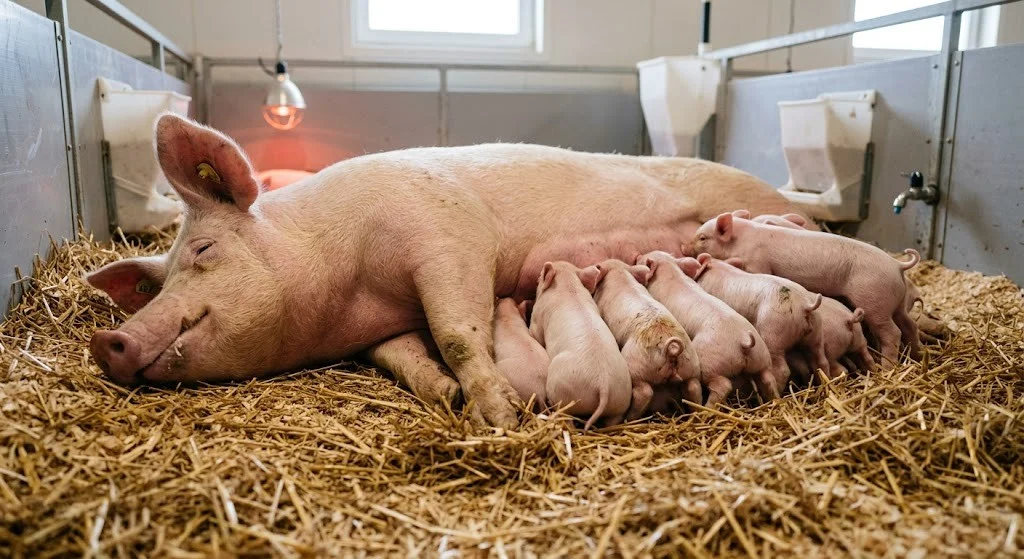
Piglets are born without circulating antibodies and acquire passive immunity entirely through colostrum—the first milk, dense in immunoglobulins—absorbed across the gut in the hours immediately after birth. The sow’s nutritional status in late gestation is therefore not only her business; it determines what her litter starts with.
The nutrients that matter here are the ones already discussed: adequate protein and amino acids for immunoglobulin synthesis and vitamin E and selenium within their published ranges, since both transfer to colostrum. The ceiling still applies. A sow’s diet cannot exceed 0.3 ppm added selenium regardless of what it might do for her litter.
Weaning
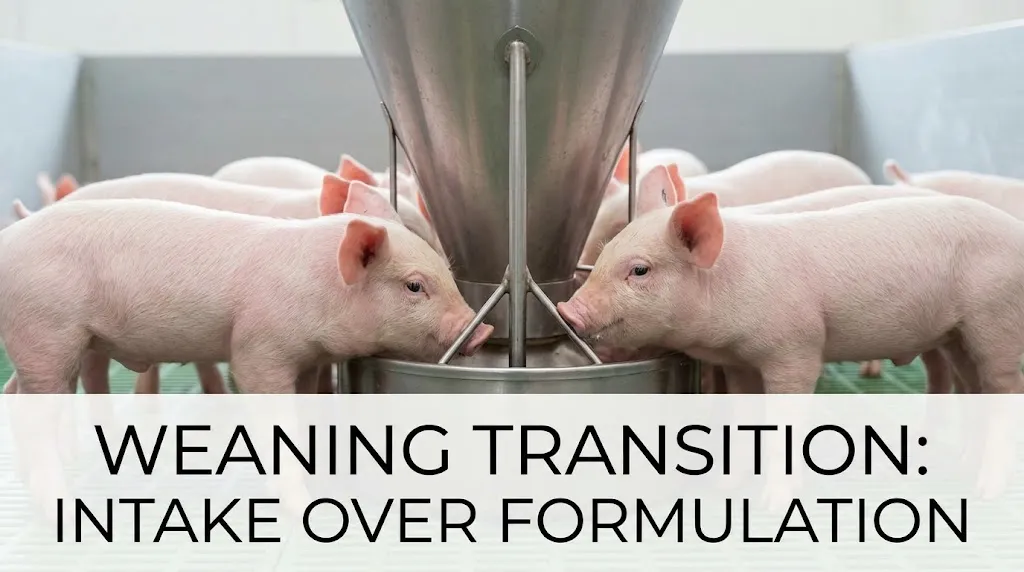
Weaning combines three stressors at once: passive immunity from colostrum is waning, the pig’s own adaptive immunity is immature, and feed intake drops sharply during the transition to solid feed. A correctly formulated diet delivers benefits only if the pig eats it.
This situation is why nursery nutrition emphasizes highly digestible ingredients and palatability rather than higher nutrient concentrations. The constraint at weaning is usually intake, not formulation. Our pig nutrition and feeding guide covers broader stage-by-stage requirements.
Feed Quality Is an Immune Variable
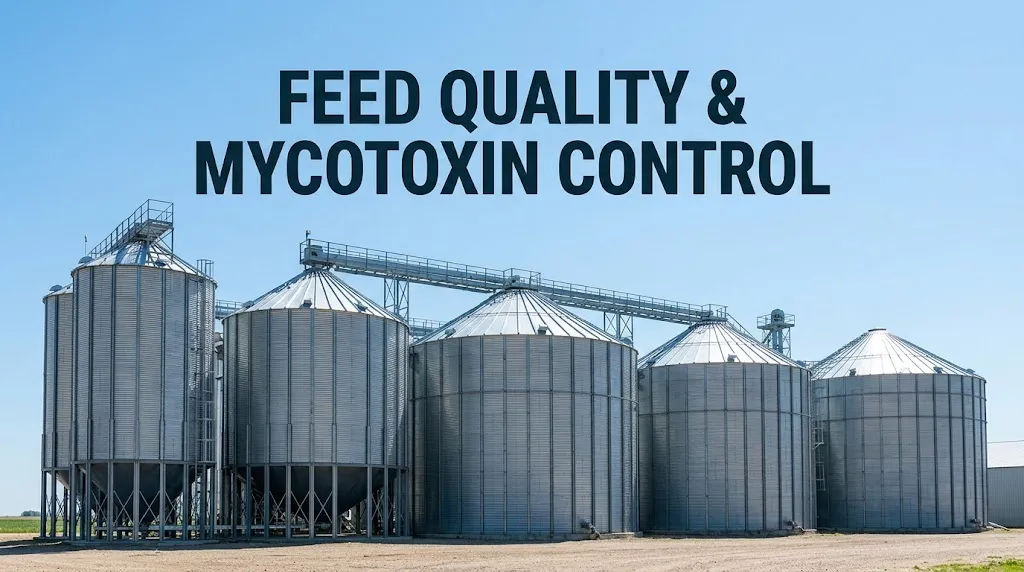
Contaminated feed suppresses immune function regardless of how well the diet is formulated, which makes feed quality control part of immune nutrition rather than separate from it.
Mycotoxins — toxic compounds produced by molds growing on grain — are the primary concern. They reduce feed intake, and several suppress immune function directly. Because they are invisible and unevenly distributed within a lot, a diet can meet every requirement on the formulation sheet while delivering a compromised immune outcome.
Storage is where most of the outcome is decided. Moisture entry, caking, and extended storage in warm conditions favor mold growth. Ingredient testing, controlled storage moisture, and cleaning bins between deliveries do more for immune outcomes on many farms than any premix adjustment — and they cost less.
Supplements: What the Evidence Supports
Evidence strength varies widely across the products marketed for immune support, and the honest summary is that a small number have substantial research behind them while most do not.
| Category | Proposed mechanism | Evidence position |
|---|---|---|
| Spray-dried plasma | Supplies immunoglobulins and bioactive proteins in nursery diets | The most extensively researched immune-supporting nursery ingredient |
| Yeast products (beta-glucans, MOS) | Immune modulation and pathogen binding in the gut | Research shows responses vary between studies and herds |
| Organic acids | Reduced gut pathogen load, improved barrier integrity | Researched, with effects most apparent under enteric challenge |
| Nucleotides | Support for rapidly dividing immune cells | Smaller body of evidence; effects inconsistent |
| Diatomaceous earth | Marketed for immune and parasite benefit | No credible evidence of immune enhancement in swine |
| Herbal immune preparations | Activity observed in laboratory settings | Laboratory activity has generally not translated to practical benefit |
| Homeopathic products | — | No established mechanism or evidence of efficacy |
Two constraints on this table. Inclusion rates and costs are deliberately absent because they are formulation decisions that belong to a nutritionist, who works with your ingredient prices and herd health status. And a product with good evidence behind it still returns nothing if base nutrition is marginal — premium fortification layered on top of a deficient diet corrects nothing.
The Sequence That Actually Works
Fix the base diet first: energy, amino acids, and the vitamin-mineral premix meeting published requirements with a sensible margin. Then verify feed quality and storage. Then, and only then, evaluate whether a supplement addresses a problem your herd actually has. Reversing that order is the most expensive mistake in immune nutrition.
What Nutrition Cannot Replace
Nutrition does not substitute for vaccination, biosecurity, or veterinary treatment—the four operate on different mechanisms and cover different risks.
Vaccination produces pathogen-specific adaptive immunity that nutrition cannot generate. Adequate nutrition supports the response to a vaccine; it does not create the specificity a vaccine provides, which is why immune nutrition belongs alongside a herd’s vaccination program rather than in place of it.
Biosecurity reduces pathogen exposure. No nutritional program compensates for a herd being repeatedly challenged, and exclusion is cheaper than response—the reasoning behind farm biosecurity measures.
Veterinary treatment addresses established disease. A well-nourished pig facing an overwhelming challenge still needs diagnosis and treatment.
The realistic framing is that nutrition sets the ceiling on what the other three can achieve. It does not replace any of them.
Frequently Asked Questions
What nutrient do pigs need the most?
There is no single nutrient that pigs need “the most” for immunity. Pigs require energy, amino acids, vitamins, and minerals in balanced amounts, and immune function can suffer when any essential nutrient becomes limiting. This is the central point of immune nutrition: immunity is not built by raising one nutrient above requirements but by ensuring no nutrient falls below them. A diet that is excellent in every respect but one performs at the level of that one shortfall.
How much selenium can I add to pig feed?
FDA regulation limits added selenium to 0.3 ppm of the diet in any class of swine. NRC 2012 places the requirement at 0.3 mg/kg for nursery pigs and 0.15 mg/kg for growing-finishing pigs and sows, meaning the nursery requirement and the legal ceiling are effectively the same figure. Before adding selenium from any source, confirm what your premix already supplies—most selenium problems in swine trace to a second, unaccounted source rather than to deliberate oversupplementation.
Can nutrition replace vaccines and medications?
No. Vaccination generates pathogen-specific adaptive immunity that no diet can produce, biosecurity reduces exposure that no diet can offset, and veterinary treatment addresses established disease. Adequate nutrition supports the response to a vaccine and provides a pig the resources to fight an infection, but it does not substitute for any of the three. The practical relationship is that nutrition determines how well the other measures can work, not whether they are needed.
Are organic trace minerals worth the extra cost?
It depends on whether mineral status is actually limiting in your herd. Organic sources, such as amino acid complexes and proteinates, are designed to resist binding with phytate and fiber in the digestive tract. Where a herd faces ongoing health challenges and mineral status is genuinely marginal, the source is worth discussing with a nutritionist. Where base nutrition already meets requirements with a reasonable margin, substituting sources is unlikely to be where the return lies.
Does vitamin E supplementation compensate for low selenium?
No. Selenium and vitamin E have closely related antioxidant functions, but their requirements are independent of one another, and neither covers a shortfall in the other. Their deficiency signs overlap almost completely—white muscle disease, mulberry heart disease, sudden death, and impaired reproduction—which is precisely why the two get conflated. A herd showing those signs needs both nutrients checked in the diet separately, not one raised on the assumption that it will cover the other.
How do I know if my feed program supports immunity?
Start with the formulation sheet rather than the outcome: confirm that vitamin and mineral levels meet published requirements with a reasonable margin and that no nutrient is being double-supplied from more than one source. Then verify that formulated levels are what pigs actually receive, since mixing accuracy, ingredient variation, and storage losses all intervene. Blood or tissue analysis of key nutrients, arranged through your veterinarian, resolves the gap between what a diet contains on paper and what a pig has taken up.
Conclusion
Sound pig immunity nutrition rests on three habits. Treat published requirements as floors rather than targets, and understand that formulating exactly at the minimum and formulating far above it are both errors. Respect the ceilings, particularly selenium’s federal limit of 0.3 ppm added to the diet, and account for every source before adding more. And fix the base diet and feed quality before evaluating any supplement, because premium fortification layered on a deficient ration corrects nothing.
Mike Jennings
Explore More
Browse all of our pig health guides for more on disease prevention, biosecurity, and herd health in U.S. pig production.