History of Pig Farming in America: From Colonies to Industrial Powerhouse
Trace the remarkable journey of American pig farming from 16th-century colonists to modern industrial operations. Discover key historical milestones, breed development, and industry evolution.
Introduction
After 20+ years running a 5,000-head operation in North Carolina, I’ve come to appreciate that understanding where we’ve been helps predict where we’re going. The history of commercial pig farming in America is a story of adaptation, innovation, and resilience that shaped rural America and fed millions.
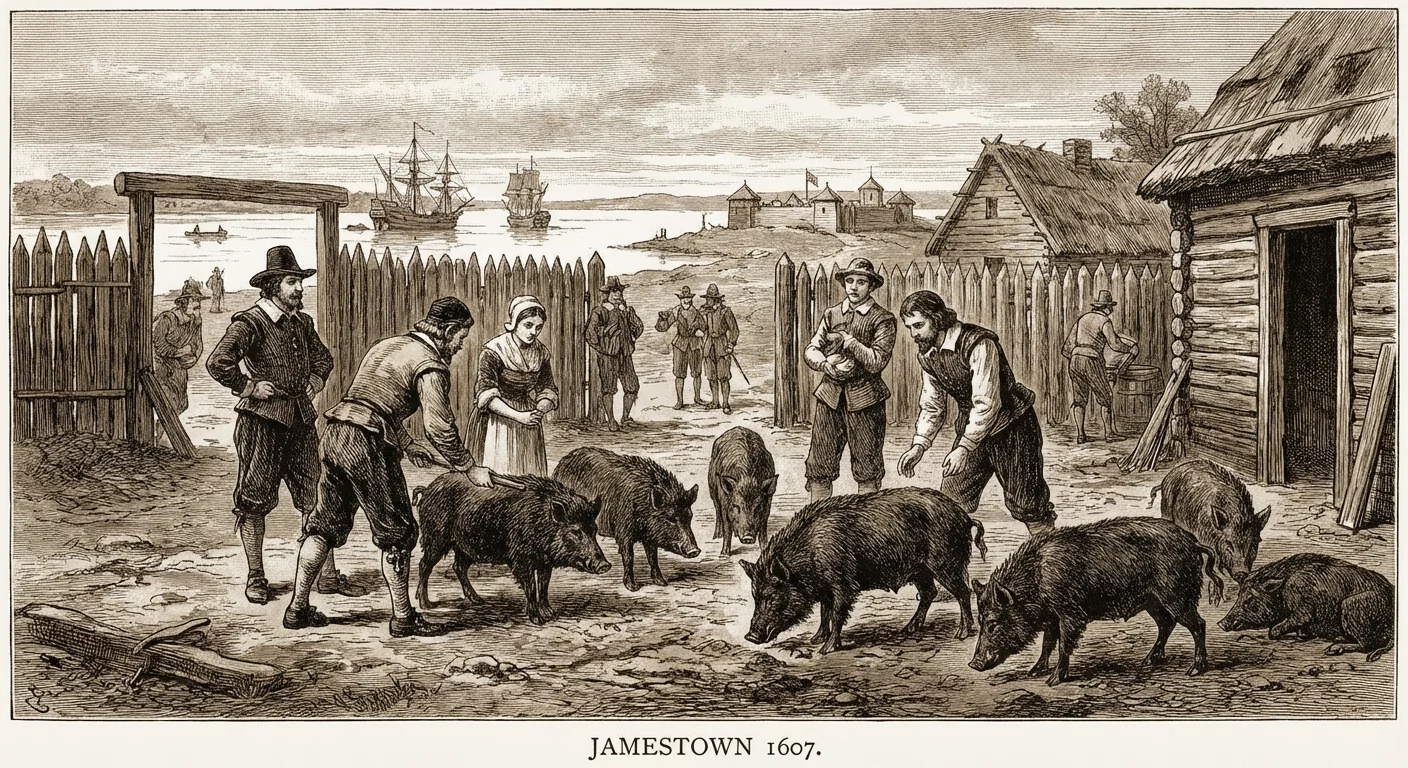
When European colonists first arrived in Jamestown in 1607 and Plymouth in 1620, they brought hogs that would become the foundation of American agriculture. According to USDA National Agricultural Statistics Service historical records, the American pork industry has evolved from subsistence farming to becoming the world’s third-largest producer, with annual production exceeding 13 billion pounds.
This history connects to pig farming economics because understanding how the industry evolved helps explain today’s market structures and pricing dynamics. The entrepreneurial spirit that drove 19th-century hog barons continues in modern commercial operations.
Table of Contents
1. Colonial Origins (1600s-1700s)
2. The Western Migration and Hog Drives (1800s)
3. Rise of the Corn Belt and Breed Development
4. Industrial Revolution in Pork Production (1900s)
5. Modern Era: Technology and Consolidation (1950s-2000s)
6.21st Century: Global Competition and Sustainability
7. Key Historical Milestones
8.Heritage Breeds: Living History
9. Lessons from History for Modern Farmers
Colonial Origins (1600s-1700s) {#colonial-origins}
First Hogs Arrive in America
The history of American pig farming began when English colonists brought ancestral breeds to the New World. These early hogs were tough, adaptable animals that thrived on the abundant acorns, roots, and wild forage. According to the American Livestock Breeds Conservancy, Spanish explorers had already introduced hogs to the Southeast in the 1500s.
Key developments of this era:
- 1607: Jamestown colonists receive first shipment of European livestock
- 1620s: Hogs become essential food source for growing settlements
- 1650s: Massachusetts establishes first fencing laws for livestock
- 1700s: Free-range hogs roam throughout colonial settlements
“Hog and Hominy”: The Colonial Diet
Pork became the dominant protein source for colonial Americans. “Hog and hominy” (corn) formed the basis of frontier diets. Colonists learned from Native Americans, who had been raising dogs before European arrival.
Case Study – The Yorkshire Legacy: While Yorkshire pigs weren’t developed until 19th-century England, their ancestors—the Large White breed—were among the first white hogs brought by colonists. Today, Yorkshires remain America’s #1 commercial breed, a direct lineage to those early colonial animals.
The Western Migration and Hog Drives (1800s) {#western-migration}
Opening of the West
As pioneers moved westward, they brought hogs with them. The Ohio River Valley became a pork-producing powerhouse by the early 1800s. According to University of Illinois Extension historical records, Illinois farmers alone marketed over 1 million hogs annually by 1850.
The Great Hog Drives:
- 1830s-1850s: Hogs driven from Ohio Valley to Eastern markets
- Cincinnati earned the nickname “Porkopolis” as the industry’s hub
- Pork packing became big business in Cincinnati, Milwaukee, and Chicago
- Over 3 million hogs were driven annually on foot to railheads
The Cattle Trail… For Hogs
Just as cattle drives shaped the West, hog drives followed similar patterns:
| Route | Period | Volume |
|---|---|---|
| Ohio River to Baltimore | 1830s-1850s | 1-2 million/year |
| Illinois to Chicago | 1840s-1860s | 2-3 million/year |
| Corn Belt to St Louis | 1850s-1870s | 3-5 million/year |
Download our FREE “Commercial Pig Farm Startup Cost Calculator” to understand historical investment patterns and apply them to your business plan:
[Lead Magnet: Farm Cost Calculator – Excel spreadsheet with templates based on historical investment data]
Rise of the Corn Belt and Breed Development {#corn-belt-rise}
Corn: The Foundation of American Pork
The development of the Corn Belt transformed American pig farming. According to the USDA Economic Research Service, Iowa and Illinois became the heart of pork production due to abundant corn and soybean feed.
Breed Development Milestones:
19th-century America saw remarkable breed innovation:
- Chester White (1815): Developed in Pennsylvania, America’s first major breed
- Poland China (1815): Ohio’s contribution—named for Polish and Chinese pigs used in development
- Berkshire (1830s): Imported from England, prized for premium meat quality
- Yorkshire (Large White): Arrived in the mid-1800s and became the leading maternal breed
- Duroc (1830s-1850s): American original, known for excellent growth rates
Real Numbers from History: According to the National Pork Board historical data, in 1850, the average American farm had 5-6 hogs. By 1900, commercial farms were marketing 50-100 heads annually. Today’s large commercial operations exceed 100,000 head.
Industrial Revolution in Pork Production (1900s) {#industrial-revolution}
From Farm to Factory
The early 20th century brought massive changes to pig farming:
1900-1950: The Transformation
- 1906: Pure Food and Drug Act improves meat inspection
- 1910s: Truck transport replaces hog drives
- 1920s: Scientific breeding gains prominence
- 1930s: Depression drives consolidation
- 1940s: War demand increases production
The Rise of Modern Genetics
According to Iowa State University animal science records, the mid-1900s saw the emergence of the following:
1. Systematic breed improvement programs
2. Artificial insemination technology (1930s-1940s)
3. National Swine Registry breed standards
4. Commercial genetic companies
Modern Era: Technology and Consolidation (1950s-2000s) {#modern-era}
The Great Consolidation
Modern pig farming has seen dramatic consolidation. According to USDA Census of Agriculture data, the number of hog farms dropped from over 1 million in 1980 to under 70,000 today, while production increased.
| Decade | Farms | Avg. Inventory/Farm | Total Hogs |
|---|---|---|---|
| 1980 | 660,000 | 73 | 48 million |
| 1990 | 300,000 | 246 | 54 million |
| 2000 | 86,000 | 740 | 59 million |
| 2010 | 67,000 | 1,100 | 64 million |
| 2024 | 60,000+ | 1,200+ | 74 million |
Technology Revolution
Modern technology has transformed operations:
- Automated feeding systems (1980s-present)
- Climate-controlled barns (1990s-present)
- Electronic identification (2000s-present)
- Precision agriculture tools (2010s-present)
My Farm Story: When I started in 2001, we recorded feed by hand in notebooks. Today, every gram of feed is logged automatically. My grandfather couldn’t have imagined the technology we use now—but the fundamentals of excellent stockmanship remain unchanged.
21st Century: Global Competition and Sustainability {#21st-century}
Export-Driven Industry
According to the USDA Foreign Agricultural Service, the U.S. now exports 25-30% of pork production—a dramatic shift from the domestic-focused industry of previous decades.
Key export markets (2024-2025):
- Mexico — #1 destination (25% of exports)
- China/Hong Kong — #2 (15-20%)
- Japan — #3 (15%)
- Canada — #4 (10%)
- South Korea — #5 (8%)
Sustainability Movement
Modern commercial pig farming increasingly focuses on environmental stewardship:
- Manure management technologies reduce environmental impact
- Renewable energy installations on farms (solar, biogas)
- Water conservation practices
- Carbon footprint reduction initiatives
Key Historical Milestones {#milestones}
| Year | Event | Impact |
|---|---|---|
| 1607 | First European hogs arrive at Jamestown | Foundation of American pork industry |
| 1815 | Chester White breed developed | First major American pig breed |
| 1850 | Corn Belt begins forming | Shift to grain-fed pork production |
| 1880 | Chicago becomes pork processing hub | Industrialization begins |
| 1906 | Federal Meat Inspection Act | Modern food safety standards |
| 1930s-40s | Artificial insemination | Genetic improvement accelerates |
| 1970s | Early contract farming emerges | Business model transformation |
| 1990s | Large-scale integrators dominate | Industry consolidation |
| 2013 | PEDv outbreak | Biosecurity revolution |
| 2020s | Antibiotic stewardship | Regulatory transformation |
Heritage Breeds: Living History {#heritage-breeds}
Many heritage pig breeds remain from America’s agricultural past:
Surviving Heritage Breeds
- Chester White: America’s oldest breed, still raised for specialty markets
- Berkshire: Prized for premium marbled meat in Japan
- Tamworth: Known for excellent foraging ability
- Poland China: Rare but preserved by dedicated breeders
- Red Wattle: Gourmet pork beloved by chefs
For detailed breed information, see our heritage pig breeds guide.
Lessons from History for Modern Farmers {#lessons}
What History Teaches Us
1. Adaptation is Essential
Hog farmers who adapted to new technologies and markets thrived. Those who resisted change struggled.
2. Efficiency Drives Success
From free-range to confinement, farmers continuously sought better feed conversion and lower costs.
3. Genetics Matter
Breed improvement has driven productivity gains for over 200 years. Modern genetic selection continues this trend.
4. Scale Evolves
The industry has always consolidated. Understanding this trend helps farmers make strategic decisions.
5. Markets Change
Export demand today mirrors 19th-century export dreams. Flexibility remains crucial.
Frequently Asked Questions {#faq}
When did commercial pig farming begin in America?
Commercial pig farming evolved gradually from colonial subsistence farming.
The 1800s saw the first true commercial operations, with major growth in the Ohio River Valley and Corn Belt.
By the 1850s, Cincinnati had processed over 1 million hogs annually, earning it the nickname “Porkopolis.”.
What was the significance of the Corn Belt to pig farming?
The Corn Belt’s abundant corn production made it ideal for hog farming. Corn is the primary energy source in pig feed, and proximity to cheap grain allowed Midwestern farmers to develop the most efficient pork production systems in the world.
Today, Iowa alone produces enough corn to feed hundreds of millions of pigs.
How did industrial pork production evolve?
Industrial pork production emerged in the early 1900s with improved transportation, refrigeration, and scientific breeding.
The 1950s-1990s saw dramatic consolidation, with integrated companies controlling genetics, production, and processing.
According to the National Pork Producers Council, today’s top 15% of producers account for over 85% of production.
What American pig breeds were developed in the U.S.?
Several breeds originated in America: Chester White (Pennsylvania), Poland China (Ohio), Duroc (various states), Hampshire (Massachusetts/New York), and Yorkshire (imported but developed extensively in the U.S.).
These breeds form the foundation of the modern commercial pig industry.
How has technology changed pig farming?
Modern technology includes automated feeding, climate control, electronic identification, video monitoring, and data analytics.
These tools improve efficiency, animal welfare, and profitability.
According to Pork Checkoff, technology adoption has helped U.S. producers remain competitive globally.
What challenges does the modern pig industry face?
Modern challenges include disease threats (PRRS, ASF), environmental regulations, animal welfare standards, antibiotic restrictions, labour shortages, and market volatility.
Understanding historical context helps farmers navigate these issues while maintaining profitability.
Conclusion
The history of American pig farming is a story of innovation, adaptation, and perseverance. From colonial hogs roaming free to modern precision agriculture, the industry has continuously evolved to meet challenges and opportunities.
Understanding this history isn’t just academic—it’s practical knowledge that informs better decision-making on modern farms.
Key Takeaways:
1. American pig farming evolved from colonial subsistence to industrial powerhouse over 400+ years
2. The Corn Belt’s development made the U.S. the world’s most efficient pork producer
3. Breed development has driven productivity gains from Chester Whites to modern hybrids
4. Technology adoption and scale have been consistent themes across every era
5. Lessons from history remain relevant for navigating today’s challenges
For a complete commercial pig farming guide, visit Commercial Pig Farming in the USA: Our Pillar Article.