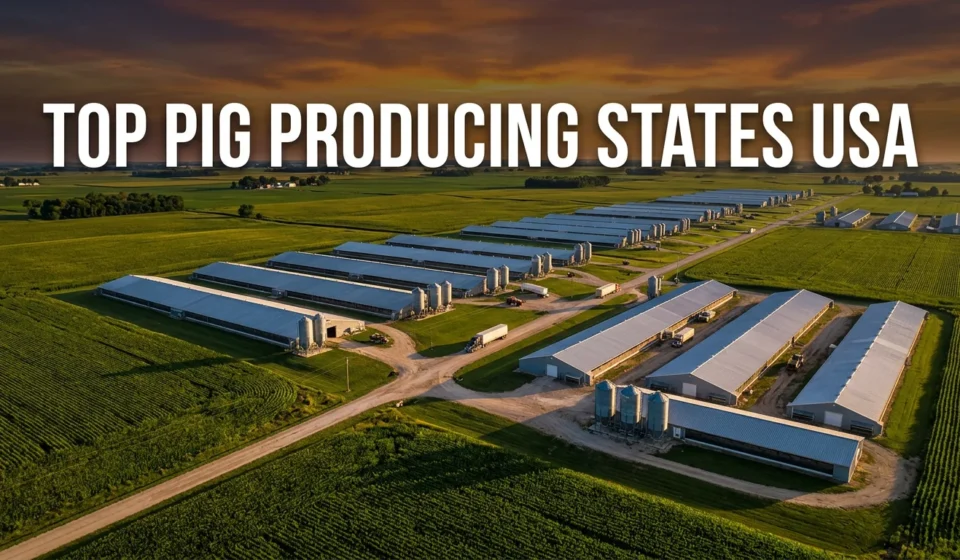
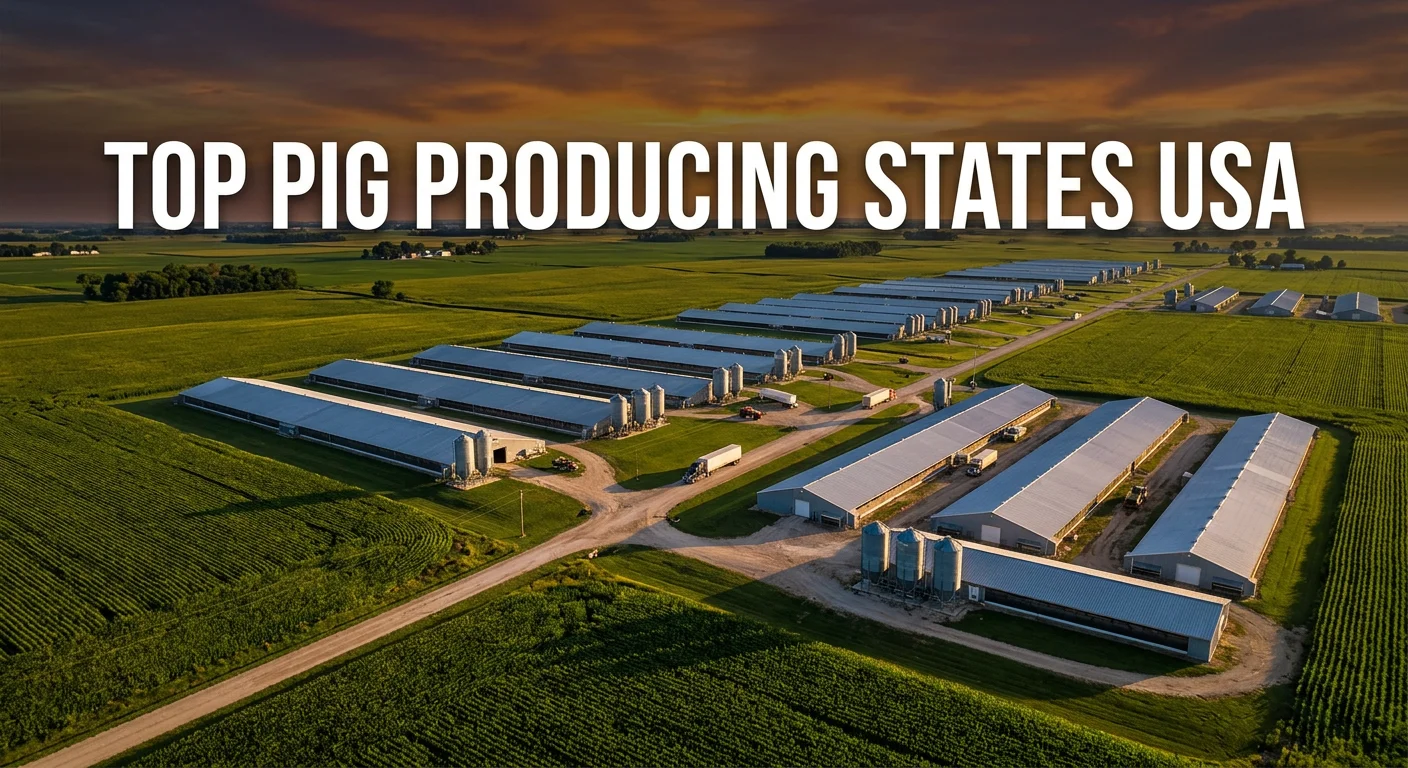
Top Pig-Producing States in the USA: Regional Powerhouses of American Pork
Introduction
After 20+ years running a 5,000-head operation in North Carolina, I’ve seen firsthand how geography shapes the American pork industry. Understanding commercial pig farming by state is essential for anyone evaluating market opportunities, supply chains, or regional competitiveness.
According to the USDA National Agricultural Statistics Service (NASS) December 2024 report, the United States has approximately 74.1 million hogs and pigs, with over 60% concentrated in just five states.
This regional concentration is not coincidental; it demonstrates the effective interplay of climate, feed availability, processing infrastructure, and agricultural knowledge.
Case Study – The Iowa Advantage: Iowa’s combination of 12+ million acres of corn production, world-class land-grant universities, and established infrastructure makes it the undisputed leader.
The Iowa Pork Producers Association says that Iowa has more pigs than the next five states put together.
This regional analysis connects to pig farming economics because location directly impacts feed costs, transportation, and market access. Understanding these dynamics helps farmers make smarter business decisions.
Table of Contents
1. National Overview: Where America’s Pork Comes From
2. #1 Iowa: The Undisputed King of Pork
3. #2 North Carolina: The Eastern Powerhouse
4.#3 Minnesota: The Northern Producer
5. #4 Illinois: The Prairie State
6.#5 Indiana: The Crossroads of Pork
7. Honourable Mentions: Rising Regions
8. Why These States Dominate
9. Regional Economic Impact
National Overview: Where America’s Pork Comes From {#national-overview}
U.S. Hog Inventory by State (2024-2025)
According to the USDA NASS Quarterly Hogs and Pigs Report (December 2024):
| Rank | State | Total Hogs (million) | % of U.S. Total | Annual Marketing |
|---|---|---|---|---|
| 1 | Iowa | 24.5+ | 33% | 47+ million |
| 2 | North Carolina | 9.0+ | 12% | 18+ million |
| 3 | Minnesota | 8.5+ | 11% | 14+ million |
| 4 | Illinois | 5.5+ | 7% | 11+ million |
| 5 | Indiana | 4.3+ | 6% | 9+ million |
| 6 | Nebraska | 3.5+ | 5% | 7+ million |
| 7 | Missouri | 3.0+ | 4% | 6+ million |
| 8 | Oklahoma | 2.3+ | 3% | 4.5+ million |
| 9 | Kansas | 1.9+ | 2.5% | 3.5+ million |
| 10 | Ohio | 1.7+ | 2.3% | 3.2+ million |
The top five states account for 69% of total U.S. hog inventory.
#1 Iowa: The Undisputed King of Pork {#1-iowa}
By the Numbers
According to Iowa State University Extension, Iowa stands alone at the top of American pork production:
| Metric | Iowa | U.S. Total | Iowa’s Share |
|---|---|---|---|
| Hog Inventory | 24.5+ million | 74.1 million | 33% |
| Annual Marketing | 47+ million | 140+ million | 34% |
| Pig Crop (2024) | 23+ million | — | — |
| Breeding Hogs | 1.1+ million | — | — |
| Cash Receipts | $8.5+ billion | — | — |
Why Iowa Dominates
1. Corn, Corn, and More Corn
Iowa produces over 12 million acres of corn annually—perfect for pig feed. According to the USDA Economic Research Service, proximity to feed reduces transportation expenses by $15-20 per tonne.
2. Processing Infrastructure
Major plants in Sioux City, Waterloo, and Denison process millions of hogs weekly. According to the Iowa Pork Producers Association, 25+ pork processing facilities operate in Iowa.
3. Research & Education
Iowa State University’s Pork Industry Center provides cutting-edge research, extension services, and workforce training.
Real Numbers: According to Iowa DNR, Iowa’s pork industry employs over 40,000 people and generates $13+ billion in economic activity annually.
A single 2,500-head finishing barn contributes approximately $150,000 annually to the local economy.
Key Counties
Top Pork-Producing Counties (Iowa):
- Sioux County
- Hamilton County
- Washington County
- Dubuque County
- Delaware County
#2 North Carolina: The Eastern Powerhouse {#2-north-carolina}
By the Numbers
According to the North Carolina Department of Agriculture & Consumer Services:
| Metric | North Carolina | U.S. Total |
|---|---|---|
| Hog Inventory | 9.0+ million | 12% |
| Annual Marketing | 18+ million | 13% |
| Cash Receipts | $4.5+ billion | — |
| Pig Crop (2024) | 8.5+ million | — |
My Backyard: North Carolina’s Story
As someone who’s operated in North Carolina for over two decades, I’ve seen this state’s transformation. According to the North Carolina Pork Council, the state rose from a minor producer in the 1970s to #2 nationally in just 30 years.
Key Growth Drivers:
1. Integration with processing: Smithfield Foods built massive complexes in eastern NC
2. Contract farming: New models enabled rapid expansion
3. Labour force: Rural communities provided willing workforce
4. Climate: Longer grazing seasons reduced heating costs
Geographic Hotspots
Top Pork-Producing Counties (North Carolina):
- Sampson County (largest pork-producing county in the U.S.)
- Duplin County
- Wayne County
- Robeson County
- Greene County
Case Study – Sampson County: The USDA Census of Agriculture reports that Sampson County alone has over 1 million hogs—the most of any county in America. This represents a billion-dollar economic engine for rural eastern North Carolina.
#3 Minnesota: The Northern Producer {#3-minnesota}
By the Numbers
According to the University of Minnesota Extension Swine Program:
| Metric | Minnesota | U.S. Total |
|---|---|---|
| Hog Inventory | 8.5+ million | 11% |
| Annual Marketing | 14+ million | 10% |
| Breeding Hogs | 450,000+ | — |
| Cash Receipts | $3.2+ billion | — |
Why Minnesota Matters
1. Research Excellence
The University of Minnesota’s Swine Center and extension programmes lead nationally in research, contributing significantly to industry best practices.
2. Cooperative Model
Unlike other states dominated by integrators, Minnesota has a strong cooperative tradition. According to the Minnesota Pork Board, family farms remain significant producers.
3. Strategic Location
According to the Minnesota Department of Agriculture, the state sits at the crossroads of major grain-producing regions and processing facilities.
Top Pork-Producing Regions (Minnesota):
- Murray County
- Nobles County
- Rock County
- Yellow Medicine County
- Lac qui Parle County
#4 Illinois: The Prairie State {#4-illinois}
By the Numbers
According to the Illinois Pork Producers Association:
| Metric | Illinois | U.S. Total |
|---|---|---|
| Hog Inventory | 5.5+ million | 7% |
| Annual Marketing | 11+ million | 8% |
| Pig Crop (2024) | 5.0+ million | — |
| Cash Receipts | $2.1+ billion | — |
Historical Significance
Illinois played a critical role in American pork history. According to University of Illinois Extension historical records, Chicago became the pork processing capital in the 1850s, pioneering industrial meat production methods still used today.
Why Illinois Continues to Lead:
1. Transportation hub: Major railroads and interstates connect to every market
2. Grain access: Central Illinois corn production rivals Iowa
3. Processing legacy: World-class facilities in Chicago, Peoria, and Springfield
4. University of Illinois: World-renowned animal science program
Top Pork-Producing Counties (Illinois):
- Livingston County
- LaSalle County
- Mason County
- Clinton County
- Shelby County
#5 Indiana: The Crossroads of Pork {#5-indiana}
By the Numbers
According to the Indiana Pork Producers Association:
| Metric | Indiana | U.S. Total |
|---|---|---|
| Hog Inventory | 4.3+ million | 6% |
| Annual Marketing | 9+ million | 6.5% |
| Breeding Hogs | 290,000+ | — |
| Cash Receipts | $1.6+ billion | — |
Indiana’s Strategic Position
Indiana occupies a unique position in American pork production. According to Purdue University Extension, the state’s central location offers logistics advantages that attract both integrators and independent producers.
Growth Factors:
1. Interstate access: I-65, I-70, and I-69 provide excellent transportation
2. Grain production: Northern Indiana Corn Belt provides affordable feed
3. Growing processing: Major plants in Logansport and other locations
4. Cooperative strength: Indiana Pork operates effective promotion programmes.
Top Pork-Producing Counties (Indiana):
- Whitley County
- Huntington County
- Wabash County
- Clinton County
- Delaware County
Honorable Mentions: Rising Regions {#honorable-mentions}
States Worth Watching
Nebraska
According to the Nebraska Pork Producers Association, the Cornhusker State has 3.5+ million hogs with significant processing infrastructure in Madison and Crete.
Missouri
According to the Missouri Pork Association, the Show-Me State has 3.0+ million hogs with a strong independent producer base.
Oklahoma
According to the Oklahoma Pork Council, this state has emerged as a major producer with 2.3+ million hogs, driven by integrator investment.
Kansas
According to the Kansas Pork Association, the Sunflower State has 1.9+ million hogs with growing finishing capacity.
Why These States Dominate {#why-dominate}
Common Factors
1. Feed Access
According to the USDA ERS Feed Grains Database, the top 10 pig states account for 55% of U.S. corn production. Feed costs account for 60–70% of production expenses.
2. Processing Proximity
Major pork processing plants concentrate in these states:
- Iowa: 25+ plants
- North Carolina: 15+ plants
- Minnesota: 12+ plants
- Illinois: 10+ plants
3. Infrastructure
According to USDA Rural Development, these states have superior transportation infrastructure, including:
- Paved rural roads
- Grain elevator networks
- Veterinary service availability
- Equipment dealer networks
4. Cultural Expertise
Generations of pig farming have created deep institutional knowledge. Landgrant universities in these states have world-class swine programs.
Regional Economic Impact {#economic-impact}
Pork’s Economic Footprint
According to the National Pork Producers Council (NPPC) 2024 Economic Impact Report:
| State | Direct Jobs | Indirect Jobs | Total Economic Impact |
|---|---|---|---|
| Iowa | 40,000+ | 120,000+ | $13+ billion |
| North Carolina | 18,000+ | 45,000+ | $7+ billion |
| Minnesota | 15,000+ | 38,000+ | $5+ billion |
| Illinois | 12,000+ | 30,000+ | $4+ billion |
| Indiana | 8,000+ | 20,000+ | $2.5+ billion |
Rural Community Benefits
Real Impact Story: According to the Iowa State University Center for Agriculture and Rural Development, every 100 sows generate approximately $25,000 in local economic activity through feed purchases, veterinary services, and labour.
Frequently Asked Questions {#faq}
What is the number one pig-producing state in the USA?
Iowa is the number 1 pig-producing state by a significant margin. According to the USDA NASS December 2024 report, Iowa has 24.5+ million hogs—33% of the U.S. total.
The state markets over 47 million pigs annually and produces more pork than the next five states combined.
Why is Iowa the top pork-producing state?
Iowa’s dominance stems from several factors: abundant corn production (12+ million acres), established processing infrastructure with 25+ plants, world-class research at Iowa State University, and a century of agricultural expertise.
According to the Iowa Pork Producers Association, these advantages reduce feed costs by $15-20 per tonne compared to other regions.
What is the second-largest pork-producing state?
North Carolina ranks #2 with 9+ million hogs, according to the NC Department of Agriculture.
The state’s rapid rise from the 1970s to today reflects Smithfield Foods’ major investment in processing facilities and contract farming networks, particularly in Sampson County, which leads the nation in hog inventory.
How does Minnesota compare to other pork states?
Minnesota ranks #3 with 8.5+ million hogs, according to the University of Minnesota Extension.
The state differs from top producers by having a stronger cooperative tradition and family farm base.
Minnesota’s University of Minnesota Swine Program provides leading research that benefits producers nationwide.
What counties produce the most pork?
According to the USDA Census of Agriculture, the top pork-producing counties are Sampson County, NC (#1 nationally with 1+ million hogs); Sioux County, IA; Duplin County, NC; Hamilton County, IA; and Clinton County, IN. These rural counties have billion-dollar pork industries supporting their local economies.
Are pork production regions shifting?
According to National Pork Board analysis, while top states remain stable, secondary regions are growing. Oklahoma, Kansas, and Colorado have increased production significantly over the past decade, thanks to new processing facilities and favourable regulations.
However, the Corn Belt’s feed advantage ensures Midwest dominance.
Conclusion
The geographic concentration of American pork production reflects decades of economic optimisation—states with feed access, processing infrastructure, and agricultural expertise naturally dominate.
Understanding these regional dynamics is crucial for anyone in the industry.
Key Takeaways:
1. Iowa dominates with 33% of U.S. hog inventory—producing more than the next five states combined
2. North Carolina’s rapid rise reflects successful integration of processing and contract farming
3. Minnesota, Illinois, and Indiana form the stable core of Midwestern pork production
4. Feed costs, processing proximity, and infrastructure create lasting competitive advantages
5. Regional economic impact exceeds $30 billion annually, supporting rural communities nationwide
For the complete commercial pig farming overview, visit Commercial Pig Farming in the USA – Our Pillar Article.