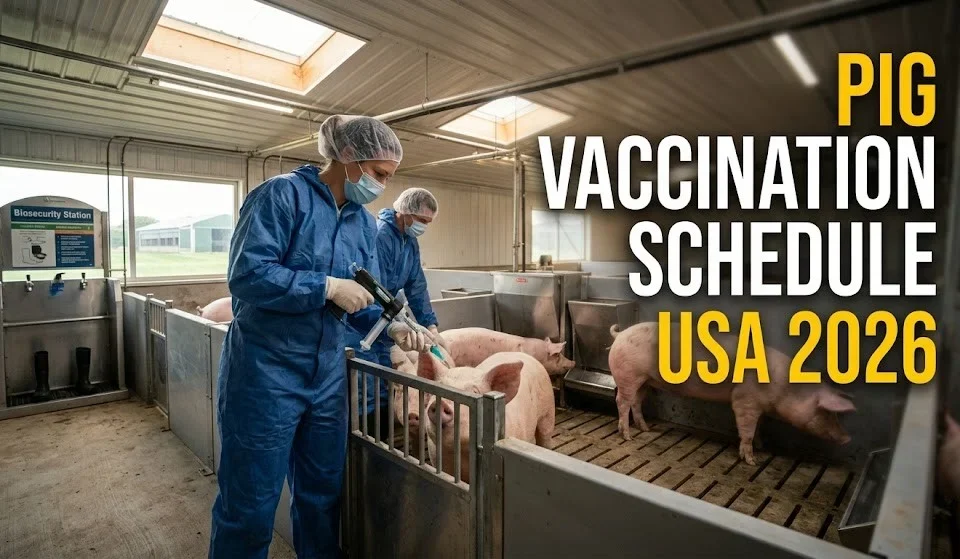
Pig Vaccination Schedule USA: Complete Guide for 2026
Introduction
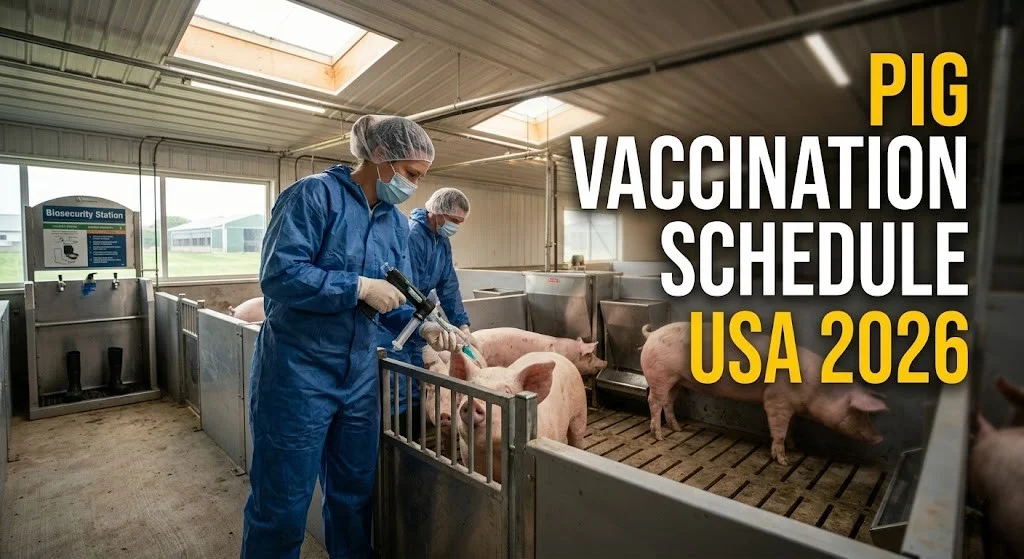
Disease prevention remains the cornerstone of profitable pig production, with vaccination programmes reducing mortality by 15-30% across U.S. swine operations, according to 2025 USDA veterinary surveys.
A well-designed vaccination schedule protects your herd from devastating diseases while maintaining regulatory compliance and consumer confidence in your pig health and disease management practices.
In my 15 years of swine practice across Iowa and the Midwest, I’ve watched farms transform their health outcomes simply by transitioning from reactive treatment to proactive immunisation.
The economic impact goes beyond lower medication costs—properly vaccinated herds consistently have better feed conversion ratios, faster growth rates, and higher weaning percentages.
Strategic vaccination timing, particularly when integrated with your commercial pig farming operation’s production flow, creates immune protection precisely when pigs face their highest disease pressure.
This guide gives vaccination protocols based on evidence for every production stage, from newborn piglets to breeding stock, focusing on 2026 regulatory requirements and new disease threats for American pig farmers.
Table of Contents
- Understanding Pig Immunity and Vaccine Science
- Core Vaccines Every Pig Farm Needs
- Risk-Based Vaccines for Specific Operations
- Vaccination Schedule for Piglets (Birth to Weaning)
- Nursery Pig Vaccination Protocol (Weaning to 50 lbs)
- Grower-Finisher Vaccination Timeline
- Breeding Stock Vaccination Programs
- Vaccine Storage and Handling Best Practices
- Vaccination Administration Techniques
- Monitoring Vaccine Efficacy
- State and Federal Vaccination Requirements
- Common Vaccination Mistakes to Avoid
- FAQ
- Conclusion
Understanding Pig Immunity and Vaccine Science
Pigs develop immunity through two pathways: passive immunity from colostrum and active immunity from infection or vaccination.
Newborn piglets rely entirely on maternal antibodies transferred through colostrum during the first 24 hours of life, providing protection for approximately 3-6 weeks depending on the sow’s antibody levels.
Active immunity develops when vaccines introduce antigens that trigger the pig’s own immune system to produce antibodies and memory cells.
Modified-live vaccines (MLV) contain weakened pathogens that replicate within the pig, creating strong, long-lasting immunity typically with a single dose.
Killed vaccines (bacterins and inactivated viruses) contain dead organisms and require adjuvants plus multiple doses to build protective immunity, but they pose no risk of causing disease and are safer for pregnant animals.
The timing challenge every pig farmer faces is the “immunity gap”—the period when maternal antibodies have declined enough to no longer protect against infection but remain high enough to neutralise vaccine antigens.
A 2024 University of Minnesota study found this gap typically occurs between 3 and 5 weeks of age for most pathogens, making precise vaccination timing critical.
Maternal antibody interference explains why many vaccines require booster doses or strategic timing around weaning when maternal protection wanes.
Herd immunity amplifies individual vaccination benefits by reducing pathogen circulation within your facility.
When 80-90% of your herd maintains protective antibody levels against a specific disease, transmission chains break, protecting even unvaccinated or poorly responding animals.
This concept proves especially important in continuous-flow operations where complete depopulation isn’t feasible.
Modern swine vaccines have changed a lot since 2020, with several products now using subunit technology and adjuvant systems that create stronger, more focused immune responses and cause fewer side effects.
The 2025 approval of RNA-based vaccines for swine respiratory disease represents a significant advancement, though field data on long-term efficacy remains limited as of early 2026.
Core Vaccines Every Pig Farm Needs
The Mycoplasma hyopneumoniae vaccine ranks as the single most economically important immunisation for U.S. pig farms, preventing enzootic pneumonia that costs the industry an estimated $4.16 per market pig, according to a 2025 Iowa State economic analysis.
Single-dose products given at 1-3 weeks of age provide consistent protection until market weight, while two-dose protocols offer better immunity in high-disease-pressure environments.
Porcine circovirus type 2 (PCV2) vaccination became standard practice following the 2005-2007 PCVAD epidemic and remains essential despite improved overall herd health.
Current vaccines combine PCV2 with Mycoplasma in convenient, single-injection products, reducing labour and pig-handling stress.
The USDA reports PCV2 vaccination rates above 95% in commercial operations with more than 100 head, reflecting widespread recognition of the impact of this disease on growth performance.
Erysipelas (Erysipelothrix rhusiopathiae) vaccination protects against acute septicaemia, skin lesions (diamond skin disease), and chronic arthritis and endocarditis.
While clinical disease is less common than in previous decades, sporadic outbreaks still occur, particularly in outdoor production systems where environmental contamination persists indefinitely.
Breeding stock requires regular boosters every 6 months to maintain protective immunity and prevent reproductive losses.
Porcine parvovirus (PPV) causes reproductive failure exclusively, making it essential for gilt and sow vaccination but unnecessary for market pigs.
First exposure during pregnancy results in embryonic death, mummification, and stillbirths, with losses highest when infection occurs before 70 days of gestation.
A 2024 USDA survey identified PPV antibodies in 87% of breeding herds, indicating either widespread vaccination or natural exposure, with vaccination providing more consistent protection.
Leptospirosis vaccination targets five primary serovars affecting U.S. swine: Pomona, Bratislava, Icterohaemorrhagiae, Grippotyphosa, and Canicola.
This zoonotic bacterium causes reproductive losses in breeding stock and occasionally kidney damage in growing pigs.
Multivalent vaccines providing broad serovar coverage outperform monovalent products, though annual boosters are necessary because immunity wanes within 12 months.
Actinobacillus pleuropneumoniae vaccines address the primary cause of acute pleuropneumonia outbreaks in weaned pigs and growers.
Fifteen serovars exist worldwide, with serovars 5, 7, and 1 being the most common in North American herds.
Autogenous vaccines created from farm-specific isolates provide superior protection compared to commercial products when specific serovars are identified through diagnostic testing.
Risk-Based Vaccines for Specific Operations
Porcine reproductive and respiratory syndrome (PRRS) vaccination strategies vary dramatically based on farm PRRS status and production system.
PRRS-negative herds typically avoid vaccination to maintain their negative status and premium market access, while endemic-positive farms employ either modified-live virus (MLV) or killed vaccines as part of comprehensive control programmes.
The 2025 emergence of PRRS variant 1-4-4 L1C has prompted many Midwestern farms to update vaccine strain selection, though cross-protection against this variant remains under investigation.
Swine influenza vaccination addresses H1N1, H1N2, and H3N2 subtypes circulating in U.S. herds, with multivalent products providing broader coverage than monovalent vaccines.
Fall vaccination of breeding stock reduces winter influenza circulation, which typically peaks between November and March across the Corn Belt.
A controversial 2024 study from the University of Illinois suggested that annual influenza vaccination may select for antigenic drift, though the practical implications for on-farm disease control remain debated.
Escherichia coli vaccines prevent neonatal and post-weaning diarrhoea by targeting specific fimbrial antigens (F4, F5, F6, F18, F41), which allow pathogenic E. coli to attach to the intestinal wall.
Sow vaccination before farrowing transfers protective antibodies through colostrum, reducing pre-weaning scours by 40–60% in research trials.
Post-weaning E. coli vaccines given at or soon after weaning protect against disease during the high-risk nursery phase, when changing diets and social stress make animals more likely to get sick.
Clostridium perfringens type C causes necrotic enteritis in piglets that are less than a week old, but the number of cases has gone down a lot since the 1990s.
Sow vaccination 2-4 weeks before farrowing provides colostral immunity that protects the critical first days of life.
This vaccine primarily benefits outdoor production systems and farms with historical type C problems rather than modern confinement operations where the disease rarely appears.
Vaccination against Lawsonia intracellularis stops porcine proliferative enteropathy (ileitis), which makes grower-finisher pigs grow more slowly, convert more feed, and sometimes have acute hemorrhagic diarrhoea.
The oral modified-live vaccine must be administered through drinking water 3 to 10 weeks before expected disease exposure, typically around weaning or during the early nursery phase.
A 2025 meta-analysis showed vaccinated pigs averaged 0.9 lbs additional daily gain during the grower phase compared to unvaccinated controls.
Autogenous vaccines provide customised immunity against specific pathogens isolated from your farm, which is particularly useful for bacterial diseases where commercial vaccines don’t exist or offer inadequate protection.
Common targets include Streptococcus suis, Haemophilus parasuis (Glässer’s disease), and farm-specific Actinobacillus or Bordetella strains.
State and federal regulations require a veterinary prescription, diagnostic confirmation of the pathogen, and specific manufacturing protocols through licensed veterinary biologics companies.
Vaccination Schedule for Piglets (Birth to Weaning)
Birth processing occurs within 12-24 hours and includes an iron dextran injection (200 mg IM) to prevent anaemia; the injection is not technically a vaccine but is universally practiced.
Farms experiencing neonatal E. coli scours may add an oral E. coli vaccine at processing, though sow vaccination provides superior protection in most cases.
Needle teeth clipping, tail docking, and ear notching occur simultaneously to minimise handling stress.
Mycoplasma hyopneumoniae vaccination at 1-3 weeks of age represents the most common piglet immunisation, with single-dose protocols dominating commercial practice.
Research from Iowa State University demonstrated equivalent efficacy whether administered on day 1, 7, or 21, allowing flexibility to match your farm’s piglet-processing schedule.
Two-dose protocols spaced 2-3 weeks apart provide marginally better protection in high-challenge environments, but they double the labour requirements.
PCV2 vaccination timing has shifted toward younger ages since the combination PCV2-Mycoplasma products entered the market in 2018. Single-dose administration at 3 weeks of age provides reliable protection, with maternal antibody interference being minimal by this age for most sow herds.
Some veterinarians recommend delaying until weaning in herds with exceptionally high sow antibody levels, determined through periodic serological monitoring.
Ileitis oral vaccine administration requires careful water system management to ensure proper dosing. The modified-live Lawsonia organisms remain viable for only 2–4 hours in water, necessitating complete consumption within this window.
Most farms withhold water for 2-3 hours before offering vaccine-medicated water to ensure rapid intake, though summer heat requires caution to avoid dehydration.
Influenza vaccination of piglets remains uncommon in commercial systems, with most farms focusing on vaccinating breeding stock to reduce viral shedding during farrowing.
Show pig operations frequently vaccinate piglets at 4-6 weeks, with a booster at 8-10 weeks before exhibition, where concentrated animal density and multi-source mixing create extreme disease pressure.
Pre-weaning castration of male piglets, unlike vaccination, typically occurs at 3-7 days of age and should not coincide with vaccination to avoid compounded stress and immune suppression. Schedule castration at least 3-4 days before or after vaccination events to maintain an optimal immune response to the vaccine antigens.
Nursery Pig Vaccination Protocol (Weaning to 50 lbs)
Weaning stress temporarily suppresses immune function for 7–10 days post-weaning, influencing vaccination-timing decisions.
Most veterinarians recommend allowing 5-7 days of nursery adjustment before administering vaccines when possible; however, operational constraints often necessitate weaning-day vaccination.
If weaning-day vaccination is unavoidable, prioritise killed vaccines over modified-live products, as they’re less dependent on robust immune responses.
Mycoplasma booster doses, when following two-dose protocols, should occur 2-3 weeks after the first dose, typically falling in the early nursery period at around 5-6 weeks of age.
Farms using single-dose Mycoplasma products at 3 weeks of age require no nursery boosters, simplifying protocols and reducing labour.
PRRS vaccination in the nursery phase targets 4- to 7-week-old pigs on endemic-positive farms, following specific protocols developed with your herd veterinarian.
Modified-live PRRS vaccines take 3-4 weeks to create protective immunity and may cause mild clinical signs in naive pigs for 3-5 days.
The timing of vaccination in relation to expected natural PRRS exposure is crucial for vaccine success: vaccinating too early wastes the vaccine on pigs that still have maternal antibody protection, while vaccinating too late fails to protect them before they are exposed to the field virus.
Actinobacillus pleuropneumoniae vaccination typically begins at 4-6 weeks of age with a booster 2-3 weeks later, though product-specific protocols vary.
Autogenous vaccines need to be given exactly when the manufacturer says to, because killed bacterial products need to be spaced out correctly to build up enough immunity.
Streptococcus suis vaccination using autogenous products has increased since 2022, as this pathogen emerged as a leading cause of nursery mortality in the Midwest.
Two doses spaced 2-3 weeks apart, beginning at 3-4 weeks of age, provide protection during the high-risk 6-12 week age window when the disease typically strikes.
Post-weaning E. coli vaccination targets the 7-14 day post-weaning period, when intestinal villi damage from weaning stress allows F18-positive E. coli to colonise and produce toxins.
Single-dose oral or injectable vaccines administered at weaning provide protection during this critical vulnerability window, reducing post-weaning diarrhoea and improving feed intake during nursery adaptation.
Grower-Finisher Vaccination Timeline
Entry vaccination at 50-60 lbs addresses pathogens that primarily affect grower-finisher pigs, rather than younger animals.
This timing allows the immune system to mature beyond nursery stressors while generating protection before pigs reach peak disease susceptibility at around 100 to150 lbs.
Mycoplasma hyopneumoniae booster doses are unnecessary in properly vaccinated pigs using modern single-dose products, though some veterinarians recommend boosters at grower entry on farms with severe enzootic pneumonia.
The 2024 National Animal Health Monitoring System survey found only 12% of U.S. farms routinely boost Mycoplasma in grower pigs, down from 34% in 2018, reflecting improved single-dose vaccine efficacy.
Influenza vaccination in grower pigs focuses on show pig operations and farms that market during the winter months, when respiratory disease pressure peaks.
Two doses, 2-3 weeks apart, provide optimal protection, with the second dose administered at least 2 weeks before expected exposure or the show date.
Ileitis vaccination works exceptionally well in grower-finisher pigs since immune systems are fully competent and disease risk peaks between 12 and 20 weeks of age.
The oral modified-live vaccine requires administration at least 3 weeks before the expected challenge, making 8-10 weeks of age the ideal timing for most production flows.
Research trials show that the economic return on investment (ROI) for ileitis vaccination is between $1.85 and $3.20 per pig. This makes it one of the optional vaccines with the highest ROI for commercial farms.
Erysipelas vaccination in market pigs remains uncommon since disease risk is low and the pathogen primarily affects breeding stock. Organic operations and farms marketing pigs older than 6 months may consider vaccination since antibiotic treatment options are restricted or undesirable.
The final finishing phase requires minimal vaccination activity in most protocols, allowing pigs to focus metabolic energy on growth rather than immune responses.
Avoid vaccination within 3-4 weeks of harvest to prevent injection site lesions that reduce carcass value and to ensure proper withdrawal times if the vaccines contain antibiotic preservatives.
Breeding Stock Vaccination Programs
Gilt acclimation programmes introduce replacement females to endemic pathogens circulating in the breeding herd while simultaneously providing vaccine immunity against major diseases.
A typical acclimation protocol spans 45-60 days and includes PRRS MLV (if the herd is positive), parvovirus, erysipelas, leptospirosis, and potentially influenza, depending on herd status.
Acclimation timing before first breeding ensures immunity development without interfering with early pregnancy.
Vaccination before breeding, 2 to 4 weeks before the first service, lets antibody levels rise to their highest point before conception.
Killed vaccines pose no reproductive risk and can be administered at any time, but modified-live products should be given at least 3 weeks before breeding to avoid potential, though rare, reproductive complications.
Parvovirus vaccination is critical at this stage, since gilt immunity from piglet vaccination has waned by breeding age.
Pre-farrowing boosters for sows occur 2–5 weeks before the expected farrowing date to maximise colostral antibody transfer.
This timing allows peak antibody production to coincide with colostrum synthesis in late gestation. Typical pre-farrowing vaccines include E. coli (if used), erysipelas, leptospirosis, and potentially Clostridium type C on farms with historical problems.
A 2025 study from North Carolina State found that sows vaccinated 3 weeks before farrowing transferred 23% higher E. coli antibody titres to their piglets compared to sows vaccinated 5 weeks before farrowing.
Post-weaning vaccination occurs within 3–7 days after weaning and targets diseases that require frequent boosters, such as PRRS on endemic farms.
This timing capitalises on the brief period before rebreeding, when handling sows poses minimal reproductive risk.
Combining post-weaning vaccination with breeding checks maximises labour efficiency.
Annual boosters maintain immunity for diseases requiring less frequent stimulation than reproductive cycles provide. Erysipelas and leptospirosis typically need vaccination every 6 months (pre-farrowing for each parity), while parvovirus requires boosters only annually or sometimes just at gilt entry if titres remain adequate.
Influenza vaccination once or twice annually depending on seasonal disease patterns provides adequate breeding herd immunity.
Boar vaccination protocols mirror sow programmes for diseases affecting reproductive performance: parvovirus annually, erysipelas and leptospirosis every 6 months.
PRRS vaccination in boars remains controversial, as some evidence suggests that MLV vaccines may reduce semen quality for 2-4 weeks post-vaccination, although high-quality studies are limited.
Breeding soundness evaluations should occur at least 4 weeks after any vaccination to allow temporary effects to resolve.
Vaccine Storage and Handling Best Practices
Refrigeration between 35 and 45°F preserves vaccine potency, with most products losing efficacy when exposed to temperatures outside this range.
A 2024 survey of veterinary biologics manufacturers found that 83% of vaccine failure complaints traced to improper storage rather than product defects.
Dedicated vaccine refrigerators with continuous temperature monitoring prevent the freeze-thaw cycles and warm temperature excursions common in multi-use refrigerators.
Freezing destroys killed vaccines and some modified-live products, rendering them completely ineffective. Water-based vaccines expand when frozen, rupturing cellular components and denaturing proteins.
Modified-live vaccines packaged with a separate diluent can tolerate brief freezing of the freeze-dried antigen portion, but the diluent must never freeze. Store vaccines in the refrigerator interior, never in door shelves where temperature fluctuations are most extreme.
Light exposure degrades modified-live vaccines particularly rapidly, with some products losing 50% potency after just 2 hours of direct sunlight exposure.
Opaque vaccine coolers or refrigerators with solid doors protect products during storage, while amber or opaque vaccine bottles minimise photodegradation during field use. Reconstituted vaccines should remain in coolers between pigs and never sit in direct sunlight.
Reconstitution requires using the manufacturer-supplied diluent, never substituting water, saline, or other vaccines. The diluent contains stabilisers, pH buffers, and sometimes additional antigens that maintain vaccine stability and efficacy.
Mix vaccines thoroughly but gently—excessive shaking denatures proteins and reduces immunogenicity.
Use reconstituted vaccines within 1-2 hours for modified-live products and within 4-6 hours for killed vaccines, according to manufacturer guidelines.
Expiration dates reflect guaranteed potency when properly stored and should never be ignored. Expired vaccines may provide partial immunity or none at all, creating false confidence in herd protection.
Implement first-in-first-out inventory rotation to use the oldest vaccines first, and inspect shipments upon arrival to ensure adequate dating for your herd size and usage rate.
Contamination prevention requires aseptic technique when drawing vaccines from multi-dose vials.
Swab rubber stoppers with 70% alcohol before each needle insertion, use sterile needles for every vial entry, and never use the same needle to draw vaccine that you just used to inject a pig.
Contaminated vaccines cause abscesses, spread disease between pigs, and may reduce vaccine effectiveness through pathogen-induced cytokine responses.
Vaccination Administration Techniques
Intramuscular injection in the neck region behind the ear provides optimal vaccine absorption while minimising carcass damage and injection site lesions.
The USDA promotes neck injection through the Pork Quality Assurance Plus program because ham and loin injections cause tissue damage that reduces carcass value by $2-8 per pig.
A proper neck IM injection targets the triangular area between the ear base, neck-shoulder junction, and midline, using a 1-1.5 inch needle for market-weight pigs.
Subcutaneous injection behind the ear or in the flank works well for certain vaccines specifically labelled for this route. Insert the needle at a 30- to 45-degree angle just under the skin rather than into the muscle.
Subcutaneous absorption proceeds more slowly than IM injection, making this route suitable for vaccines where delayed, sustained release benefits immunity development.
Needle selection impacts vaccine delivery and pig welfare significantly. Use 18-20 gauge needles for thick vaccine suspensions and 20-21 gauge needles for thin liquids, with lengths ranging from 0.5 inches for piglets to 1.5 inches for sows.
Dull or barbed needles cause excessive tissue trauma and pain—change needles every 10 to15 pigs (more frequently in large sows) to maintain sharpness.
The 2025 National Pork Board guidelines recommend changing needles after any pig whose injection felt resistant or who reacted severely.
Injection speed affects product distribution and pig comfort. Rapid injection creates pressure that tears tissue and forces vaccine into unintended spaces, while extremely slow injection prolongs restraint stress.
Depress the plunger steadily over 1-2 seconds for most products, adjusting for volume—larger doses require slightly longer injection times.
The restraint method influences vaccination safety and efficacy. Improper restraint causes needle breaks, injection misses, and accidental human injection.
Small pigs (under 40 lbs) can be held by lifting from behind using the hind legs, while larger pigs require snout snares, sorting boards, or squeeze chutes depending on temperament and facility design. Never attempt to vaccinate loose, unrestrained pigs beyond nursing piglets.
Oral vaccine administration through drinking water requires precise water medication systems calibrated to deliver correct volumes.
Shut off all other water sources 2-3 hours before vaccine water to ensure consumption, then monitor closely to verify that pigs drink the medicated water within the 2-4 hour viability window.
Calculate total water consumption accurately, since underestimating leads to underdosing, while overestimating results in degraded vaccine before consumption.
Monitoring Vaccine Efficacy
Serological monitoring measures antibody levels in blood samples to verify vaccination success and duration of immunity.
Sample 10-12 pigs from each population (nursery, grower, and sow pool) at strategic intervals post-vaccination to track antibody response curves.
A 2025 Iowa State protocol recommends testing 3-4 weeks post-vaccination to confirm response, then again at expected immunity-waning points to guide booster timing decisions.
Production performance metrics often provide a more practical vaccination success assessment than serology.
Track mortality rates, average daily gain, feed conversion ratio, and treatment rates by barn or group, comparing vaccinated versus unvaccinated populations when ethical control groups exist.
Farms implementing ileitis vaccination should see grower-finisher ADG improve by 0.05-0.15 lbs/day with corresponding FCR improvements of 0.05-0.12 points, according to field trial data compiled by the University of Minnesota in 2024.
Clinical disease monitoring identifies vaccine failures requiring protocol adjustment.
If vaccinated pigs develop disease the vaccine should prevent, investigate potential causes: improper storage, administration errors, overwhelming challenge dose, maternal antibody interference, or inadequate vaccine-pathogen match.
Necropsy diseased pigs and submit tissues for diagnostic confirmation rather than assuming vaccine failure without evidence.
Economic return tracking justifies continued vaccination investment in farm ownership and management.
Calculate the cost per dose, including product, labour, and supplies, and then compare it to measurable benefits such as reduced mortality, improved growth rates, and decreased treatment costs.
The National Pork Board’s online vaccine ROI calculator helps standardise these analyses across different disease scenarios and farm types.
Adverse event monitoring documents vaccine reactions requiring veterinary attention.
While modern vaccines are exceptionally safe, allergic reactions, injection site abscesses, and transient fever or lethargy occasionally occur.
Record adverse events by product, lot number, pig age, and severity to find patterns that suggest product quality issues or administration problems that need to be resolved.
Herd health status review with your veterinarian annually evaluates whether current vaccination protocols match disease risks and production goals.
Disease patterns change as biosecurity improves, facility sanitation evolves, and genetic stock shifts.
What worked in 2022 may be excessive or inadequate by 2026—a systematic review prevents both over-vaccination waste and under-vaccination disease losses.
State and Federal Vaccination Requirements
Federal regulations through USDA APHIS establish baseline standards for vaccine manufacturing and approve all veterinary biologics sold in the United States.
The Code of Federal Regulations Title 9 Parts 101-118 governs vaccine production, potency testing, labelling, and distribution.
While APHIS doesn’t mandate specific pig vaccinations at the federal level, all vaccines must meet efficacy and safety standards before receiving conditional or full product licences.
State veterinary authorities may impose vaccination requirements beyond federal regulations, particularly for show animals and pigs moving across state lines.
Pseudorabies eradication programmes eliminated this disease from U.S. commercial herds by 2004, and most states no longer require pseudorabies vaccination, but a few still maintain requirements for certain pig movements.
Review your state’s specific requirements through the state veterinarian’s office before assuming federal standards apply universally.
Interstate movement certificates (CVIs or health certificates) require veterinary inspection and often documentation of specific vaccinations depending on destination state regulations.
Show pigs typically need influenza, Mycoplasma, and potentially other vaccinations documented on CVIs within 30 days of movement.
Contact the destination state veterinarian well in advance of planned movements to ensure compliance with all requirements.
Organic certification under the USDA National Organic Program prohibits routine antibiotic use but permits and even encourages vaccination. The 2025 NOP guidance explicitly states: “Biologics, such as vaccines, are allowed in organic livestock production” without restriction beyond livestock welfare considerations.
Organic pig producers should maintain robust vaccination programmes because they have severely limited treatment options after disease strikes.
Export certification requirements vary dramatically by destination country and change frequently based on disease outbreaks and trade negotiations.
The USDA Food Safety and Inspection Service Export Library maintains current requirements for specific countries, but working with an export-experienced veterinarian and customs broker prevents costly shipping delays.
Some countries require specific vaccine types (killed vs MLV) or prohibit vaccines against diseases they’ve eradicated.
Veterinary feed directives (VFDs) don’t directly regulate vaccines, but the FDA’s 2017 implementation of VFD requirements for medically important antibiotics shifted many farms toward improved vaccination to reduce antibiotic dependency.
This regulatory pressure sped up the use of PCV2, Mycoplasma, and ileitis vaccines as producers looked for non-antibiotic ways to prevent disease.
Common Vaccination Mistakes to Avoid
Using expired vaccines ranks as the most frequent error I encounter during farm visits, often because busy staff don’t check dates or because farms over-order infrequently used products.
Expired vaccines leave livestock with uncertain immunity—maybe partial, maybe none—and create false confidence that they are protected.
Implement a vaccine inventory system with expiration date alerts and monthly refrigerator audits to prevent this expensive mistake.
Mixing vaccine brands or product types within the same protocol causes confusion and may compromise immunity if products aren’t compatible.
While some combination vaccines (PCV2-Mycoplasma) simplify protocols, randomly mixing products from different manufacturers or attempting to save money by switching between similar vaccines mid-protocol risks gaps in protection.
Select protocols with your veterinarian and maintain consistency throughout the production cycle.
Improper needle size or injection site creates unnecessary tissue damage and reduced vaccine efficacy.
Ham and shoulder injection continues despite decades of industry education against this practice—a 2025 packing plant survey found injection site lesions in 8.3% of market hogs, representing millions of dollars in lost carcass value annually.
Neck IM injection eliminates this entirely preventable loss while improving animal welfare.
Vaccinating sick or stressed pigs wastes vaccine and potentially worsens clinical signs.
The immune system requires energy and metabolic resources to mount vaccine responses—sick or stressed pigs divert these resources to survival and recovery, leaving insufficient capacity for antibody production.
Delay vaccination during disease outbreaks or during the 5–7 days immediately following major stressors, such as weaning or transport.
Failing to read product labels leads to incorrect dosing, improper routes, wrong species treatment, and violation of withdrawal times.
Every vaccine label contains critical information: dose volume, administration route, booster requirements, target species, withdrawal time, and adverse reaction warnings.
Assuming vaccines are interchangeable or that “more is better” causes problems ranging from wasted money to regulatory violations.
Inadequate record keeping prevents traceability when adverse events occur and makes herd health assessment impossible.
Document every vaccination event with date, product name and lot number, pig group identifier, and vaccinator name.
These records prove invaluable during disease investigations, food safety audits, and when evaluating whether protocol changes improved outcomes.
Electronic record systems integrated with farm management software streamline this process while improving accuracy over paper records.
Comparison Table: Common Pig Vaccines
| Vaccine Type | Target Disease | Typical Timing | Doses Required | Duration of Immunity | Best For | Approximate Cost per Dose |
|---|---|---|---|---|---|---|
| Mycoplasma hyopneumoniae (MLV) | Enzootic pneumonia | 1-3 weeks age | 1-2 | To market weight | All commercial farms | $0.75-1.50 |
| PCV2 (inactivated) | Circovirus | 3 weeks ago | 1 | To market weight | All commercial farms | $0.85-1.65 |
| PRRS (MLV) | PRRS virus | 4-6 weeks age | 1 | 4-6 months | Endemic-positive farms | $1.20-2.00 |
| Parvovirus (inactivated) | Reproductive failure | Pre-breeding, pre-farrow | 2 initial, then boosters | 6-12 months | Breeding stock only | $0.65-1.20 |
| Erysipelas (bacterin) | Erysipelas | Pre-breeding, pre-farrow | 2 initial, then boosters | 6 months | Breeding stock, outdoor pigs | $0.45-0.95 |
| Lawsonia (MLV oral) | Ileitis | 4-8 weeks age | 1 | 15-20 weeks | Farms with ileitis history | $1.80-2.50 |
| E. coli (bacterin) | Neonatal/PWD | Sow pre-farrow or piglet at weaning | 1-2 | 3-6 weeks | Farms with scours problems | $0.85-1.40 |
| Actinobacillus pleuro (bacterin) | Pleuropneumonia | 4-6 weeks age | 2 | 4-6 months | Farms with APP outbreaks | $1.50-2.80 |
| Influenza (inactivated) | Swine flu | Breeding stock 2x/year or piglets | 2 initial | 4-6 months | Winter farrowings, show pigs | $0.95-1.75 |
Quick Reference: Vaccination Essentials
- Core vaccines for market pigs: Mycoplasma hyopneumoniae, PCV2, ileitis (on affected farms)
- Core vaccines for breeding stock: Parvovirus, erysipelas, leptospirosis
- Optimal refrigerator temperature: 35-45°F with continuous monitoring
- Shelf life of reconstituted ML V vaccines: 1-2 hours maximum
- Recommended neck injection zone: Triangle behind ear, above shoulder junction
- Needle gauge for most pig vaccines: 18-20 gauge
- Needle replacement frequency: Every 10-15 pigs or sooner if dull
- Pre-weaning piglet vaccines: Mycoplasma (1-3 weeks), PCV2 (3 weeks)
- Nursery pig vaccines: PRRS if endemic (4-6 weeks) and APP if needed (4-6 weeks with booster)
- Show pig additions: Influenza (two doses, finish 2 weeks before show)
- Gilt acclimation duration: 45-60 days before breeding
- Pre-farrowing sow booster timing: 2-5 weeks before farrowing
- Withdrawal time verification: Always check label before harvest
- Adverse reaction monitoring period: 30-60 minutes post-vaccination
- Annual veterinary protocol review: Essential for matching current disease risks
FAQ
What age should I start vaccinating piglets?
An iron injection occurs at processing (12-24 hours old), but the first true vaccine typically occurs at 1-3 weeks of age for Mycoplasma hyopneumoniae and at 3 weeks for PCV2.
Some farms combine these into single-injection products after 3 weeks.
Maternal antibodies from sow colostrum protect piglets during early life, with vaccines becoming effective as maternal immunity wanes around 3–6 weeks, depending on the disease and sow antibody levels.
Can I vaccinate pregnant sows safely?
Killed vaccines (bacterins and inactivated viral vaccines) are safe throughout pregnancy and actually recommended pre-farrowing to boost colostral antibodies.
Modified-live vaccines generally should not be given during pregnancy, especially during the first 30 days of gestation when embryo implantation occurs.
The exception is some gilt acclimation programmes, where MLV products are strategically used before breeding, under veterinary guidance.
Always verify product labels and consult your veterinarian before vaccinating pregnant animals.
How do I know if a vaccine is working?
Monitor three indicators: decreased disease incidence in vaccinated groups compared to historical unvaccinated data; improved production metrics (growth rate, feed efficiency, and mortality); and serological testing showing adequate antibody levels at appropriate time points post-vaccination.
If clinical disease appears in properly vaccinated pigs, investigate storage, handling, timing, or whether the pathogen strain matches the vaccine strain through diagnostic testing.
What vaccines do organic pig farms need?
Organic certification permits and encourages vaccination without restriction.
Organic farms should implement the same core vaccines as conventional operations: Mycoplasma, PCV2, parvovirus for breeding stock, and erysipelas.
Since organic rules severely limit antibiotic treatment options, robust vaccination programs become even more critical for preventing disease.
Ileitis vaccination proves especially valuable on organic farms where therapeutic antibiotics are prohibited for market pigs.
Do show pigs need different vaccines than farm pigs?
Show pigs face extreme disease exposure due to concentrated animal density, multi-source mixing, and travel stress, which requires more comprehensive vaccination.
Add influenza (two doses finishing 2 weeks before the show), potentially extra PRRS protection if travelling to endemic regions, and ensure that Mycoplasma and PCV2 are up to date.
Some veterinarians recommend adding streptococcus vaccines for show pigs due to respiratory disease risk. State health certificate requirements also vary for the entry of show animals.
How long can I use a vaccine bottle after opening?
Multi-dose vials maintain sterility and potency for 28 days after first puncture if handled with aseptic technique and stored properly, though manufacturer guidelines vary.
Modified-live vaccines reconstituted from freeze-dried powder must be used within 1-2 hours after mixing with the diluent, as living organisms die rapidly once rehydrated.
Always record the date you open multi-dose vials and discard them after 28 days even if the product remains.
Never use visibly contaminated or discoloured vaccines, regardless of dating.
Conclusion
Strategic vaccination programmes form the foundation of profitable, sustainable pig production by preventing disease before it compromises animal welfare and economic performance.
The core vaccines—Mycoplasma hyopneumoniae, PCV2, parvovirus for breeding stock, and disease-specific products that match your farm’s risk profile—help by lowering mortality, improving growth efficiency, and reducing antibiotic use.
Success requires attention to three critical factors: proper vaccine selection that matches actual disease risks instead of generic protocols, careful storage and handling that keeps the product potent from manufacturer to injection, and precise timing that builds immunity before disease exposure while avoiding maternal antibody interference.
Work closely with your herd veterinarian to develop customised protocols that reflect your facility’s disease history, production flow, and economic priorities.
As we move into 2026, new vaccine technologies, like RNA-based products and better adjuvant systems, promise better disease control with fewer doses and fewer side effects.
No matter how technology changes, the basic idea stays the same: preventing disease by vaccinating pigs is much cheaper than treating sick pigs, and it also helps animal welfare and consumer trust in your pork products.
For comprehensive disease prevention strategies beyond vaccination, explore our complete guide to managing pig health and learn how vaccination integrates with biosecurity, nutrition, and facility management for optimal herd health outcomes.