
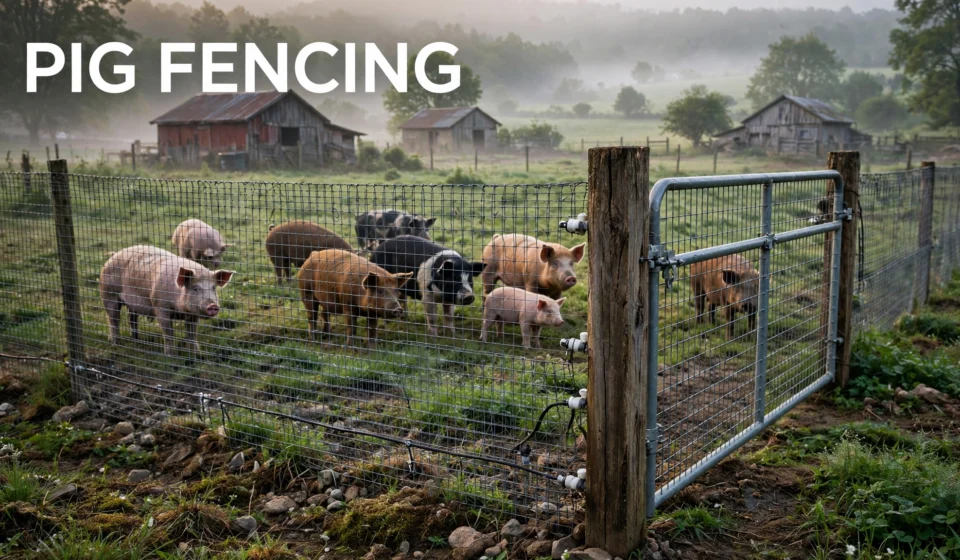
Pig Fencing: What Actually Holds a Pig
Pig fencing fails in ways that surprise people coming from other livestock. A pig does not test a fence by leaning on it or jumping it. It tests the ground underneath, the gap at the corner, and the moment the gate latch is loose — and it is patient. Understanding that changes what you build, and it changes where you spend money. If you are setting up an operation rather than fixing an existing fence, our small-scale pig farming in the USA guide covers the wider picture.
Quick Answer
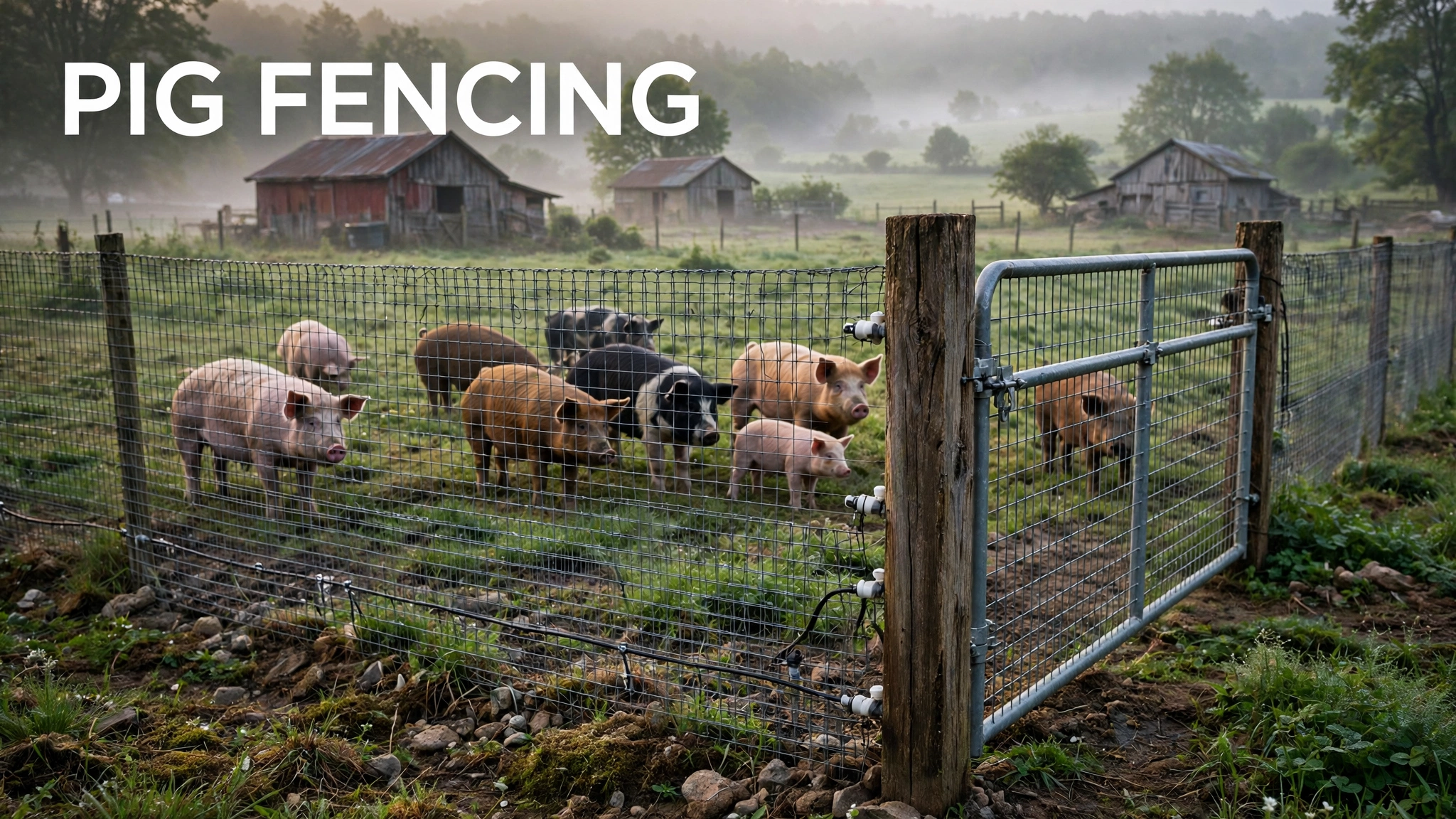
Penn State Extension recommends a strong, reliable woven exterior fence for pigs, and notes that pigs can be trained to an electric fence. The practical system most small farms end up with combines the two: physical wire to contain, an electric strand to discourage rooting under it. Secure the base first — pigs escape under and through a fence far more often than over it.
Key Takeaways
- A woven exterior fence is the foundation — Penn State Extension strongly encourages one even where electric fencing is used.
- Electric is a behavioral layer, not a barrier — it works because pigs learn to avoid it, which means training comes first.
- The base is the failure point. Pigs are natural excavators, and a fence that does not meet the ground tightly will be tested there.
- A ground-level electric strand inside the fence discourages digging — but do not run it across the barn doorway.
- A loose pig is a regulatory problem, not just a nuisance — escaped pigs contribute to feral hog populations, and federal USDA rules carry consequences.
Why Fence Height Isn’t the Whole Answer
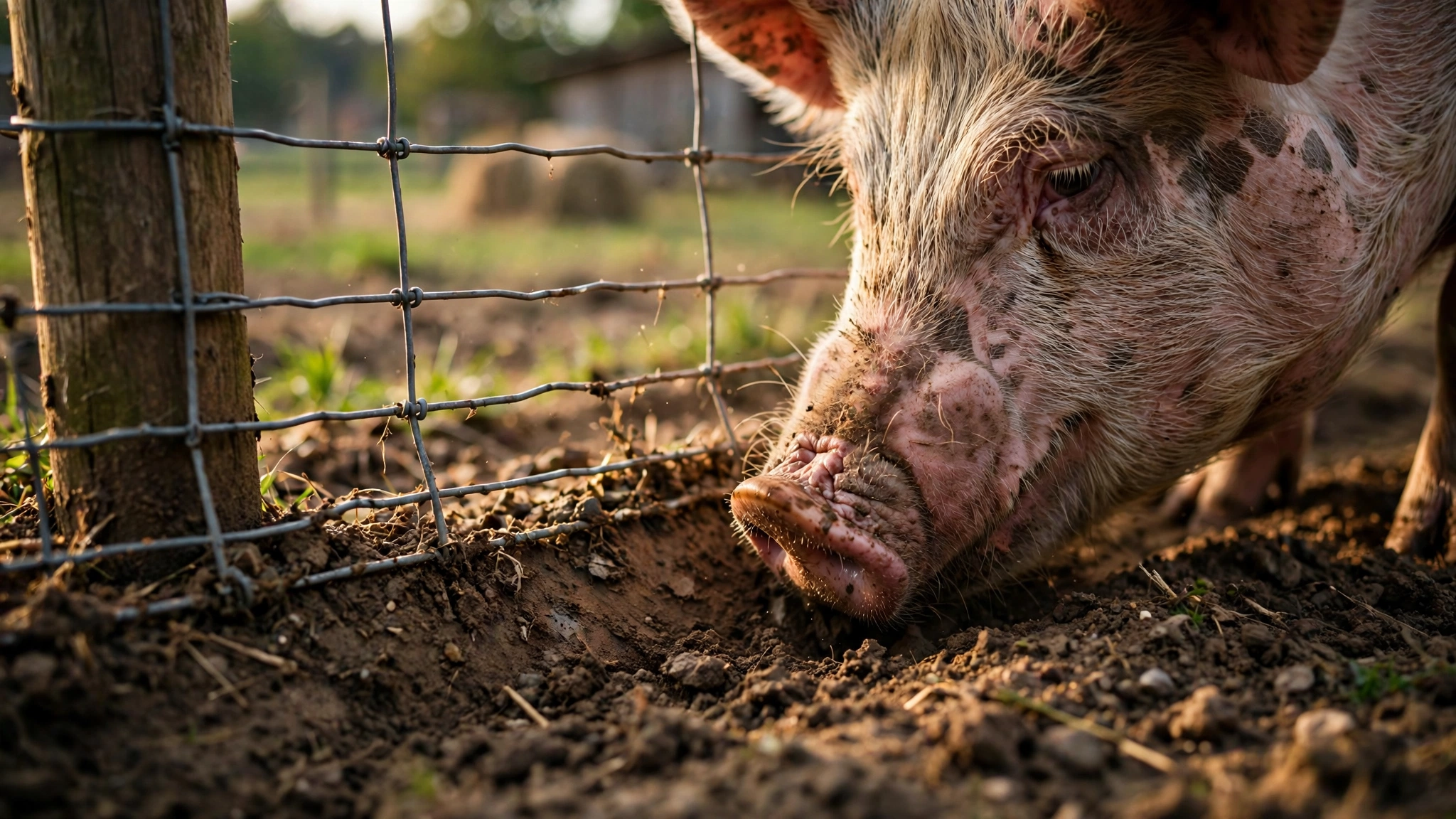
Height matters, but it is rarely what fails first — pigs are built to push, root, and squeeze rather than to climb, so the bottom of the fence gets tested long before the top does. Penn State Extension describes pigs as animals that will attempt to dig their way out, which is why containment planning starts at ground level.
How many pigs you are containing, and on how much ground, shapes the fence before any of this — that calculation is in how much space do pigs need.
That does not make height irrelevant. A fence has to be tall enough that a pig cannot get its shoulders over a sagging section, and tall enough to stay effective as the animals grow. But a tall fence with a loose base is an expensive fence that does not work.
Under the Fence
This is the primary escape route. Pigs root — they dig with the snout to turn soil — and a fence with any gap along the ground gives them a starting point. Soft ground after rain, a low spot where water runs, or the natural settling of soil along a fence line all create openings that were not there when you built it.
Through Gaps
Wire spacing matters more for small pigs than for large ones. A weaner that can get its head through a gap will usually get the rest of itself through. This is also why fence sections that have been pushed, stretched, or bowed by repeated rubbing become escape points even when nothing is visibly broken.
Around the Gate
Gates are the weakest part of most fence lines because they are the only part that has to move. Latches loosen, hinges sag, and the gap between gate and post widens with use. A gate that swings freely and closes with a positive latch is worth more than another 6 inches of wire height.
Pig Fencing Types and When Each Works
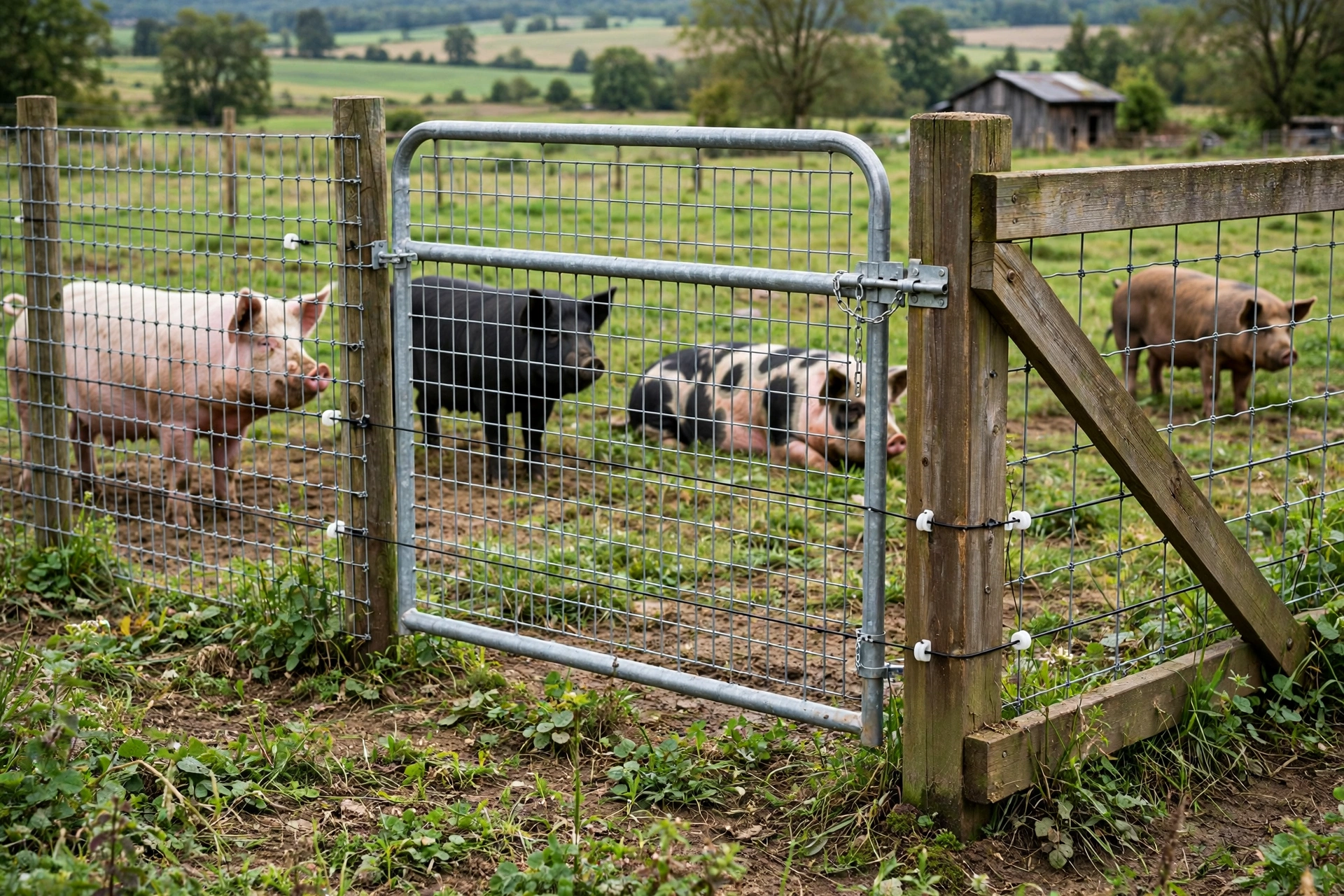
Pig fencing divides into physical containment, behavioral deterrent, and the combination of both — and most working small-farm systems end up in the third category rather than relying on either alone.
One clarification before the types: “hog wire fence” describes a material or panel style, not a complete containment system. Whether it holds pigs depends on how the base, corners, gates, and any electric components are configured around it. Two farms can buy identical panels and get opposite results.
Woven Wire and Hog Panels
Physical containment. This is the fence that holds a pig when nothing else is working — when the charger fails, when the ground is dry, when a pig panics and runs. Penn State Extension strongly encourages a strong and reliable woven exterior fence, and that recommendation stands even for operations that also use electric.
The tradeoff is cost and permanence. Woven wire and rigid panels are more expensive per foot than electric and far harder to move, which makes them the right answer for a perimeter and the wrong answer for paddock subdivision you plan to change every few weeks.
Electric Netting and Polywire
Behavioral deterrent. Electric fencing does not physically restrain a pig; it teaches the pig not to approach. That distinction matters, because a deterrent only works on an animal that has learned what it means.
Electric is where portable and temporary pig fencing lives. It is light, fast to move, and well suited to rotating pigs through paddocks — which is what actually protects your ground, as covered in the pasture section of our space guide. Its weakness is that it depends on the charger working, the ground staying conductive enough to complete the circuit, and vegetation not shorting the line.
Combined Systems
The practical answer for most small farms. A woven wire or panel perimeter provides the barrier that holds when something goes wrong, and an electric strand set low on the inside discourages pigs from working at the base in the first place.
Penn State Extension notes that a single strand of electric wire run inside the pen at ground level helps prevent digging under the fence — with one specific warning worth repeating: do not run that wire across the barn or shelter doorway. A pig that gets shocked in a doorway remembers the location, and you can end up with an animal that refuses to walk out through its own gate.
This is why pig fence ideas that work tend to look layered rather than clever. The barrier does one job; the wire does another.
Training Comes Before Turnout
Pigs can be trained to an electric fence, and Penn State Extension says so explicitly — which means the training step is part of the system rather than an optional refinement.
Why Training Changes Electric-Fence Behavior
An electric fence communicates through experience. A pig that has learned what the wire does treats it as a boundary. A pig that has never encountered one has no reason to read a thin line of polywire as a barrier at all, and its response when it does contact the wire is unpredictable — it may back away from it, or it may move forward through it.
The practical consequence is sequencing. Introduce pigs to electric fencing inside a secure, physically fenced area where a mistake costs you nothing, and give them time to learn the boundary before that boundary is the only thing between them and the road.
This is also the argument for keeping the woven perimeter even after the pigs are trained. Training reduces the chance a pig challenges the wire. It does not eliminate the chance the charger fails.
The Three Failure Points
Fences fail at three predictable places, and inspecting those three costs less than repairing an escape.
The Base
Walk the fence line and look at where wire meets ground. Any gap, any washed-out low spot, any section where the soil has settled away is where the next escape starts. This inspection is worth doing after heavy rain specifically, because that is when the ground moves.
Corners
Corners take the most pressure. Pigs rub against fences, and corners concentrate that force on the posts that are hardest to replace. A corner that has started to lean is telling you it will fail, and it will usually fail at the worst time.
Gates
Check that the latch closes positively, that the hinges have not sagged, and that the gap between gate and post has not widened. Gates are also where people fail rather than fences — a gate left unlatched during chores accounts for a meaningful share of escapes. Gate placement and traffic flow are part of the wider layout question covered in our pig housing and farm infrastructure guide.
Fence lines and gates are also part of your farm’s disease boundary. Keeping domestic pigs from nose-to-nose contact with wildlife is a containment question as much as a health one, which connects fencing directly to your biosecurity measures.
Keeping Pigs In vs Keeping Feral Swine Out
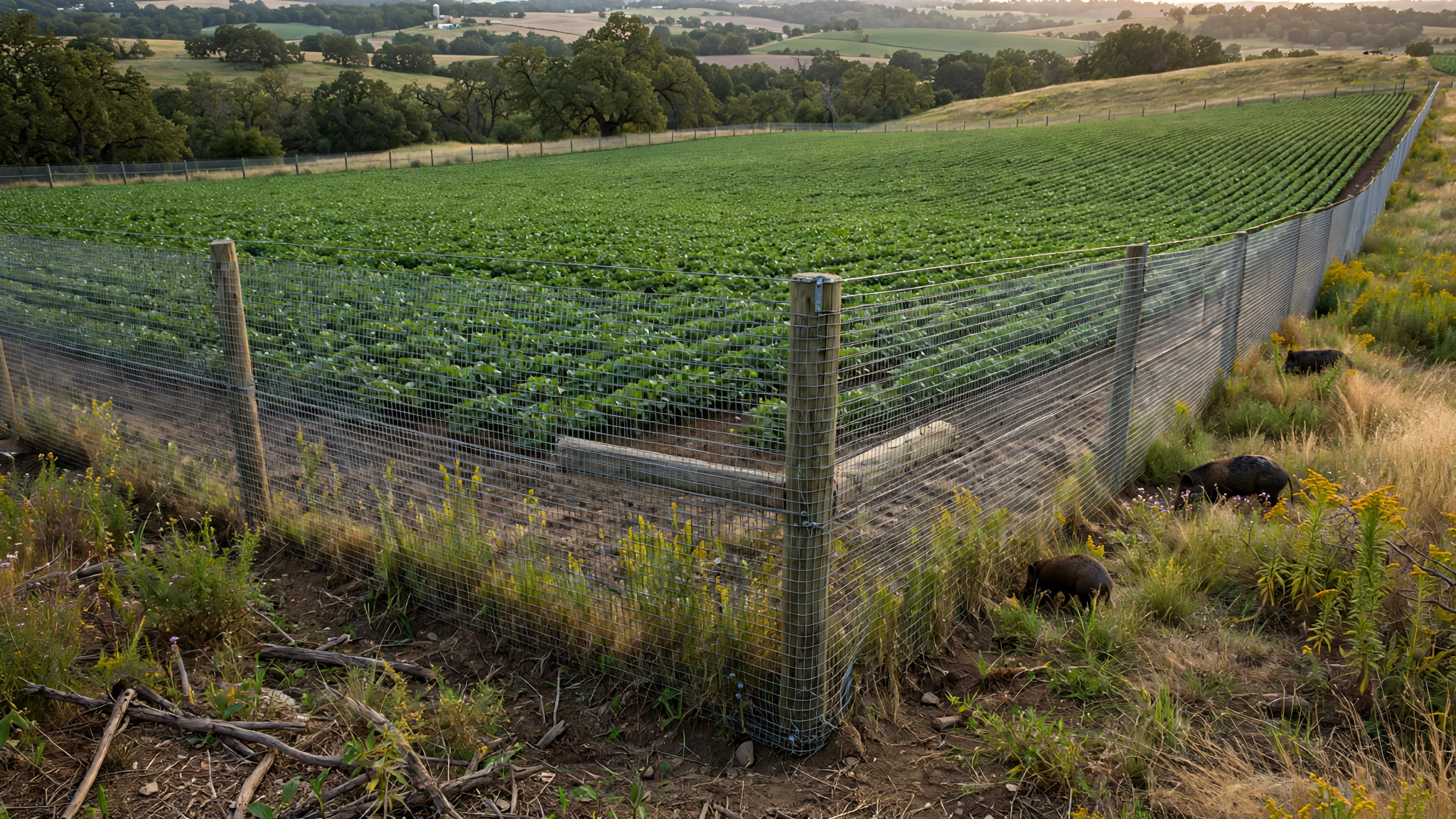
These are opposite problems, and the same word — “hog fencing” — is used for both, which is how the wrong specifications end up on the wrong farm.
Containing your own pigs means stopping animals that live inside the fence from working their way out at the base. Excluding feral swine means stopping wild animals outside the fence from getting in.
The USDA APHIS guidance on fencing out feral swine recommends building fences at least 5 feet high with fence strand spacing no more than 4 inches apart. Those figures are for exclusion — keeping wild swine off cropland or property.
Why the APHIS Numbers Don’t Answer Your Pen Question
Do not read 5 feet as the answer to “how tall should my pig pen be.” It is guidance for a different job, against a different animal, under different pressure. A feral hog approaching a crop field at night is not the same containment problem as a market pig in a familiar pen.
If feral swine are a genuine concern in your area, that is a second fence with its own specification — and worth treating as its own project rather than trying to make one fence do both jobs.
What a Loose Pig Actually Costs You
An escaped pig is a regulatory matter, not only an inconvenience. Penn State Extension states that loose pigs contribute to feral hog populations and that federal USDA laws outline strict ramifications for loose pigs.
That is the sentence most fencing guides never mention, and it changes the arithmetic. The cost of an escape is not the price of the pig plus a torn-up neighbor’s garden. Domestic pigs that go loose and are not recovered can establish or reinforce feral populations, which is a problem regulators treat seriously.
The specific consequences depend on your state, your county, and the circumstances — enforcement and reporting requirements vary by jurisdiction, and your state department of agriculture is the authority on what applies to you. What does not vary is the direction of the incentive: a fence that costs more than you wanted is still cheaper than an escape you cannot resolve quietly.
Practically, this argues for building the perimeter you can trust rather than the one you can afford this month, and for treating gate discipline as a real procedure. Which system suits your operation also depends on whether you keep pigs year-round or in batches — the systems are compared in farrow-to-finish vs wean-to-finish.
Frequently Asked Questions
What is the best fencing for pigs?
There is no single best type, but the combination most small U.S. farms settle on is a strong woven exterior fence with an electric strand run low on the inside. Penn State Extension strongly encourages the woven perimeter even where electric is used. The physical fence contains; the electric wire discourages rooting at the base. Portable electric netting is the usual choice for temporary paddock subdivision inside that perimeter.
How high should a fence be for pigs?
High enough that pigs cannot get their shoulders over it as they grow, and tall enough to stay effective on uneven ground — but height is not where most fences fail. Published heights vary widely because they come from different sources for different breeds and systems. Do not apply the USDA APHIS 5-foot figure here; that is guidance for excluding wild feral swine, not for containing farm pigs.
Will pigs dig under fences?
Yes. Pigs are natural excavators and Penn State Extension identifies digging out as a real containment risk. This is why the base of the fence matters more than the top, and why a ground-level electric strand run inside the fence is a common addition. Inspect the fence line after heavy rain, when soil movement opens gaps that were not there before.
Can pigs jump over a fence?
Pigs are not natural jumpers and rarely escape over a properly maintained fence. They are, however, strong and persistent pushers, and a fence section that has been bowed or stretched by repeated rubbing can end up low enough for a large pig to get over. Treat a leaning or sagging section as an active problem rather than cosmetic damage.
What are the disadvantages of a hog panel fence?
Cost and permanence. Rigid panels and woven wire are more expensive per foot than electric and difficult to relocate, which makes them poorly suited to rotational grazing where paddocks change frequently. They also do nothing on their own to stop rooting at the base — a panel fence without a secured base or an inside electric strand can still be undermined.
Conclusion
Good pig fencing comes down to three decisions. Build a woven perimeter you can trust when everything else fails, because that is the fence that holds during a power outage or a panic. Add electric as a behavioral layer and train the pigs to it inside a secure area first, since a deterrent only deters an animal that has learned what it means. And spend your inspection time at the base, the corners, and the gate rather than worrying about height.
The reason to overbuild rather than underbuild is not the pig. It is that an escaped pig is a regulatory problem with consequences you do not control, and that is a bad trade for the money you saved on wire.
Explore More: Browse every article in Small-Scale and Backyard Pig Farming.