Pig Gestation Management: From Confirmed Pregnancy to the Farrowing Move
Pig gestation management is the set of decisions that protect a pregnancy from breeding until the sow moves to the farrowing room: what to keep away from her early, how to house and feed her alongside other sows, how to hold her condition, and when to move her.
It is one stage within the wider work of breeding and reproduction in pigs, and most of the losses it prevents happen before anyone in the barn can see them.
Quick Answer
Pig gestation management covers the sow from breeding to the farrowing room. Gestation now averages 115–116 days from first service, according to the Merck Veterinary Manual (2026). The first 30 days carry the highest risk of embryo loss, so avoid regrouping, moving, heat stress, and overfeeding then. Group-housed sows need at least 18–19 sq ft each, mixing works best after implantation, and research supports moving sows to farrowing around days 95–105.
Key Takeaways
- Gestation averages 115–116 ± 1 days from first service (Merck Veterinary Manual, 2026), slightly longer than the traditional 114 days.
- Embryonic loss of 30–40% is common in pigs, and the first 30 days after breeding carry the greatest risk.
- A stall’s footprint of about 16 sq ft is too little in a group pen. University of Minnesota Extension sets 18–19 sq ft per sow as a minimum, adjusted for group size.
- In UMN data, mixing after implantation raised farrowing rate from 82.5% to 85.0% in static groups and from 82.1% to 88.0% in dynamic groups.
- Pre-farrowing vaccines belong in the last 6 weeks of gestation, and research supports moving sows to farrowing around days 95–105.
What Pig Gestation Management Covers
Pig gestation management covers four decisions made between a confirmed pregnancy and the farrowing room: protecting embryos in the first 30 days, choosing housing and the time to mix, holding body condition steady, and timing late-gestation vaccines and the move. It picks up where pregnancy diagnosis in sows leaves off, once a sow is confirmed and has a due date.
Penn State Extension divides gestation into three approximate phases (2026), each with its own management priority. The boundaries are a guide, not a fixed schedule for every sow:
| Phase | Days | What is happening | Management priority |
|---|---|---|---|
| Early | 0–30 | Embryos elongate around days 10–12 and signal the sow to maintain the pregnancy; embryo losses are most common | Avoid stress, regrouping, and moving |
| Mid | 30–70 | The placenta grows and sets how much nutrient and oxygen each fetus can receive | Hold condition steady; mix groups once pregnancy is confirmed |
| Late | 70 to farrowing | Most fetal weight gain happens; nutrient demand rises | Vaccinate, prepare the farrowing room, time the move |
Penn State ends the late phase at day 114; on the current average, most sows farrow around day 115 or 116.
How Long Is a Pig’s Gestation Now?
A pig’s gestation now averages 115–116 days from first service, give or take about one day, according to the Merck Veterinary Manual chapter on breeding management of pigs (reviewed July 2026). First service is the first mating or insemination of that heat.
Merck notes that the average length has been increasing, which is why newer references sit above the figure most producers learned.
Why the Traditional 114-Day Estimate Needs Context
The familiar “3 months, 3 weeks, and 3 days” works out to about 114 days, and it remains a reasonable rough guide; Penn State Extension still uses it as an average. The point is not that 114 is wrong but that it now sits at the short end, and individual sows vary far more than any rule suggests.
A 2022 scientific review by Walls and colleagues in the journal Animals reports a range of 105 to 125 days across breeds and individuals.
The most reliable due date comes from each farm’s own breeding and farrowing records. If sows routinely farrow on day 115 or 116, schedule crate space on that basis. For how gestation fits with breeding, lactation, and the wean-to-estrus period, see where gestation sits in the sow’s production cycle.
Larger Litters, Slightly Shorter Pregnancies
Gestation is slightly shorter in sows carrying larger litters, according to Merck. Have a crate clean and ready a few days before the expected date, not on it.
What the Due Date Controls
An accurate due date sets when a farrowing crate must be free, when staff need to be on hand, and whether farrowing can safely be induced. Farrowing induction is the use of a prostaglandin hormone to start labor on a planned day.
Merck states that prostaglandin must be used within 72 hours of the expected farrowing date to avoid an increase in stillbirths, which makes accurate breeding records a safety requirement. Whether to induce, and with which product, is a decision for the herd veterinarian under the product label.
The First 30 Days: What to Keep Away From Bred Sows
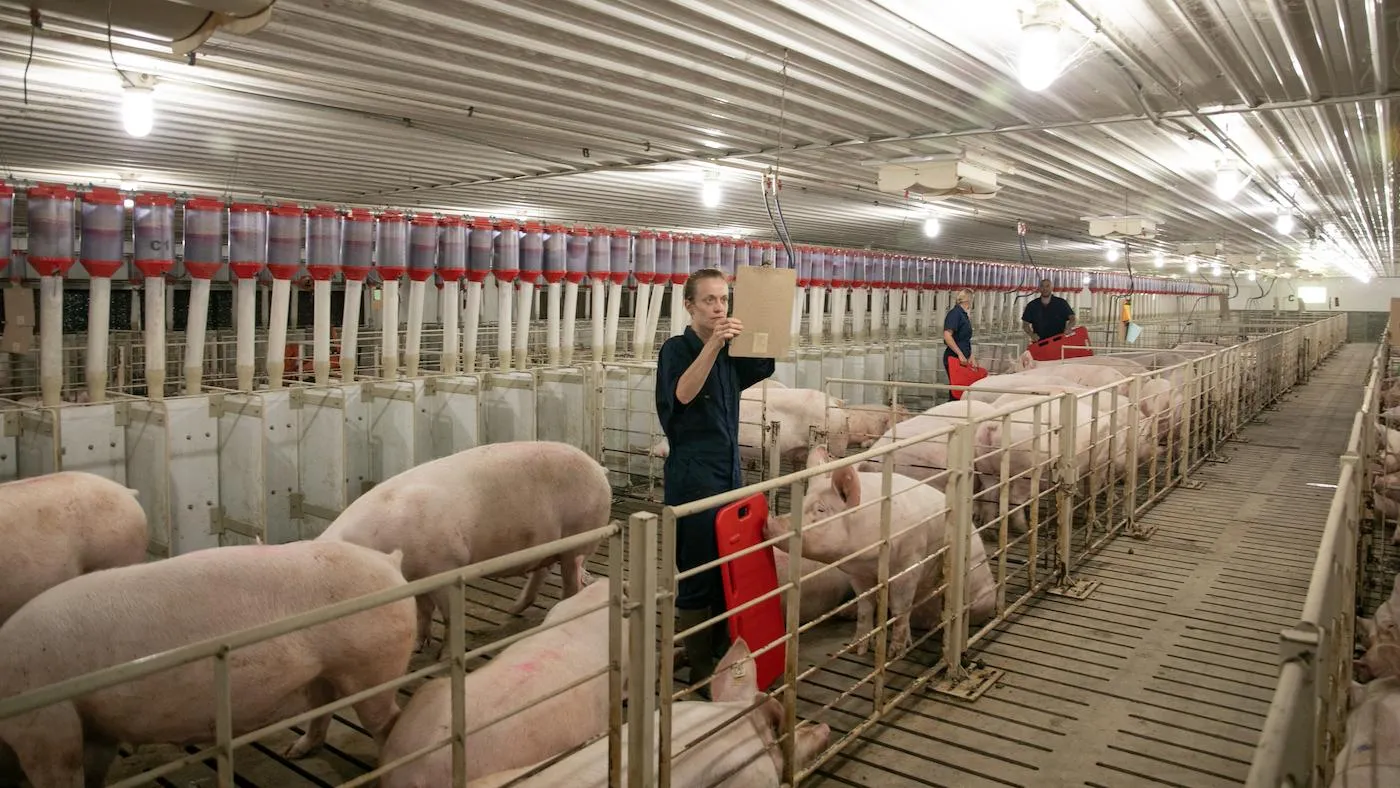
For the first 30 days after breeding, keep five things away from bred sows: overfeeding, heat stress, regrouping, handling or moving, and vaccination. These are the stresses the Merck Veterinary Manual lists for this window, when embryos are at their greatest risk.
Fertilization rates in pigs approach 95%, yet embryonic loss, meaning the death of fertilized embryos before they develop into fetuses, of 30–40% is common, according to Merck.
Pregnancy recognition, when the embryos signal the sow to keep the pregnancy going, occurs by days 12–14. Implantation, the attachment of the embryos to the uterine wall, begins around days 13–14 and is complete by about day 40.
Plan group moves, routine vaccinations, and pen changes so they fall before breeding or after day 30, never in between.
Heat Stress Before Day 16
Pregnancies younger than 16 days are especially susceptible to heat stress, according to Merck. For summer breeding groups, cooling in the breeding and early-gestation barn comes first. A heat wave in the two weeks after breeding can cost pregnancies that only show up later, as returns to heat or small litters.
When a Confirmed Sow Turns Up Open
A sow confirmed pregnant that later shows no pregnancy has usually lost her litter after the diagnosis. Merck explains that fetal deaths after about day 40 can cause abortion, while earlier losses can be hard to see. If only a few fetuses die, they may become mummified and pass at farrowing.
Merck also notes that a litter of fewer than five piglets can indicate early embryo death after attachment. Several open sows in one group, or a run of small litters, is a herd-health question for the veterinarian, not a testing error.
Stalls or Group Pens? Choosing Gestation Housing
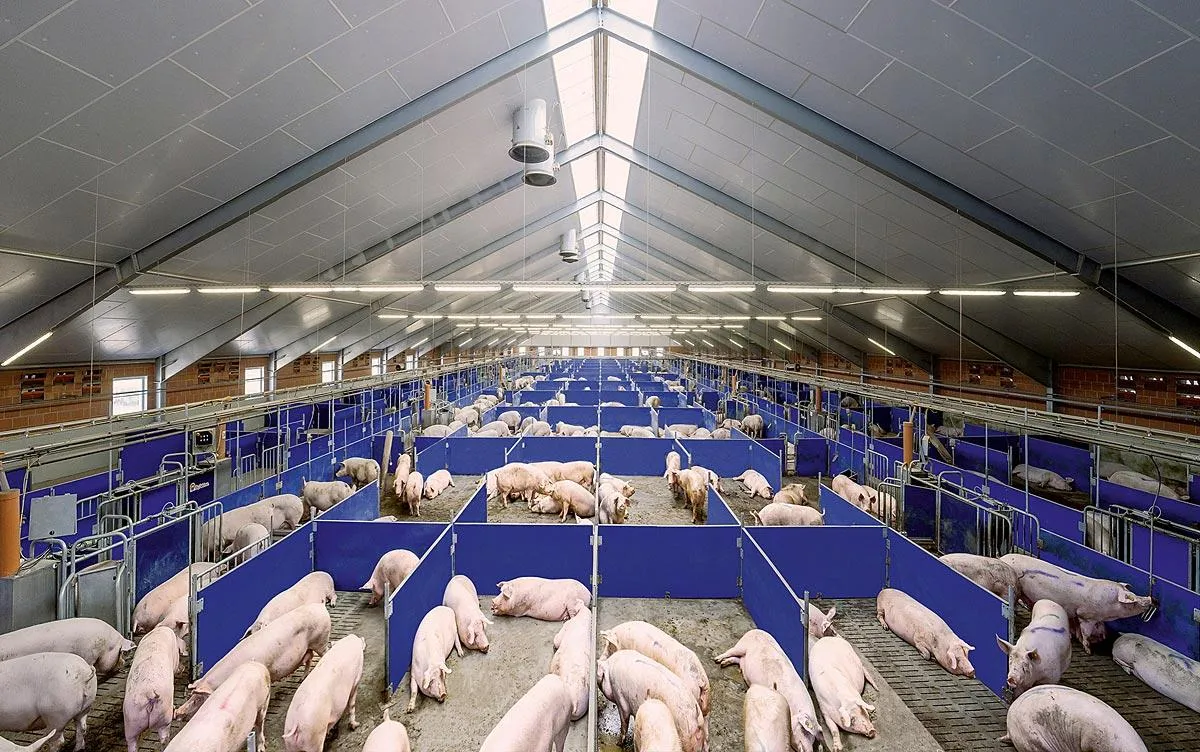
Both stalls and group pens can carry a sow through gestation, but the choice sets how much floor space each sow needs, when she can be mixed, and which feeding system you must run.
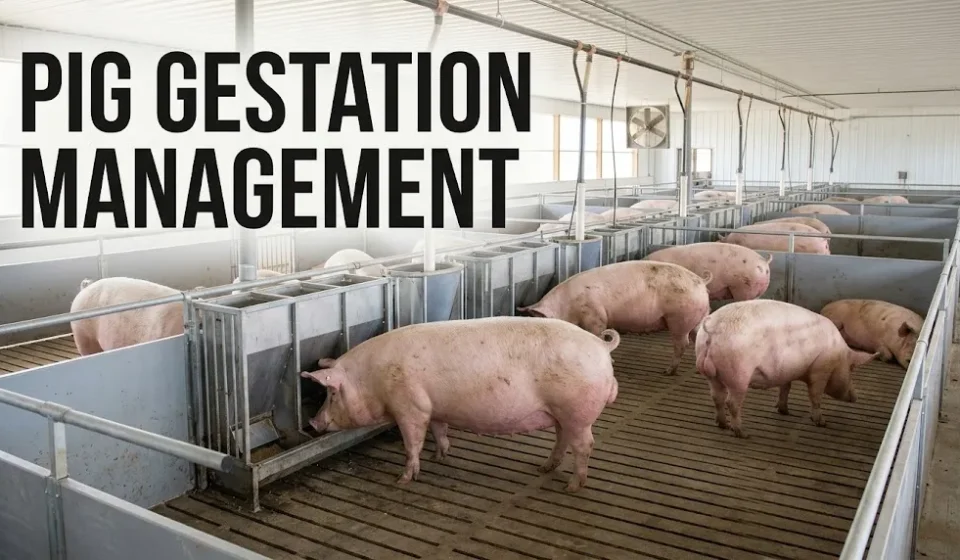
A gestation stall is an individual pen roughly the size of one sow; group housing keeps several sows in one pen at 18–19 sq ft per sow or more. Several states restrict stalls, and buyer programs add their own requirements, covered alongside the rules and barn layouts that shape gestation housing.
Space per Sow in a Group Pen
A group-housed sow needs at least 18–19 sq ft of floor space, according to University of Minnesota Extension guidance on group sow housing (reviewed 2024).
A standard stall plus half the aisle behind it comes to about 16 sq ft, which most studies suggest is too little once sows share a pen, so UMN advises adding 10–20% when converting from stalls. Group size changes the figure:
| Group size | UMN adjustment | Approximate space per sow |
|---|---|---|
| Fewer than 10 sows | Add 10% | About 20–21 sq ft |
| 10 to 40 sows | Baseline | 18–19 sq ft |
| More than 40 sows | Can reduce by 10% | About 16–17 sq ft |
These are minimum guidelines from one extension source, not an ideal target or a legal standard. Sow size, the feeding system, and state law or buyer programs can raise the requirement. For sows in stalls, the lying-space test for a sow in a stall checks fit better than a dimension table.
When to Mix Sows
The safer time to mix sows into groups is after pregnancy is confirmed, at least 30 days after mating, which is the timing University of Minnesota Extension recommends where the barn layout and breeding schedule allow it. UMN explains that embryos float freely in the uterus for the first 18 days and become more resistant to the stress of fighting once they implant.
A static group is formed once and stays together until farrowing; a dynamic group has sows entering and leaving as breeding groups rotate. UMN reports that mixing after implantation improved farrowing rate in both:
| Group type | Mixed before implantation | Mixed after implantation |
|---|---|---|
| Static | 82.5% farrowing rate | 85.0% farrowing rate |
| Dynamic | 82.1% farrowing rate | 88.0% farrowing rate |
Total born per litter stayed between 11.9 and 12.2 in every group, so the gain comes from more sows reaching farrowing, not bigger litters. Because dynamic groups face fighting each time sows arrive, introduce newcomers as a group rather than one at a time.
The Feeding System Follows the Housing
In group pens, the feeding system decides whether each sow gets her own ration or competes for it. University of Minnesota Extension divides the options into two types:
| Feeding system | Type | How it works | Trade-off |
|---|---|---|---|
| Electronic sow feeding (ESF) | Noncompetitive | A computer identifies each sow by ear tag and dispenses her ration | Higher cost; sows need training |
| Free-access stalls | Noncompetitive | Sows eat and rest in individual stalls without pressure | More floor space; harder to vary rations |
| Floor feeding | Competitive | Feed is dropped onto a solid floor area | Lowest cost; dominant sows eat more |
| Partial feeding stalls | Competitive | Side walls reach the shoulder or mid-body | Dominant sows can still push others aside |
| Trickle feeding | Competitive | Feed is delivered at the speed sows eat, often in partial stalls | Needs careful timing |
Competitive systems cost less but produce more variation in body weight and backfat, according to UMN. If you run one, group sows of similar age and weight, and expect a few that never adapt and need individual housing.
Holding Body Condition Steady Through Mid-Gestation
Set a sow’s body condition during the first third of gestation, about the first 38 days of a 115-day pregnancy, then hold it steady until farrowing; the Merck Veterinary Manual describes this as the approach most producers use. Body condition is the fat and muscle a sow carries, judged by eye, by caliper, or by ultrasound measurement of backfat, the fat layer over the loin.
Gilts and young first-parity sows are still growing, so their ration must cover growth as well as pregnancy; parity is the number of litters a sow has had. Older sows coming off a 3- to 4-week lactation may need to regain condition early.
At the other end, overconditioning in late gestation can increase stillbirths and reduce lactation feed intake, according to Merck, which also describes full feeding above 4–5 lb per day in the first 30 days as debated. For daily allowances and scoring methods, see how much to feed a sow at each stage of pregnancy.
Daily Checks in the Gestation Barn
A daily walk through the gestation barn should check every sow’s body condition, health, and behavior, along with feeding equipment, air quality, and manure storage capacity, following the routine University of Minnesota Extension sets out for stockpeople.
UMN adds two habits: walk the same route each day but start at different points, so sows pushed away from feed are not always seen last, and move slowly and quietly, which builds trust and may improve reproductive performance.
Two checks matter most in gestation. Around day 21 after breeding, watch for sows returning to heat, a sign the pregnancy did not take or was lost early. In group pens, watch for thin sows: in competitive feeding systems they are usually the ones losing out at the feeder, and moving them early is cheaper than recovering them later.
Late Gestation: The Immunization Window and the Move to Farrowing
Late gestation has two timed jobs: vaccinate within the last 6 weeks to raise antibodies in the sow’s first milk, and move her to the farrowing room early enough to settle. Both are planned from the due date.
Vaccinating in the Last 6 Weeks
The Merck Veterinary Manual recommends immunizing gilts and sows during the last 6 weeks of gestation to increase colostral antibodies. Colostrum is the first milk, and its antibodies are a newborn piglet’s main protection against disease in its first days.
Merck lists E. coli, atrophic rhinitis, and erysipelas as typical choices, plus others suited to each farm’s disease situation. Which vaccines a farm needs, the exact week, and the dose are decisions for the veterinarian, made against the product label.
Timing the Move to the Farrowing Room
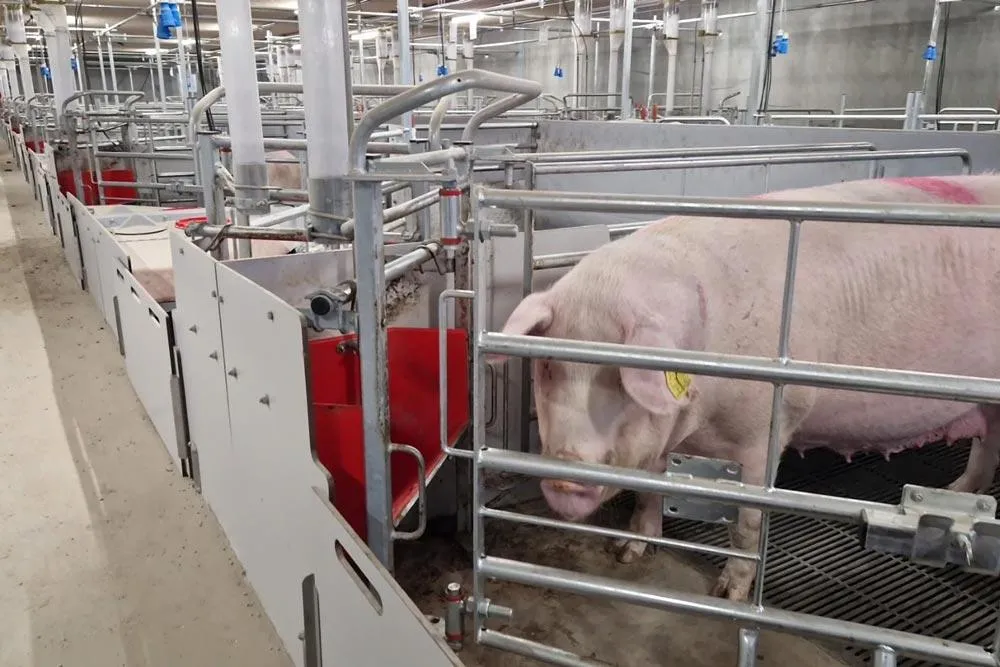
Research supports moving sows to the farrowing room around days 95–105 of gestation. A 2022 review by Walls and colleagues in Animals reports research showing that moving sows and gilts in this window lets them adjust to new surroundings and reduces restless behavior before farrowing, compared with moving them at day 114.
The same review warns that moves made too close to farrowing can disrupt maternal behavior.
Treat days 95–105 as a research-supported window, not a fixed date for every farm. Room availability, cleaning and drying time, biosecurity rules, and the batch schedule all shape when a move is possible. The evidence shows calmer sows before farrowing; it does not promise better farrowing results in every system.
Frequently Asked Questions
How long are pigs pregnant?
Pigs are pregnant for about 115–116 days from first service on average, according to the 2026 Merck Veterinary Manual, though individual sows can fall well outside that. A 2022 review by Walls and colleagues puts the full range at 105–125 days across breeds and individuals.
The traditional “3 months, 3 weeks, and 3 days,” or about 114 days, remains a fair rough guide, but farrowing plans work best from each farm’s own records.
What causes a pregnant sow to abort?
Abortion follows the death of a litter during pregnancy, but not every fetal death ends that way. The Merck Veterinary Manual notes that fetal deaths after about day 40 can cause the litter to be expelled, while a few dead fetuses may instead be retained, mummify, and pass at farrowing.
Reproductive diseases, heat, regrouping, moving, and exposure to outside animals all raise the risk of loss, so report every abortion to the herd veterinarian, who can decide whether testing is needed.
Can pregnant sows be housed together?
Yes. Pregnant sows can share group pens if each sow has enough floor space, mixing waits until after implantation, and the feeding system keeps dominant sows from taking more than their share. University of Minnesota Extension gives 18–19 sq ft per sow as a minimum, adjusted for group size, and advises mixing at least 30 days after mating. A few sows never adapt to a group and need individual housing.
When should a pregnant sow switch to gestation feed?
Most feeding programs move a sow onto a gestation diet shortly after breeding and keep her on it until she goes to the farrowing room, where a lactation diet takes over.
There is no single changeover date that suits every farm: the timing, the daily allowance, and any late-gestation increase depend on the feeding system, housing, temperature, and the sow’s condition. The sow feeding guide linked in the body condition section above covers allowances stage by stage.
How many embryos does a sow need to stay pregnant?
The Merck Veterinary Manual states that at least four embryos must be present around day 40, when attachment to the uterus is complete, for a pregnancy to continue. That figure is a biological threshold reported by the source, not a guarantee.
A sow carrying more than four embryos can still lose her pregnancy to stress or disease. Merck also notes that a litter of fewer than five piglets can point to early embryo death after attachment.
Conclusion
Good pig gestation management comes down to timing more than equipment:
- Protect the first 30 days. Embryo loss of 30–40% is common, so keep regrouping, moving, heat stress, overfeeding, and vaccination out of this window.
- Match housing, mixing, and feeding. Group pens need at least 18–19 sq ft per sow, mixing after implantation raised farrowing rate in UMN data, and competitive feeding needs sows sorted by size.
- Plan the end from accurate dates. With gestation averaging 115–116 days, vaccinate in the last 6 weeks and aim to move sows around days 95–105 where the system allows.
Mike Jennings, DVM
Explore More: Browse more breeding and reproduction guides for heat detection, artificial insemination, and pregnancy diagnosis.